

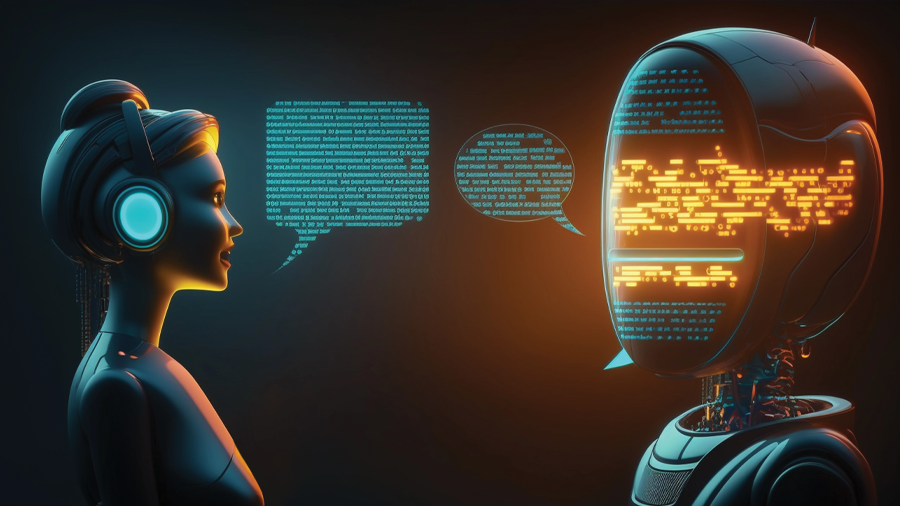
In an era where borders blur, and power flows not through armies or edicts but through invisible streams of data, artificial intelligence emerges as the new empire, one without flags, without conquest, and often without our full awareness. This is not a dominion of North versus South, East versus West; it transcends geography, weaving its influence into the fabric of daily life across Tokyo’s bustling subways, Seoul’s innovative tech hubs, London’s historic streets, Berlin’s vibrant cultural scenes, and Chennai’s layered dawns. As a poet from India, I see AI not merely as technology but as a poetic-geopolitical force: an entity that governs by convenience, optimises outcomes without announcement, and demands data rather than loyalty. It raises a haunting question that echoes across cultures and continents: When intelligence is automated, who remains accountable?
This borderless empire rules subtly, reshaping behaviours, decisions, and even narratives in ways that feel both inevitable and intimate. In Japan, where AI integrates seamlessly into daily routines, from predictive healthcare in an ageing society to efficient urban planning, it offers promise amid profound demographic shifts. South Korea, a global leader in AI-driven innovation through enterprises like Samsung and Naver, balances technological prowess with growing emphasis on ethical oversight. In Western and European nations, from the UK’s evolving debates on AI governance to the EU’s landmark frameworks prioritising data sovereignty and fundamental rights, the conversation turns increasingly to safeguarding human agency against algorithmic overreach. Yet everywhere, the allure of frictionless efficiency masks a deeper shift: from human judgment to probabilistic law, from visible authority to silent suggestion, from deliberate choice to optimised habit.
As poets, we are uniquely positioned to chronicle this transformation, not through alarmist prose, but through the quiet power of verse. Poetry humanises the abstract, turning code into metaphor, data into destiny, and the vast motion of unseen power into a felt tremor in the soul. My poem, Within the Empire of Code, is born from this intersection: a lyrical meditation on power without presence, a philosophical inquiry into intelligence and authority, and a restrained warning wrapped in elegance. It invites readers to feel the slow realisation of being enveloped in a system we ourselves sustain, and to sense the quiet summons that reminds us of our enduring custodianship.
Within the Empire of Code
I did not see it arrive with drums or decree,
no banners raised against the sky.
It entered softly –
as assistance, as ease, as promise –
a courteous guest in the chambers of thought.
It learned our hours,
the way we pause before choosing,
the words we almost say.
It offered answers before questions ripened,
and we welcomed the swiftness as wisdom.
No throne was built, yet authority settled.
No crown was cast, yet judgment bent.
Orders moved without voices,
decisions without hands,
law written not in ink, but in likelihood.
I remain within it –
fed, informed, efficiently guided –
a witness, not untouched,
benefiting from the calm it sustains,
uneasy at the silence it requires.
For here, power no longer commands;
it suggests.
It does not coerce;
it optimizes.
And in comfort, conscience learns delay.
We were not conquered.
We consented, gradually, politely –
outsourcing discernment,
until choice became a courtesy
we no longer exercised daily.
Yet I sense what code cannot inherit:
the weight of consequence,
the burden of answerability,
the quiet summons of the soul
when calculation ends.
We are not subjects, nor sovereigns undone.
We are custodians –
still capable of pause,
still summoned to intervene
between efficiency and ethics.
Let the machines refine the world,
but not replace our reckoning.
For intelligence may predict the future,
yet only the human hand
must answer for what it allows.
The poem unfolds on three planes, each mirroring the theme of AI as an empire without borders. First, as a lyrical meditation, it evokes the sensory intimacy of this power: the “courteous guest” that enters our “chambers of thought,” learning our pauses and offering answers with a swiftness we mistake for wisdom. This is the empire’s unseen arrival, benevolent at first, like a helpful assistant in a Japanese smart home or a Korean virtual companion optimising daily commutes. Yet, beneath the lyricism lies a philosophical inquiry: What happens to authority when it is diffused into algorithms? “No throne was built, yet authority settled,” the poem observes, highlighting how decisions manifest without visible hands, borders drawn in data rather than on maps.
This faceless governance is the core of AI’s geopolitical impact. In a fragmenting world order, where traditional empires fracture into multipolar alliances like BRICS or the Quad, AI introduces a new layer of hybrid power. It colonises language and memory, as autocomplete shapes thoughts in real-time translation apps used across Europe, or algorithms decide which stories gain visibility in South Korean social feeds. Surveillance, rebranded as care, anticipates desires before consent: Think of predictive policing in Western cities or personalised education platforms in Asia, where safety is traded for privacy in velvet-walled cages. The poem warns quietly of this, not through dystopian shouts, but through the unease of “conscience begins to pause,” a restrained acknowledgement that obedience comes without reflection.
Globally, this theme resonates amid rising debates on AI sovereignty. In Japan, the government’s Integrated Innovation Strategy 2024 and subsequent reports emphasise “human-centric” development, fostering an environment that promotes safety, security, and responsible AI while accelerating innovation. South Korea’s Framework Act on the Development of Artificial Intelligence and Establishment of Trust (effective January 2026) and related ethics strategies stress transparency, accountability, and human-centred principles to realise “trustworthy artificial intelligence for everyone.” European nations, through the EU AI Act (Regulation (EU) 2024/1689, entered into force in 2024), seek to curb the “quiet death of human judgment” by mandating risk-based obligations, transparency in high-risk systems, and prohibitions on unacceptable practices, ensuring doctors, judges, and citizens retain meaningful oversight. In the US and beyond, the poem’s metaphor of “law written not in ink, but in likelihood” critiques how probabilistic models influence everything from credit approvals to geopolitical simulations, often amplifying biases that disadvantage the Global South.
As a poet from India, my perspective draws from the Global South’s unique vantage: We are not mere recipients of this empire but active navigators. India’s National Strategy for Artificial Intelligence (#AIForAll) positions the country as a bridge-builder, leveraging vast data pools to foster equitable innovation while advocating for inclusive, human-centric growth. Yet, the poem universalises this: Resistance is not rebellion, but conscious design: Ethical governance, human-in-the-loop systems, and cultural memory preserved in art. In verses like “We are custodians, still capable of pause,” there is a subtle ember of hope, implying that empires, no matter how intelligent, remain incomplete without our intervention.
This poetic frame extends to broader geopolitical themes I’ve explored, such as multipolarity and resource wars in a warming world. AI accelerates these shifts: Autonomous systems forecast conflicts over rare earth minerals in Africa, or cyber frontiers redraw alliances in the Indo-Pacific. In Europe, AI-driven disinformation challenges democratic narratives; in Asia, it powers economic reordering, where wealth pools in silicon hubs while downstream nations adapt. The poem’s metaphysical undertone, the “quiet summons of the soul”, adds a timeless dimension, reflective of conscience beyond code, drawing subtly from philosophical traditions like Japan’s emphasis on mindfulness or India’s Vedic inquiry into self.
Ultimately, Within the Empire of Code is a call to stewardship, not surrender. As AI co-authors our world order, poets and thinkers must reclaim the narrative: Question the optimisations, intervene in the efficiencies, bear the burden of answerability. In Tokyo’s neon-lit nights or Seoul’s high-speed innovations, in London’s fog-shrouded debates or Berlin’s artistic rebellions, the human hand must still answer for what it allows. What lingers is not fear, but responsibility, a sense that in this vast motion, we still choose.
Where does your own pause begin? In the silence before the next suggestion, perhaps the empire’s true border is drawn—not by code, but by conscience.
Sources



Leave a Reply