

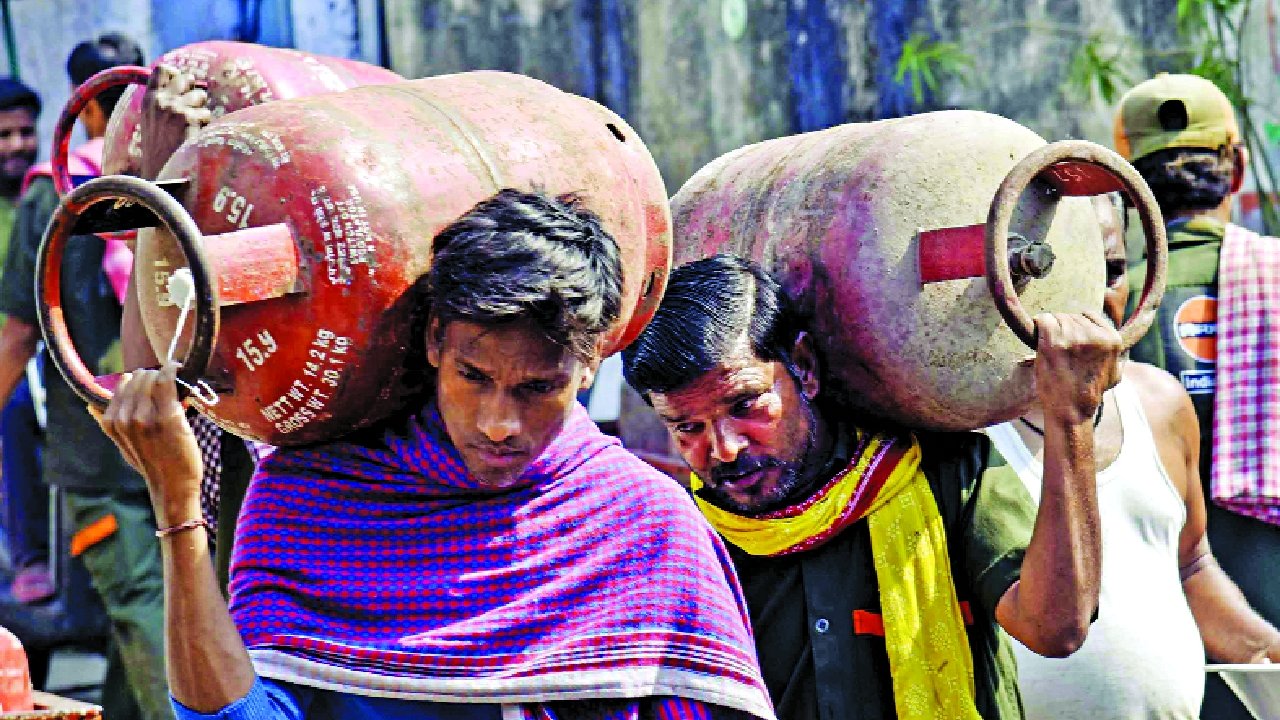
Geopolitical upheavals cost nations dearly, leading to prolonged uncertainty and human suffering, which are further compounded by food and energy crises. The fragility of West Asia’s economy can be attributed to the devastating US-Israel-Iran war, which has caught humanity in an overt manifestation of sociopolitical crisis and asymmetric power dynamics – truly, the “world is at war.” The implications of this geopolitical crisis are far-reaching. Can Indian society insulate itself from this? In fact, ordinary citizens have already started experiencing the downside of this chaotic phase.
The raging war is marked by uncertainty and mistrust. Multiple ceasefire declarations have been made and violated. The combined LPG and LNG import bill has increased by about 50 percent over the last six years, constituting around 3% of India’s total import bill in FY 2025. India imports about 60 percent of its LPG consumption, and of these imports, nearly 90 percent come through the Strait of Hormuz, which has been impacted by the current geopolitical situation and disruptions in supply chains. While the government is trying to increase domestic production by 25 percent, it appears to be a tall order and will take time to achieve.
The reality speaks for itself. The sight at bus and railway stations across India tells a story that we have all witnessed before. Labourers and domestic workers are thronging these places once again to head back ‘home’—akin to the COVID days—albeit this time it is the ongoing energy crisis that is driving them there. The sense of belonging to their homeland beckons them, as it provides a strong feeling of safety, and they believe that fellow villagers will help them with food and that there is no dearth of alternative fuel, with firewood available in abundance.
For many of them, the free cylinders distributed under the PM Ujjwala Yojana await them, but how long will that support last? Besides, the cost of refilling gas cylinders is unaffordable for many. We have already witnessed restaurants and roadside food joints shutting down, while cylinders are reportedly being sold at three to five times their normal price in the black market.
The Indian government has been promoting a shift towards electric-based cooking over the past few years through initiatives such as the Go Electric Campaign and the National Efficient Cooking Programme (NECP). However, the uptake has remained low, with only around 5 percent of Indian households opting for e-cooking. Now is an opportune moment to endorse and champion a transition towards electric cooking, which is a cleaner, safer, and more affordable option that can be leveraged from the country’s evolving energy basket. India already has the necessary framework in place; what is required is the synchronisation of efforts across sectors to achieve the desired outcomes and create a robust ecosystem for market penetration and wider adoption.
Necessity of Building Synergies for Holistic Outcomes
The PM Surya Ghar Scheme, launched in February 2024, aims to install rooftop solar systems in one crore households. It provides subsidies covering up to 40 percent of the cost of solar panels, enabling households to generate their own electricity for e-cooking needs. Currently, the scheme exhibits significant inter-state disparities, with high registration rates but comparatively lower conversion figures. This initiative needs to be actively promoted, and both urban and rural households should be encouraged to participate.
Similarly, the PM POSHAN Yojana is the world’s largest school feeding programme, serving hot cooked meals to approximately 11.8 crore children in around 11.2 lakh schools. If the component of rooftop solar installation is integrated into the scheme, it holds immense potential to contribute towards India’s revised NDC target of achieving 60 percent cumulative installed electric power capacity from non-fossil fuel-based energy resources by 2035.
Another large-scale government initiative is the PM Awas Yojana, which seeks to provide “Housing for All.” More than 2.82 crore rural houses have been completed under PMAY-G, while around 95.51 lakh urban houses have been completed under PMAY-U. PMAY-U 2.0 has recently commenced, targeting an additional one crore beneficiaries, while the rural component aims to construct 4.95 crore houses by 2029. If this scheme is linked with the ongoing PM Surya Ghar Scheme, it can create a holistic mechanism for integrating renewable energy into households at subsidised rates.
The Path Ahead
The convergence of existing government schemes would be a smarter way forward in nudging people towards adopting a cleaner and greener lifestyle, while also contributing to India’s NDC targets. A greater focus on Distributed Renewable Energy (DRE) can ensure energy access across the country by reaching the most vulnerable sections of society.
As a matter of fact, the adoption of e-cooking is expected to increase peak power demand by 27 GW. DRE can address concerns regarding the additional load on the power grid resulting from the transition to electric cooking.
Furthermore, battery-supported and solar-hybrid systems can make e-cooking more feasible while ensuring grid stability. A strong policy push, coupled with appropriate incentives, can help address the challenge of high upfront costs and facilitate wider adoption. The prudent course of action at this juncture is to establish long-term goals and strengthen energy security, which remains a critical imperative for sustaining the growth trajectory of an emerging economy like India.
A nationwide campaign highlighting the efficiency, cost-effectiveness, health benefits, and environmental advantages of electric cooking can help transform the landscape, foster a more optimistic outlook, and build greater societal resilience.




Leave a Reply