

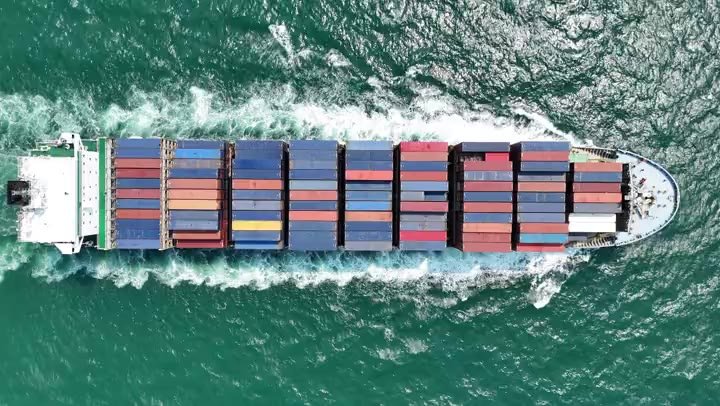
In an increasingly interdependent world, the stability of international trade depends largely on the continuous and predictable operation of major maritime routes.
Interoceanic canals and strategic straits—true chokepoints of the global system- carry a substantial share of world trade. Yet recent events have highlighted the vulnerability of these routes to geopolitical tensions, regional conflicts, and operational disruptions.
This context invites a timely reflection: Are there avenues within international law and interstate cooperation to strengthen the stability of these critical corridors?
The global maritime system is far from evenly distributed. A significant portion of world trade passes through a limited number of strategic passages, including the Panama Canal, the Suez Canal, the Strait of Malacca and the Strait of Hormuz. These chokepoints not only concentrate commercial flows, but also amplify systemic risks, expose structural vulnerabilities and generate global ripple effects from localised disruptions. When one of these corridors is affected, the consequences are felt far beyond its immediate geography.
Current global dynamics suggest an increasingly challenging environment marked by heightened strategic competition among major powers, rising risks in sensitive maritime regions and the potential use of trade routes as instruments of leverage. In such a context, predictability—an essential foundation of global trade—is becoming more fragile. This is not merely a matter of security, but of economic stability on a global scale.
International law already offers relevant precedents. Arrangements governing the Suez Canal and the Panama Canal reflect historical efforts to ensure open and non-discriminatory transit—even during periods of conflict. However, these frameworks remain fragmented, reflect distinct historical circumstances and do not comprehensively cover today’s network of critical chokepoints.
This raises the possibility of exploring a broader concept, which might be described as “functional neutrality” for international maritime corridors. Such a concept would not imply a uniform or binding legal regime. Rather, it could evolve as a set of guiding principles aimed at promoting operational continuity, non-discriminatory access, regulatory predictability and systemic stability.
In terms of a gradual and pragmatic approach, I have to point out that any effort in this direction must proceed with caution. Concerns related to sovereignty and national security are legitimate and must be fully respected.
For this reason, a viable pathway could include an exploratory dialogue among interested states to the development of non-binding principles, with engagement with relevant international organisations to a gradual evolution based on consensus. Such an approach would avoid unnecessary tensions while fostering trust and cooperation.
Far from being restrictive, an initiative of this nature could reduce uncertainty in global trade, strengthen supply chains and benefit both littoral states and user economies.
Ultimately, it would recognise that certain elements of the international system—while remaining under sovereign jurisdiction—serve functions that extend beyond immediate national interests.
The history of international law shows that many of its most enduring norms emerged in response to structural transformations in the global system.
In today’s interdependent, volatile world, we may need to reassess, carefully and incrementally, the governance of critical maritime corridors.
Rather than proposing definitive solutions, the present moment calls for opening a thoughtful, inclusive, and forward-looking conversation.



Leave a Reply