

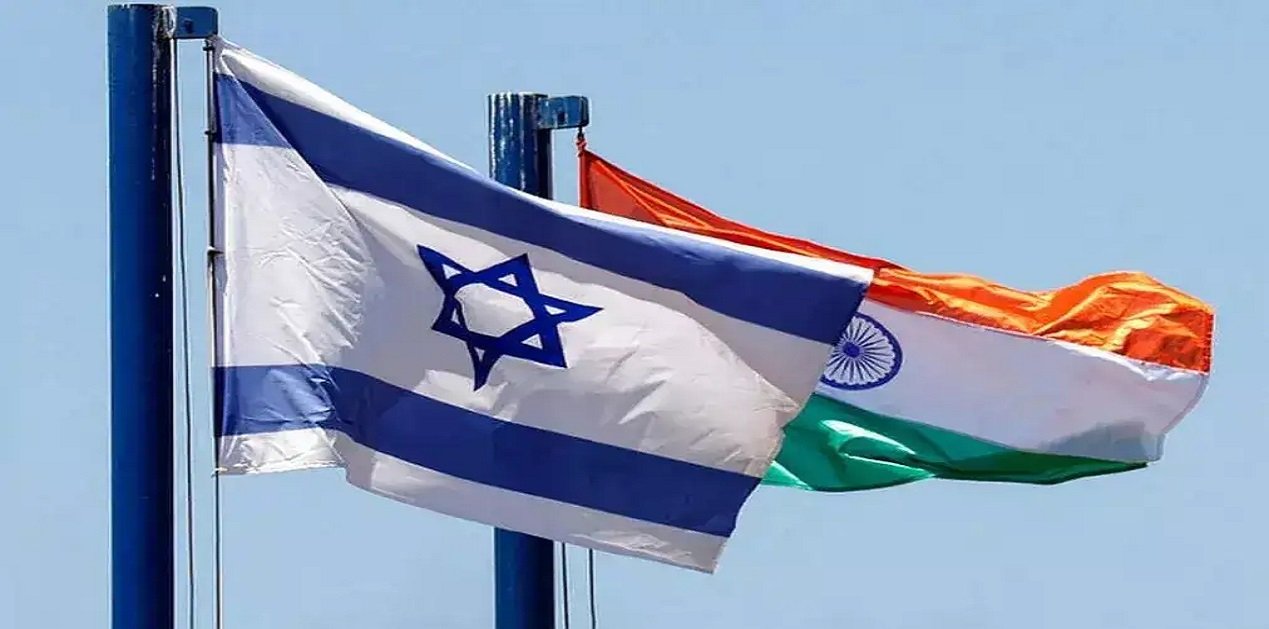
When the world appears to be grappling with collapsing geopolitical equations, extended wars that refuse to end, long-standing alliances cracking under pressure, and realities changing faster than global watchdogs can respond, it becomes extremely difficult, yet imperative for every country to have a reliable partner. A partnership that may not be built on loud proclamations, but on unflinching trust and quiet respect.
From an unpredictable and increasingly inward-looking United States to the European Union embroiled in internal dissent over a clutch of issues; from pro-Sino Russia, constrained economically by Western sanctions, to a belligerent and openly transactional China, India’s engagement with major global powers is undergoing a visible shift. Equations that once appeared stable have now become fragile, demanding constant recalibration.
India, standing at the crossroads of this turbulence, faces a diverse set of challenges. Geographically sandwiched between regions that have recently elected new governments after periods of political instability, civil rebellion, and radicalism; economically navigating currency depreciation, rising crude oil prices, declining FDI inflows, slowing manufacturing growth, and global trade uncertainties as major fallouts of the US-Iran war; militarily confronting a hostile Pakistan and an increasingly assertive China; and environmentally staring at the possibility of a below-normal monsoon due to El Niño conditions.
And it is against this backdrop that the India-Israel story begins to matter even more.
India and Israel established full diplomatic relations in 1992 at a time when the world was reordering post-Cold War. What began as cautious engagement gradually evolved into quiet cooperation and matured into a strategic partnership over the decades, carrying trust and mutual respect. Besides considering how fast the relationship grew, one should also consider how, despite internal chaos, regional upheavals, and shifting global order, the two countries smoothly sailed their relationship, countering the choppy waters.
Unfortunately, India and Israel have both been victims of difficult neighbourhoods. Over the years, they have learned that security is not just a theoretical concept but a shared, mutual reality. Terrorism and radicalisation have incurred significant damage to both countries. This shared experience has naturally pulled them closer, especially in the areas of defence, intelligence, and counterterrorism, building a partnership grounded in realism rather than rhetoric.
The recent years have kept Israel constantly on its toes. Following the harrowing October 7, 2023, attack on it, the country entered an intense phase of conflict, not just with Hamas, but also with Iran and its broader Arc of Resistance, including proxies such as Hezbollah and the Houthis. After a brief period of tense normalcy, the situation has now escalated further with the ongoing US-Israel war on Iran since February 28, 2026, reportedly triggered by a series of Israeli airstrikes that led to the assassination of Iran’s Supreme Leader, Ayatollah Ali Khamenei, and its top leadership. In retaliation, Iran has widened the theatre of conflict across the Middle East, pushing West Asia closer to a prolonged crisis.
During this entire period, India has treaded a careful path, balancing its diplomatic responsibilities while remaining firm on its core principle of zero tolerance towards terrorism. At multilateral global forums, India’s positions have mostly reflected its long-standing relationship with Tel Aviv.
Israel, too, despite facing constant pressure on multiple fronts, has always respected India’s strategic autonomy and legitimate limitations. The maturity of the bond became even more evident following the unfortunate April 2025 Pahalgam Attack and the subsequent military escalation with Pakistan in May 2025. It stood firmly with India, offering steadfast support and condemning the attacks, while most other allies and so-called partners remained noticeably restrained in both word and critique.
Defence cooperation forms the spine of this partnership. Israel has emerged as one of India’s most trusted defence technology partners. Supplying radars and sensors, unmanned aerial vehicles, precision-guided munitions, missile systems, and electronic warfare platforms, Israeli technology has always enhanced India’s military readiness. Though India is among Israel’s largest defence customers, the relationship is no longer restricted to imports. Moving from procurement to partnership, a score of Israeli defence companies have collaborated with Indian firms to manufacture systems domestically, transferring know-how, building local capacity, and aligning with India’s push for indigenous manufacturing.
Beyond defence, economic engagement between the two countries has expanded steadily. Bilateral trade has been in the multi-billion-dollar range, with India ranking among Israel’s top trading partners. While gems and defence still dominate trade volumes, newer sectors are gaining ground, from technology services and innovation ecosystems to healthcare, clean energy, and digital solutions. The India-Israel Industrial R&D and Technological Innovation Fund (I4F) has further anchored this collaboration, enabling joint research in cutting-edge technologies like artificial intelligence, cybersecurity, fintech, etc.
Agriculture stands out as one of the most quietly impactful areas of cooperation. Israel’s expertise in water management, drip irrigation, desalination, and precision farming has addressed some of India’s most persistent challenges. In a country where agriculture is both a livelihood and a lifeline, these technologies have improved yields, reduced water stress, and offered farmers tools to survive an increasingly uncertain climate.
At the political level, regular high-level engagements have reinforced trust between the two countries. Ministers, defence brass, and bureaucratic institutions remain in constant dialogue, ensuring that the lasting bond doesn’t fade. And as a cherry on the cake, the rapport between Narendra Modi and Benjamin Netanyahu has further added warmth and constantly watered the mutual sapling built on sheer trust.
What truly distinguishes the India-Israel relationship from others out there is its clarity of purpose. There is no attempt by any country to reshape the other’s internal politics, and no engagement in moral lecturing. The partnership rests on shared interests, mutual respect for sovereignty, and a common understanding.
The global order may continue to be challenged, wars may stretch longer than expected, and more players may further get involved; countries may collapse under political quagmire, and new groupings such as I2U2 may emerge and fade against shifting political winds, yet some relationships built on lasting fundamentals, sheer mutual trust, and respect will continue to endure for ages to come.



Leave a Reply