

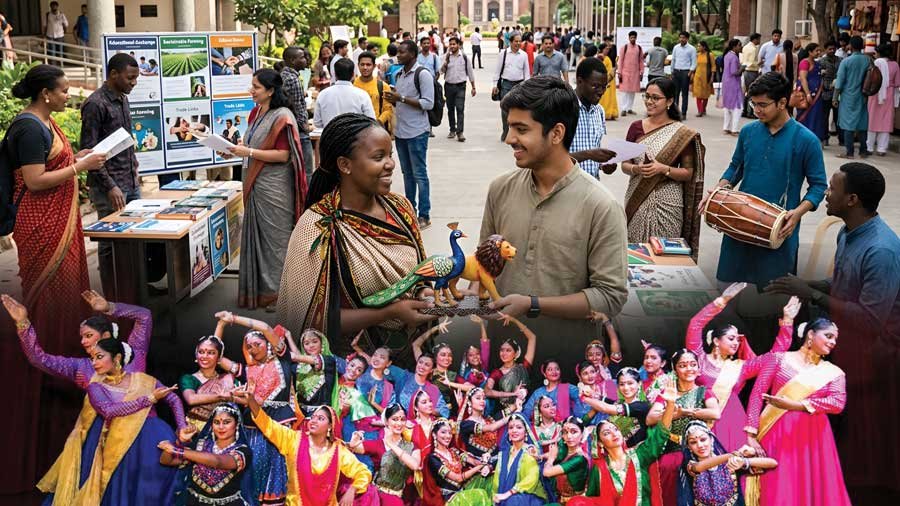
In the modern period, diplomacy goes beyond conventional political agreements and government negotiations. Diaspora communities, migration, educational exchange, and cultural connection increasingly influence international relations. These human-centred relationships play a major role in international political cooperation, social understanding, and economic cooperation. The changing relationship between Africa and India is one of the most dramatic instances of this change.
Stronger bilateral and multilateral ties between the two regions are being facilitated by the Indian diaspora in Africa and the increasing number of African students studying in India. These communities have developed into unofficial ambassadors promoting sustainable development and mutual understanding through trade, education, culture, and professional collaboration. Their function serves as an example of how educational exchange and diaspora diplomacy might influence future international collaboration in the Global South.
Diaspora as Diplomacy: How Indian Communities in Africa and African Students in India Are Shaping the Future
Due to networks of trade across the Indian Ocean, India has a long history in Africa. Many Indians moved to East and Southern Africa as workers, traders, and professionals during the colonial era. Indian communities eventually settled in South Africa, Kenya, Tanzania, Uganda, Mauritius, and Mozambique. These communities nevertheless maintain strong cultural and economic ties with India while making contributions to African economies and social development.
The Indian diaspora now plays a far wider role than only business. Healthcare, agriculture, infrastructure, information technology, and manufacturing are among the industries in which Indian-origin professionals and entrepreneurs have made investments. Their companies have enabled commercial linkages between India and African nations and produced job opportunities. Diaspora groups frequently serve as mediators in business and diplomatic relationships, fostering trust and minimising cultural misunderstandings because they are familiar with both Indian and African cultural contexts.
African students studying in India have grown to be a significant aspect of educational diplomacy at the same time. Due to its affordable education, English-medium instruction, technological advancements, and scholarship programs, India has become a popular destination for African students. Every year, thousands of students from Sudan, Tanzania, Ethiopia, Kenya, Nigeria, and Ghana enrol at Indian colleges.
These students represent more than just intellectual exchange. They interact with Indian institutions, society, and culture while they are in school, forming professional and personal ties that frequently last throughout their careers. Many graduates go on to hold prominent positions in African government agencies, academic institutions, corporations, and civil society organisations. Future cooperation initiatives, trade ties, and diplomatic interactions between the two regions are often facilitated by their acquaintance with India.
As a result, educational diplomacy has emerged as a key tool of soft power. In contrast to conventional diplomacy carried out through formal channels, educational exchange fosters enduring human ties. African graduates of Indian universities frequently keep up professional and academic relationships with Indian establishments, promoting collaboration in innovation, science, technology, and medicine. Both socially and politically, these connections improve bilateral ties.
India-Africa connections are further strengthened via cultural exchange. While African cultures are becoming more apparent in Indian academic institutions and metropolitan areas that host African students, Indian movies, music, food, literature, and yoga have become popular in many African countries. Academic forums, conferences, and cultural festivals foster intercultural communication and mutual understanding. These exchanges promote mutual respect and help dispel preconceptions.
Diaspora and student networks further strengthen economic collaboration between India and Africa. India is becoming one of Africa’s main trading partners, especially in the fields of energy, telecommunications, digital technology, and medicines. Due to their valuable cultural, linguistic, and professional experience, former students and diaspora entrepreneurs often establish commercial connections. Personal ties formed via migration or education can serve as the foundation for more extensive economic cooperation.
But there are still difficulties. While Indian populations in Africa have periodically faced political and economic problems, some African students in India have faced social discrimination and integration challenges. Governments and organisations must embrace inclusive policies that uphold equality, cultural awareness, and respect for one another if diaspora diplomacy is to continue to be successful. It is specifically the duty of educational establishments to provide secure and friendly surroundings for foreign students.
Despite these obstacles, people-to-people interaction seems to be more and more important for the future of India-Africa relations. International students and diaspora groups are proving that diplomacy is no longer just for state actors. In the twenty-first century, cultural collaboration, educational exchange, and human mobility are emerging as key foundations of international relations.
Conclusion
The power of human connection is increasingly influencing the interaction between Africa and India. African students in India and Indian diaspora communities in Africa are acting as conduits for economic, cultural, educational, and diplomatic engagement. Their efforts demonstrate the increasing significance of people-centred diplomacy and soft power in international affairs.
These networks provide an alternative diplomatic model built on understanding, collaboration in education, and shared development as the world faces geopolitical unpredictability and economic change. India and Africa have enormous economic and demographic potential, and future collaboration between them will probably depend not only on agreements between governments but also on the ongoing involvement of scholars, students, businesspeople, and expatriate populations.
In the end, diaspora diplomacy shows that common people can have enormous influence on global affairs. Indian communities in Africa and African students in India are contributing to the development of a more integrated and cooperative future between the two areas through cultural interchange, educational mobility, and economic cooperation.
References:



Leave a Reply