

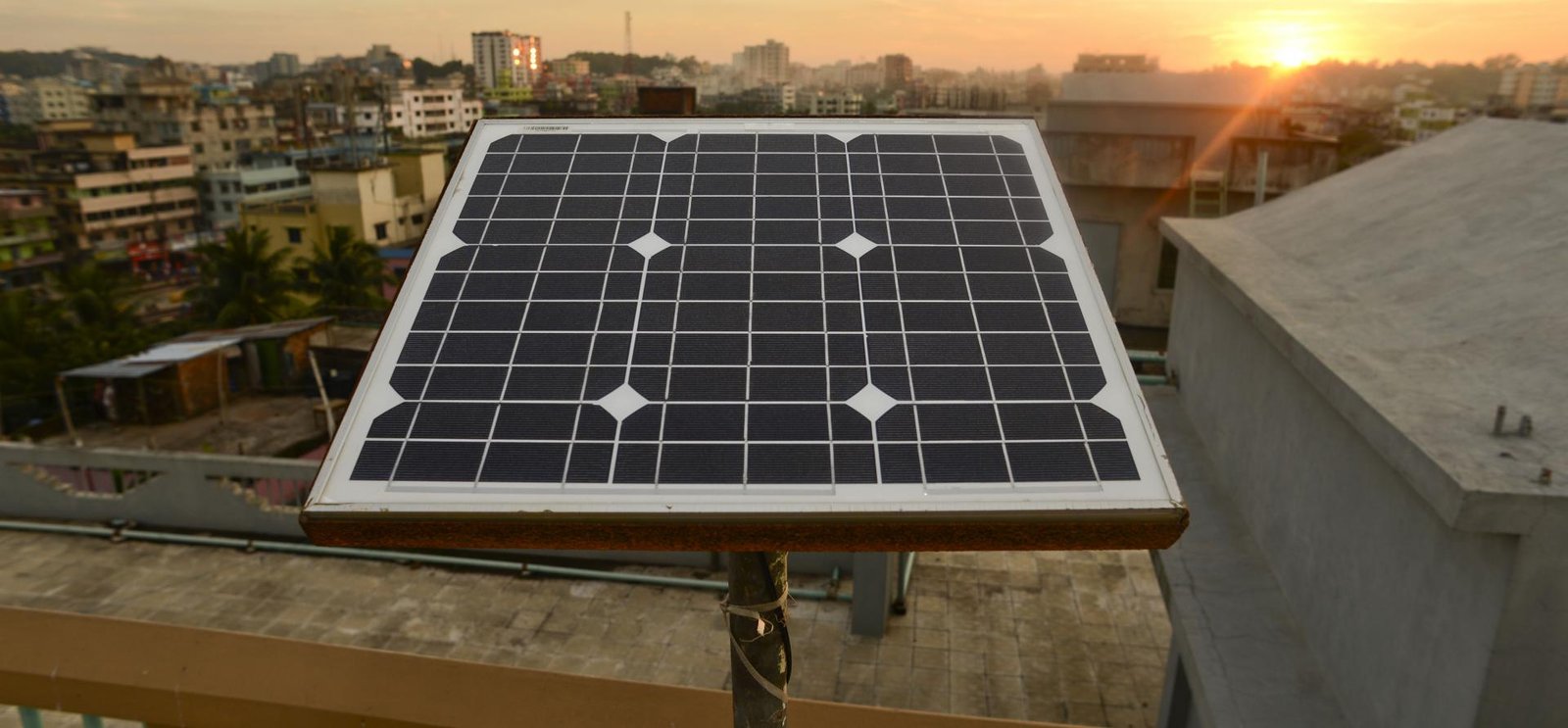
India is undertaking the world’s largest residential rooftop solar rollout through the PM Surya Ghar: Muft Bijli Yojana, which aims to solarise 1 crore households and could add approximately 30 GW of grid-connected capacity to distribution networks. At this scale, rooftop systems are no longer just consumer assets; they are embedded generators interacting continuously with the grid. Their performance, not merely their installation, will shape utility planning, power procurement, and network stability. Yet policy attention remains heavily focused on deployment, with far less emphasis on how these systems perform over their operational life.
The Legacy Performance Gap
Experience from earlier rooftop programmes shows that installed capacity does not automatically translate into delivered energy. Once commissioned, many systems receive minimal follow-up, allowing issues such as soiling, shading, equipment faults, or inverter shutdowns to persist undetected. Consumers typically lack the technical capability to diagnose underperformance, while utilities have limited visibility into plant-level output. As a result, generation shortfalls accumulate quietly, reducing expected savings for households and weakening the system’s contribution to the grid.
A major cause lies in the fragmented nature of existing monitoring arrangements. Many inverters either lack robust remote monitoring or transmit data only to manufacturer platforms. These systems record parameters such as generation, voltage, and current and transmit them via cellular or Wi-Fi networks to Original Equipment Manufacturer (OEM) servers, but there is no nationally authorised platform to aggregate and analyse performance across installations. Monitoring access is often bundled for a limited period linked to warranty terms; once subscriptions lapse, dashboards become inaccessible unless renewed by the consumer. The outcome is a landscape of isolated data streams with no common reference point for policymakers or utilities.
Infrastructure constraints reinforce this fragmentation, as India lacks a unified domestic repository for rooftop performance data, while differences in communication protocols, firmware, and hardware create incompatible formats. As data often flows through foreign servers, concerns around cyber risks, supply-chain vulnerabilities, data integrity, and external control over critical infrastructure intensify.
Connectivity as an Operational Constraint
Even where monitoring hardware exists, reliable communication cannot be taken for granted. Remote monitoring depends on stable internet connectivity through Wi-Fi, GSM, or dedicated data links, yet many installations, particularly outside major urban centres, experience inconsistent signal strength. Interruptions can leave monitoring systems offline for extended periods, preventing timely detection of faults or abnormal performance.
For grid-connected assets, this lack of continuous data has operational consequences. Utilities require near-real-time information to understand generation patterns, manage feeder loads, and anticipate variability. Without dependable communication channels, rooftop solar behaves as an unobservable resource.
Why Net-Meters alone are Insufficient
Most residential systems are equipped with bidirectional net meters that record electricity imported from and exported to the grid. While essential for billing, these devices measure only net exchange at the grid interface and do not capture total generation. Low exports, for instance, may result from reduced production, increased self-consumption, or equipment malfunction, scenarios that net meters cannot distinguish.
Dedicated generation meters provide the missing clarity by recording actual plant output. Without them, utilities cannot accurately assess performance or diagnose system issues. Some states, including Delhi, Gujarat, Maharashtra, and Haryana, have begun installing generation meters alongside net meters, but several large markets still rely primarily on net metering, limiting the depth of available data.
Practical Framework towards an Integrated & Scalable Remote Monitoring
Recognising these gaps, policymakers are moving toward standardised remote monitoring. Draft guidelines under the PM Surya Ghar: Muft Bijli Yojana propose a Remote Monitoring System (RMS) architecture based on inverter communication devices, dongles, or data loggers capable of securely transmitting generation data beyond proprietary platforms.
Pilot deployment initiatives wherein TERI is actively involved and working with some of the key stakeholders in the RTS sector illustrate how such a framework could evolve. One such initiative involves BSNL’s proof of concept using machine-to-machine SIM connectivity to transmit real-time generation data to domestically managed servers. A central dashboard enables continuous performance tracking, fault detection, and large-scale planning based on actual output rather than assumed capacity.
Private-sector efforts, including start-ups, are also emerging. Monitoring solutions developed by a start-up, Trillectric, combine smart-meter export data with inverter production data to generate feeder-level insights for distribution companies. These platforms identify voltage deviations and underperforming systems across networks, enabling targeted interventions before problems escalate. Automated commissioning records further create reliable digital asset registers for net-meter approvals and subsidy validation.
Collectively, such pilots demonstrate a distributed approach in which data from individual installations flows into interoperable platforms accessible to utilities and policymakers. Over time, these data streams could support utility-owned monitoring systems capable of scaling nationally while maintaining cybersecurity and domestic data governance.
Implications for Power Distribution Utilities
For DISCOMs, widespread rooftop adoption fundamentally alters load patterns. Daytime solar exports reduce grid demand, while evening consumption rises sharply once generation declines. Without accurate production data, utilities may miscalculate procurement needs, leading either to excess purchases at high cost or insufficient supply during peak periods.
Access to reliable telemetry improves demand forecasting, feeder planning, and network management. It also enables early identification of areas approaching technical limits due to high rooftop penetration. In this sense, monitoring converts a diffuse collection of consumer installations into a predictable component of the power system.
From Installation Incentives to Performance Incentives
Historically, rooftop solar incentives have prioritised capacity addition measured in kilowatts installed. While effective for accelerating adoption, this approach does not guarantee sustained energy delivery. As public taxpayers’ investment grows, aligning incentives with verified generation becomes increasingly important.
Performance-linked frameworks supported by generation meters and RMS data would distribute accountability across consumers, installers, and utilities. Installers would remain responsible for long-term system health, while consumers would receive assurance that promised savings are realised over time. Continuous monitoring would also enable prompt maintenance, reducing prolonged outages and equipment degradation.
India’s rooftop solar expansion represents a transformative opportunity, but its success ultimately depends on dependable electricity production rather than installation numbers alone. Counting panels may indicate progress, but measuring energy delivered will determine whether rooftop solar becomes a reliable pillar of the country’s power system or merely a symbolic addition to capacity.


Leave a Reply