

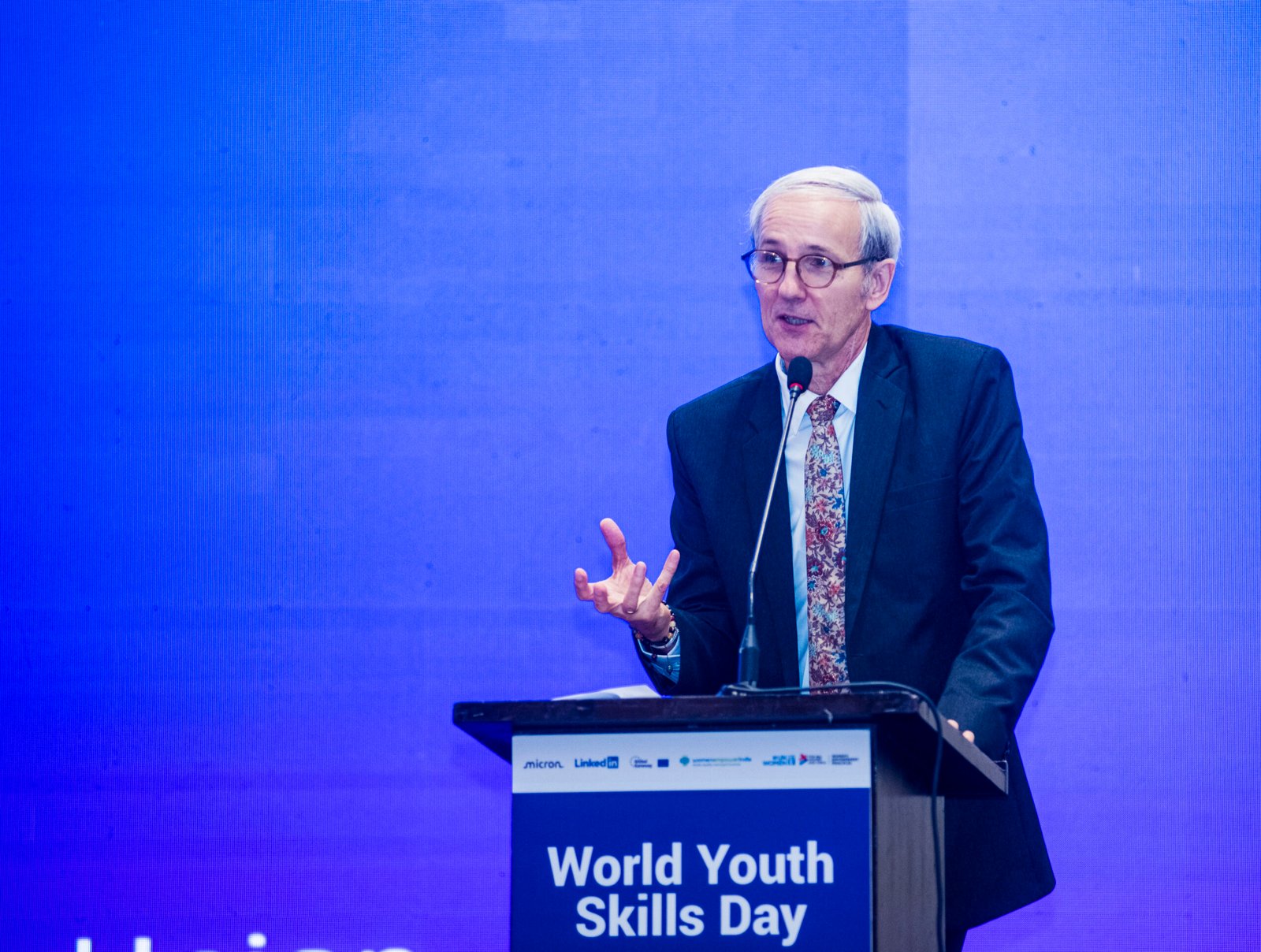
Emphasising that the future of work will be shaped by digital innovation, sustainability and inclusion, Mr. Laurent Le Danois, Team Leader, Cooperation Section, Delegation of the European Union to India and Bhutan, called upon young women to embrace emerging opportunities with confidence and become “drivers of change” in society.
Addressing the World Youth Skills Day celebration organised under the WE India Programme by UN Women India, Mr. Le Danois highlighted the European Union’s unwavering commitment to gender equality, youth empowerment and strengthening India’s skilling ecosystem through collaborative partnerships.
Referring to the rapid technological transformation taking place globally, Mr. Le Danois observed that artificial intelligence and digital technologies present immense opportunities for today’s youth.
“The world is changing through AI and digital technologies. It may seem challenging, but for your generation it is also an extraordinary opportunity. Challenges exist for everyone, but opportunities exist for everyone too.”
He encouraged young people to approach change with optimism and adaptability, stressing that success often depends on one’s mindset. “It is very much a mindset issue, how you look at things. Be open, be positive and keep learning.”
Acknowledging the support provided by governments, educational institutions, development partners and civil society organisations, he noted that inclusion cannot happen in isolation.
“Inclusion does not happen on its own. It requires partnerships, with institutions, with governments, with communities and with families, to ensure every young woman has the opportunity to participate fully in society.”
Speaking about the twin transitions towards a green and digital economy, Mr. Le Danois said these global shifts must create opportunities rather than deepen existing inequalities.
“The green and digital transitions are challenges for all of us, but they are also opportunities. We must ensure they do not reproduce inequalities. Young women can and should be drivers of change.”
Highlighting the European Union’s global commitment to gender equality, he referred to the EU Gender Action Plan III (GAP III), which places women’s economic empowerment and social rights at the heart of the EU’s external partnerships.
Mr. Le Danois also underscored the importance of integrating gender responsiveness into investment and development programmes.
“Gender responsiveness cannot be an afterthought. It must be built into programmes from the beginning so that investments create meaningful opportunities for women and young people. We have to be accountable for those outcomes.”
Speaking about the EU-supported WE India Programme, implemented by UN Women India, he said the initiative brings together governments, educational institutions, communities and the private sector to expand women’s access to quality skills, entrepreneurship and decent employment.
He also emphasised that economic participation must be accompanied by safe working environments.
“Women need safe workplaces where they can work with dignity and confidence. Safe mobility and safe working environments are essential for true economic empowerment.”
Reaffirming the strategic partnership between India and the European Union, Mr. Le Danois referred to the growing cooperation across multiple sectors following the recent EU–India Leaders’ Meeting and ongoing efforts to deepen bilateral engagement.
“We do not work for India; we work with India as partners. Together we can build solutions that create lasting opportunities for young people and women.”


Leave a Reply