

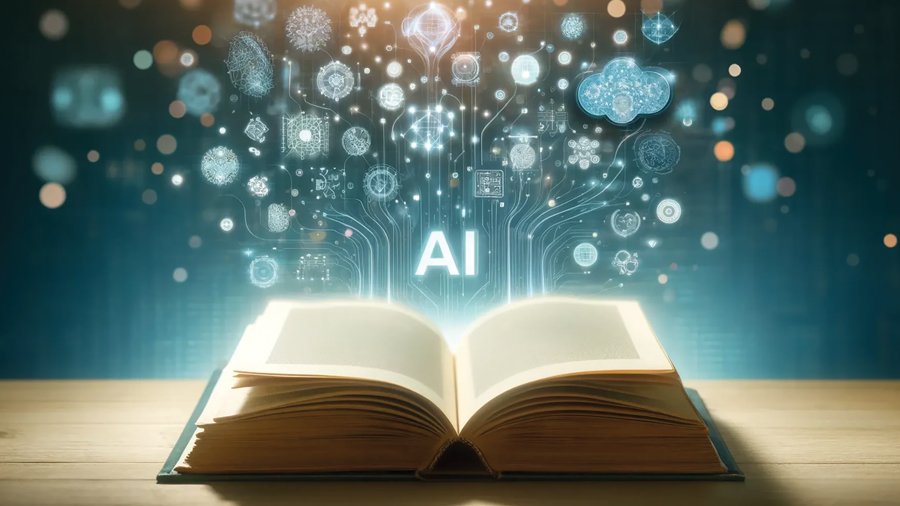
As we enter the year 2026, artificial intelligence has taken a strong foothold in everyday life. The capabilities of AI to answer questions, generate ideas, summarise information, and simulate human conversation are stunningly effective. However, even with all these technological advancements, I believe books will always be the best teachers.
I am an author, a business owner, and a student of psychology with decades of experience observing human relationships. I have learned that knowledge does not necessarily create wisdom; rather, it is through reflection, empathy, personal experience, and an understanding of the complex nature of humanity that we become wise individuals. Books continue to provide us with the ability to think, feel, question, and grow, qualities that cannot be accomplished simply by clicking a button for instant answers.
AI very often gives answers that suit the person asking, and not necessarily ones that are correct or unbiased. Thus, the importance of books has not diminished; rather, it has increased.
Books represent something we can relate to on a personal level because they have been created by people who have lived and experienced the world. They have been written over many years about all sorts of people’s experiences, failures, and emotional ups and downs. When we read a novel, memoir, or other works of non-fiction, we are not merely reading a collection of facts; we become part of another person’s world. We experience their successes and failures, and we see the world through their eyes. Books tell us about the unique experiences of individuals, reminding us that every fact is rooted in the life of a living, breathing person, something that no machine or AI can truly replicate.
The abundance of opinions, recommendations, and algorithm-driven content inundates people with information in today’s digital environment. Because of their depth and length, books require both patience and active participation from the reader. They encourage readers to analyse different points of view and arrive at their own conclusions. Reading challenges the mind. It allows time for reflection in a way that short-form content rarely does. The future will belong to individuals who can think critically and creatively about the information available to them, rather than simply consume it. Books help develop this ability.
Technology may be capable of processing language, but it will never be able to understand the emotions behind it. One of the greatest gifts of reading a book is the development of emotional intelligence. Through the characters in a story, readers learn about love, grief, betrayal, ambition, fear, and hope. As a result, they gain a deeper understanding of others’ motivations, feelings, and decisions, which may differ from their own. Emotional intelligence is essential in a world that is becoming increasingly less human, and it will remain one of the most important human qualities in an automated future. Reading is still the best way to develop emotional intelligence.
Today, we have access to countless sources of information, yet true wisdom has become increasingly elusive because it requires much more time and effort to acquire. Every book is the result of years, sometimes even decades, of intensive work by its author, including research, observation, and contemplation. Authors not only present information but also offer readers insight into not only what happened in history, but how and why events unfolded as they did. They uncover universal patterns of human behaviour, relationships, leadership, success, failure, and perseverance.
As an entrepreneur and author, I can attest first-hand that some of life’s most valuable lessons cannot simply be learned from statistics; they can only be understood through lived experiences, stories, and thoughtful introspection. Books preserve and pass these lessons from one generation to the next.
Books have preserved the memory of humankind long before the advent of the internet. They have not only kept civilisations alive but have also safeguarded their traditions, philosophies, and histories. Today, books continue to serve these vital functions. In an age when digital media can disappear, change, or become buried beneath an overwhelming volume of new information, books provide permanence.
AI is an incredible technological advancement. By increasing the speed and efficiency of our work and research, it gives us access to an unprecedented wealth of information. One major difference between books and AI, however, is that books help us think critically, challenge our assumptions, and consider multiple perspectives. AI serves primarily as a tool to provide quick answers and process information efficiently. Books, on the other hand, help us process and interpret what we learn through AI. Future generations will face the challenge of using both books and AI in an integrated manner that maximises the value of each.
What makes reading even more special is the invisible bond that forms between the reader and the author. The moment you open a book, you begin a dialogue with someone that transcends geography and time. It no longer matters where the author lived, where they came from, or how many years have passed since the book was published. An author’s thoughts and ideas can live on indefinitely, continuing to inspire readers long after their lifetime. Knowing that an author’s experiences, emotions, and ideas can still enrich our lives, even if we never meet them, is a tremendous gift. Creating this bond is one of humanity’s greatest achievements.
The use of artificial intelligence will undoubtedly change the way we live, work, and learn. AI will become faster, more intelligent, and increasingly integrated into our daily lives. Books, however, will remain a constant because they serve a purpose that technology alone cannot fulfil: they offer empathy, wisdom, reflection, imagination, and genuine human connection. While AI has the potential to be a remarkable resource for gathering and delivering information, books will continue to teach us something even more important, how to live.



Leave a Reply