

The year 2026 marks a historic milestone in Viet Nam–India relations. Ten years after the establishment of the Comprehensive Strategic Partnership in 2016, the two countries have elevated their relationship to an Enhanced Comprehensive Strategic Partnership during the State Visit of General Secretary and President To Lam to India from 5–7 May 2026. This upgrade reflects not only the deep mutual trust between the two nations but also a shared determination to strengthen substantive cooperation in trade, investment, technology, innovation and supply-chain resilience.
The visit carried special significance as it concluded in Mumbai, India’s financial and commercial capital. This choice symbolized a clear message: the next chapter of Viet Nam–India relations will be increasingly driven by business, investment and economic connectivity. High-level political commitments now require practical implementation, and the Viet Nam Trade Office in India stands at the forefront of transforming these commitments into tangible opportunities for enterprises from both countries.
As the commercial arm of the Embassy of Viet Nam in India, the Trade Office serves as a bridge connecting businesses, institutions and policymakers, while actively supporting the realization of the ambitious bilateral trade target of USD 25 billion by 2030.
A Dynamic and Expanding Economic Partnership
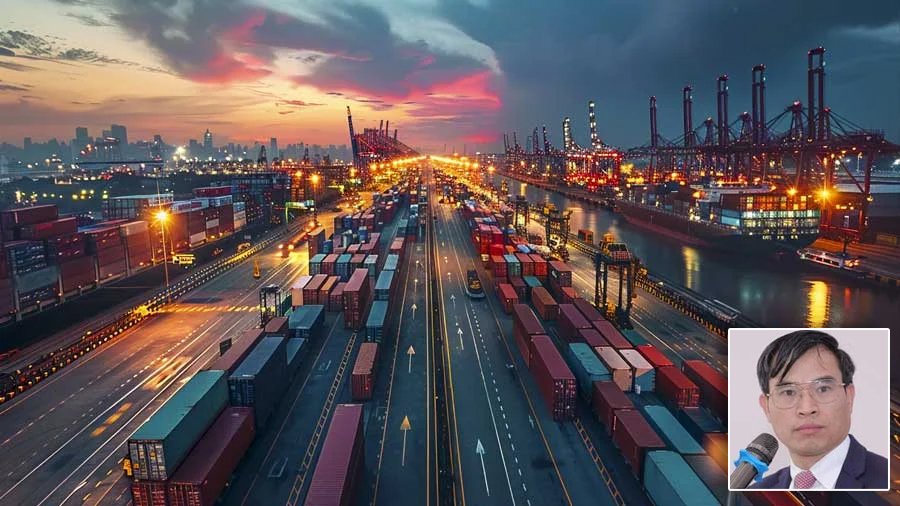
The economic relationship between Viet Nam and India continues to demonstrate remarkable resilience and growth. Bilateral trade reached a record USD 16.46 billion in 2025, representing a year-on-year increase of 10.5%.
Growth accelerated further in the first five months of 2026. According to data from the General Department of Viet Nam Customs, two-way trade reached nearly USD 8.37 billion, an increase of 28.4% compared to the same period in 2025. Viet Nam’s exports to India totaled approximately USD 4.94 billion, up 19%, while imports from India reached around USD 3.43 billion, reflecting strong growth in industrial inputs and raw materials required for Viet Nam’s expanding manufacturing sector.
The composition of trade demonstrates the increasingly complementary nature of the two economies. Viet Nam’s major exports to India include electronics, mobile phones and components, computers and electronic products, machinery and equipment, steel products, chemicals, wood products, footwear, coffee, pepper and other agricultural commodities. During the first five months of 2026, electronics and machinery remained key drivers of export growth, highlighting Viet Nam’s growing role in regional manufacturing value chains.
India, meanwhile, plays a vital role in supplying Viet Nam with steel, chemicals, pharmaceuticals, textile materials, animal feed ingredients, seafood products and other industrial inputs. This balanced and mutually beneficial trade structure provides a strong foundation for sustainable long-term growth.
Investment cooperation is also gaining momentum. As of May 2026, Indian investors maintained over 500 active projects in Viet Nam with registered capital exceeding USD 1.17 billion. At the same time, Vietnamese enterprises are increasingly exploring opportunities in the Indian market. The planned electric vehicle investment by Vingroup in Tamil Nadu, alongside broader ambitions to expand its presence in India, reflects growing confidence among Vietnamese companies in India’s long-term economic potential.
State Visit Outcomes: Building New Pillars of Cooperation
The State Visit of General Secretary and President To Lam produced a series of practical outcomes that will shape economic cooperation for years to come. Thirteen agreements and cooperation documents were signed across multiple sectors, creating new frameworks for collaboration.
Particularly significant were agreements in financial innovation and digital payments. Cooperation between the Reserve Bank of India and the State Bank of Viet Nam, together with the partnership between NPCI International Payments Limited and NAPAS, will facilitate cross-border QR-code payment interoperability, reducing transaction costs and improving convenience for businesses and tourists.
Cooperation in pharmaceuticals and healthcare was strengthened through collaboration between India’s Central Drugs Standard Control Organization and Viet Nam’s Drug Administration, creating opportunities for increased pharmaceutical trade and regulatory cooperation.
The two countries also agreed to deepen cooperation in critical minerals, rare earths and strategic supply chains, sectors that are increasingly important for global technology and energy transitions.
Agricultural market access achieved notable progress. Viet Nam officially opened its market to Indian grapes, while India opened access for Vietnamese durian. Discussions are also advancing on market access for Vietnamese pomelo and Indian pomegranate, demonstrating the commitment of both governments to remove barriers and expand trade opportunities.
A highlight of the visit was the Viet Nam–India Business Forum held in Mumbai, which attracted nearly 400 leading enterprises, investors and business organizations from both countries. The forum demonstrated a shift from traditional trade relations toward deeper cooperation in innovation, research and development, advanced manufacturing and emerging technology sectors.
During the preparation and implementation of activities surrounding the visit, the Viet Nam Trade Office actively coordinated with major Indian corporations in renewable energy, biofuels, green hydrogen, logistics, ports, infrastructure and high technology. The Trade Office provided market intelligence, arranged business meetings, facilitated partner matching and coordinated investment discussions, helping transform political goodwill into concrete commercial opportunities.
The Trade Office also supported working sessions involving VINACHEM, enterprises in the fertilizer and chemical sectors, and delegations from Ho Chi Minh City seeking partnerships in energy, infrastructure and industrial development.
New Growth Drivers and Strategic Opportunities
Looking ahead, several sectors offer particularly promising opportunities for bilateral cooperation.
Manufacturing and supporting industries remain a priority area. As global companies diversify supply chains, Viet Nam and India are increasingly positioned as complementary manufacturing hubs. Cooperation in electronics, automotive components, electric vehicles and industrial machinery can strengthen regional production networks and enhance competitiveness.
The digital economy represents another major growth frontier. Artificial intelligence, fintech, data centers, cybersecurity and digital services are areas where India’s technological strengths and Viet Nam’s rapidly expanding digital market create significant synergies. The growing startup ecosystems in both countries also provide opportunities for innovation partnerships and venture investment.
Renewable energy and green technologies have emerged as strategic priorities. India has developed substantial expertise in solar energy, biofuels and green hydrogen, while Viet Nam is pursuing ambitious energy transition goals. Cooperation in these sectors can support sustainable development objectives in both countries.
Traditional sectors continue to offer considerable potential. Agriculture, seafood, food processing and pharmaceuticals remain important pillars of cooperation. Rising consumer demand, expanding middle-class populations and increasing food security concerns create favorable conditions for greater trade in agricultural and food products.
Logistics, warehousing and e-commerce infrastructure also deserve greater attention. Enhanced connectivity between Mumbai and Ho Chi Minh City could become a major economic corridor linking South Asia and Southeast Asia.
Addressing Barriers Through Practical Solutions
Despite strong momentum, several challenges continue to constrain bilateral trade and investment.
Businesses frequently cite logistics costs, limited direct shipping routes, insufficient air connectivity, regulatory complexity and differing standards requirements as key obstacles. Technical regulations, sanitary and phytosanitary measures, certification procedures and market information gaps also create challenges, particularly for small and medium-sized enterprises.
The Viet Nam Trade Office has been actively working to address these issues. One notable example is its support for VinFast and Green SM in navigating regulatory procedures and market-entry challenges in India. The Trade Office has also assisted Vietnamese enterprises in resolving commercial disputes, and understanding local legal frameworks.
In response to increasingly stringent technical requirements in India, particularly regarding Bureau of Indian Standards (BIS) certification, the Trade Office has engaged directly with Indian consulting firms, certification bodies and regulatory authorities to identify practical solutions for Vietnamese exporters.
The Trade Office has also closely monitored trade remedy investigations, including India’s countervailing duty investigation concerning calcium carbonate filler masterbatch products. Through cooperation with legal consultants, Indian authorities and Viet Nam’s trade remedy agencies, timely information and guidance have been provided to affected enterprises.
At the policy level, both governments have committed to accelerating the review of the ASEAN–India Trade in Goods Agreement (AITIGA), improving regulatory harmonization, expanding agricultural market access and strengthening supply-chain connectivity.
The Trade Office: A Trusted Partner for Business
The Viet Nam Trade Office in India provides a comprehensive range of services to support enterprises seeking to enter or expand in either market. The Trade Office also facilitates connections with government agencies, industry associations and potential partners.
Success depends on strong institutional cooperation. Therefore, the Trade Office works closely with the Embassy of Viet Nam in India, the Consulate General of Viet Nam in Mumbai, business chambers, sectoral associations and relevant authorities in both countries to ensure continuity and long-term effectiveness.
Enterprises seeking support may contact the Trade Office at: trade@vietnamembassydelhi.in.
Looking Ahead: From USD 25 Billion to Greater Ambitions
The road toward USD 25 billion in bilateral trade by 2030 is both ambitious and achievable. Realizing this vision will require sustained engagement from governments, businesses and institutions on both sides.
Vietnamese exporters should view India not only as one of the world’s fastest-growing major economies but also as a strategic market with enormous long-term potential. Indian companies, meanwhile, should increasingly regard Viet Nam as a gateway to ASEAN, a manufacturing platform connected to global value chains and a trusted partner in the Indo-Pacific region.
The Viet Nam Trade Office strongly encourages Indian enterprises to participate in Viet Nam International Sourcing 2026, scheduled from 3–5 September 2026 in Ho Chi Minh City. Organized by the Ministry of Industry and Trade of Viet Nam, the event will feature more than 600 exhibition booths, welcome approximately 450 international buying delegations and facilitate over 3,000 direct business-to-business meetings.
The future of Viet Nam–India economic cooperation will not be built solely through agreements and declarations. It will be built through thousands of business partnerships, investment projects and commercial transactions. The Viet Nam Trade Office remains committed to serving as a proactive bridge between the two business communities, helping transform the vision of the Enhanced Comprehensive Strategic Partnership into practical and lasting prosperity for both nations.



Leave a Reply