

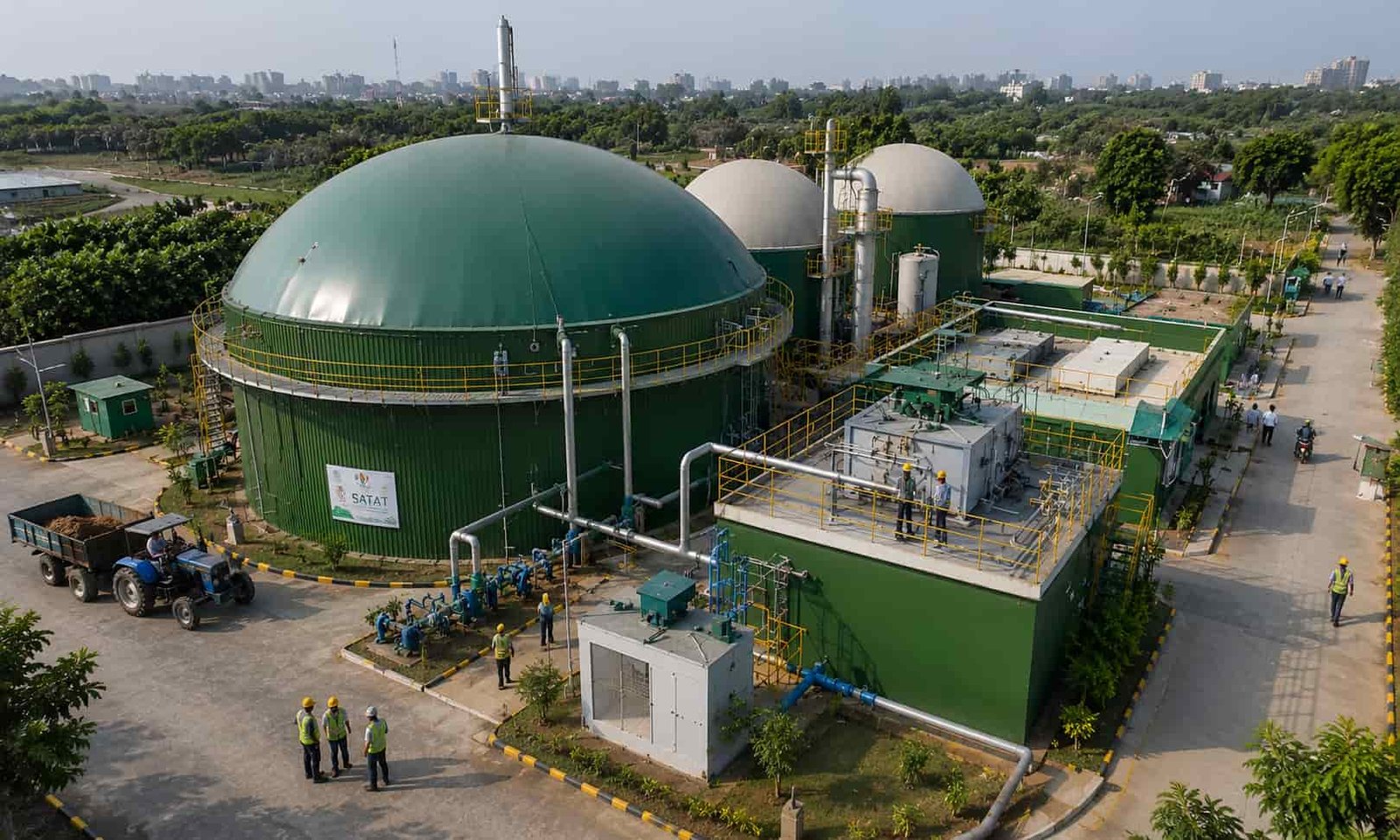
India cannot reach its compressed biogas (CBG) ambitions by building plants alone. The country has enough agricultural waste, animal dung and urban solid waste. What it lacks is a proper system to collect, transport and store that waste, so that it reaches plants in the right quantity, quality and price. This is the hidden infrastructure problem of the bioenergy transition, and the next step in CBG policy must be a shift from a plant-centric to a supply-chain approach. A plant’s success depends not only on the digester but also on farms, collection centres, rural roads, storage, municipal waste systems and local services that keep it supplied all year.
Energy security beyond imports
The urgency goes beyond energy policy. International energy supply lines have proved inadequate against geopolitical tensions, shipping disruptions and trade conflicts. The New Delhi Declaration, adopted at the recent BRICS summit, echoed this concern. It stressed stable energy markets, uninterrupted flows of energy from diverse sources, reliable infrastructure and closer cooperation on energy supply chains. It also named bioenergy and other low-carbon technologies as part of the answer to energy security, alongside sustainable development.
For India, this calls for a wider view of energy security. Securing crude oil and gas imports and holding strategic stocks will remain essential. Yet agricultural waste, cow dung and organic municipal waste are still seen mainly as a disposal problem. Processed properly, they become CBG feedstock, with organic fertiliser as a by-product.
The Union Cabinet’s approval of the Galvanizing Organic Bio-Agro Resources Dhan (GOBARdhan) scheme, with an outlay of over Rs 23,731 crore, gives strong backing. The scheme offers assured offtake, pricing support, financial assistance, pipeline connectivity, credit facilitation and feedstock arrangements. No amount of money, however, can stand in for a reliable biomass supply.
Where the chain breaks
A CBG plant is not a standalone energy project. It is the hub of a local supply chain linking farmers, dairy cooperatives, municipalities, waste contractors, aggregators, transporters, storage operators, gas buyers and buyers of organic fertiliser — if any link fails, the plant is unviable even when the technology works and a buyer for CBG exists.
The collection phase is the first difficulty. Agricultural waste is spread over thousands of farms and is usually available only for a short time after harvest. It must be collected, separated from contaminants, baled or processed, moved to an aggregation point and stored until use. Cow dung and wet biomass need more frequent collection. Seasonality shapes the economics: biomass is available for a few weeks, but a plant needs feedstock every day of the year. Working capital, storage and forecasting therefore decide whether a digester runs efficiently.
Regional biomass estimates can also be misleading. Not all waste is commercially recoverable. Farmers may need it for animal feed, soil incorporation and other uses, and labour, moisture, contamination, distance and transport costs can erode viability.
India’s pipeline shows the gap between ambition and delivery. As of 6 August, the national portal listed 1,908 registered CBG plants, of which 217 were operating and 339 were under construction. The gap does not by itself prove that feedstock is the constraint, since financing, approvals, construction, technology and offtake can all cause delay. It does show that registered capacity is not operational capacity.
Plan the supply before the plant
Commercial planning must start before construction. Project approvals should be tied to district-level biomass mapping, seasonal availability, competing uses, collection costs, road connectivity, storage capacity, plant location and the market for digestate. Every project should show a credible feedstock plan, named aggregation partners, storage arrangements, quality protocols, an offtake agreement and a market for organic manure before work begins.
Farmer producer organisations (FPOs), dairy cooperatives, panchayats, self-help groups and rural entrepreneurs can link scattered suppliers to large companies. They can organise farmers, manage collection machinery, run aggregation centres, enforce quality and pay on time. Public support should therefore reach beyond digesters to baling equipment, short-haul transport, covered storage and working capital.
Finance must also recognise the role of aggregation. Local aggregators are commercially vital but may lack the collateral needed for conventional loans. Loan guarantees, equipment leasing and working capital loans could close that gap.
The economics of CBG also depend on what happens after digestion. If digestate cannot be sold or disposed of, a revenue stream becomes a cost. Projects need ties with farm extension services, fertiliser supply chains and soil health programmes, and standards, testing and certification can give organic fertiliser a stable market.
Partners abroad, coordination at home
International cooperation can strengthen this ecosystem but cannot replace domestic logistics. At their annual summit in New Delhi in July 2026, India and Japan agreed to deepen energy security cooperation and launched the Cooperative Biogas for Growth Initiative, which envisages 1,000 biogas plants in India. Results should be judged by operational metrics, not by counting new facilities. Pilot districts can link communities, milk producers, municipalities, collection centres, plants, gas suppliers and agricultural markets, and be assessed on plant utilisation, feedstock cost and quality, methane leakage and reliability of gas supply.
BRICS offers another forum for practical learning. Brazil’s experience with biofuels shows how much energy production depends on agricultural supply and logistics, while China’s rural biogas record teaches the value of decentralised collection and local service organisations.
The harder coordination must happen inside India. Petroleum, agriculture, rural governance, urban local bodies, state governments, city gas distributors, banks and developers work in separate administrative and commercial silos. A developer may win approval but lack segregated waste. A farmer may be willing to supply residue but lack machines and a transparent payment mechanism. A gas distributor may want CBG but face delays in pipeline connectivity.
The measure of success should be plants that operate, pay suppliers on time, maintain feedstock quality, sell their gas and use their digestate, not the number registered. GOBARdhan can set the policy framework, Japan can bring technology and finance, and BRICS can widen cooperation among emerging economies. India still has to build a domestic logistics network that carries biomass from scattered sources to plants all year round — the bioenergy transition will happen not only inside digesters but on farms, on roads and in city infrastructure.




Leave a Reply