

Introduction
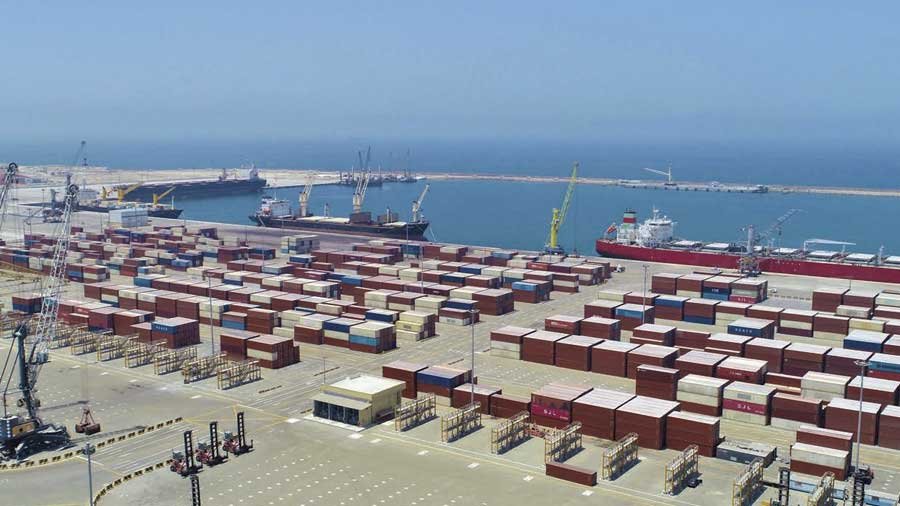
Amidst the continuing uncertainty in West Asia, as well as the end of the sanctions waiver pertaining to the strategically important Chabahar Port project (Iran) – in April 2026 — India is working on the logistics of handing over the Shahid Behesti terminal to the Iranian government. While doing so, New Delhi will ensure adequate safeguards so that the project is handed back over to India once the situation in West Asia improves and issues pertaining to US sanctions vis-à-vis Iran are addressed.
India’s interest in the Chabahar Port project goes back to the early 2000’s
India has been showing interest in the Chabahar Project over the past two decades and the two countries had first signed an MoU for the promotion of the Chabahar Project in 2003. India has also funded the Delaram-Zaranj Highway in Afghanistan. This project which was completed in 2009 was important, because Zaranj connects with Zahedan which ultimately connects with Chabahar. India understands the importance of the 700-kilometre Chabahar-Zahedan rail corridor and has shown interest in expediting work on the project, but the geopolitical turmoil in the region – ever since February 28, 2026 — has acted as a major road bloc to the same.
India’s growing interest in the project over the past decade
Over the past decade, India has invested significantly in the strategically important Chabahar Port project (located in the Sistan-Baluchestan Province). During PM Modi’s Iran visit in May 2016, India signed an agreement for trilateral connectivity with Afghanistan and Iran. PM Modi who signed the agreement with then Iranian President Hassan Rouhani and Afghanistan President, said that the agreement had the potential of changing ‘the course of history in the region’, while Hassan Rouhani said that the agreement was an important development in the context of ties between the three countries and firmly reiterated the point that regional progress was only possible through “joint cooperation and utilising regional opportunities.”
The Chabahar Port is important, since it is India’s gateway to Afghanistan. The Port enables India to bypass Pakistan, which has refused to grant India overland transit access to Afghanistan. The Chabahar Port is also less than 100 miles from the strategically important Gwadar Port an important component of the China Pakistan Economic Corridor (CPEC).
In 2016, India committed $85.21 million and a $150 million credit line to Chabahar in 2016. The first phase of the project was inaugurated in December 2017. In December 2018, India Ports Global Limited (IPGL) took over interim control of Shahid Behesti terminal.
Even after the US pulled out of the JCPOA in 2018, India was granted a sanctions waiver for the Chabahar Port till September 2025. After the revocation of this waiver, India got another extension for 6 months from October 2025 till April 2026. In 2024, IPGL signed a 10-year contract with the Port & Maritime Organization (Iran) to run the Shahid Beheshti terminal, adding a $120 million equipment commitment.
Despite the uncertainty in Iran-US ties – which was prevalent even before the conflict broke out in March 2026 — both India and Iran have given immense emphasis to the Project. External Affairs Minister, S Jaishankar while paying tributes to Iranian President Ebrahim Raisi (2021-2024) and Foreign Minister Amir Abdollahian (2021-2024) who died in a crash in May 2024 highlighted the point that both were key architects of the 10 year deal between India and Iran for running the Shahid Behesti terminal.
In the aftermath of the West Asia conflict, PM Modi has spoken on more than one occasion to Iranian President Masoud Pezeshkian, while External Affairs Minister S Jaishankar has spoken on several occasions, and met with Iran’s Foreign Minister Abbas Araghchi. The importance of the Chabahar Project has been highlighted as an important dimension of the bilateral relationship. During his visit to India for the BRICS Foreign Ministers’ meeting, in May 2026, Araghchi while commenting on the Chabahar project dubbed it as an important “symbol of cooperation” between India and Iran. He also said:
“..India played an important role in the development of that port. It has now somehow slowed down because of the US sanctions, but I am confident that this port will be like a Golden Gate for India to access Central Asia, and then Europe through this transit route. So I hope that Indians will continue their work in the Chabahar port, so that it will be fully developed at the service of the interests of India and other countries around.”
During Iranian President, Masoud Pezeshkian’s visit to India in connection with the BRICS Summit, the progress of the project is likely to be discussed
The importance of Chabahar in the context of India-Afghanistan economic ties
In recent years, the Chabahar Port has been playing an important role in the context of India-Afghanistan economic relations. This has been even more so after India-Afghanistan trade via Pakistan stopped – in the aftermath of tensions between India and Pakistan. Here it would be pertinent to mention that ties between Afghanistan and Pakistan have also witnessed a downward slope in the previous year. During his visit to India, in November 2025 Afghanistan’s Commerce and Industry Minister Alhaj Nooruddin Azizi pitched for the expansion of the Chabahar Port.
In 2025-2026, India-Afghanistan bilateral trade stood at $907.85 million. India has also used the Chabahar Port for transportation of relief materials to Afghanistan on more than one occasion.
The Chabahar Port is also important in the context of the International North-South Transport Corridor (INSTC_ project which is important for India and Russia. The INSTC project is a 7200 kilometre project which will connect India to Europe, via Russia. An agreement pertaining to the creation of the INSTC was first signed in 2000 and later Azerbaijan, Belarus, and Central Asian nations also got on board. In 2016, an MoU agreement was signed between India and Iran for linking Chabahar with INSTC. In 2024, trade between India and Russia via the INSTC witnessed a significant rise.
The INSTC is of immense significance for India, Iran, Russia and Central Asia.
In conclusion, the Chabahar Port project is important for several reasons as has been discussed earlier in the article. While for now, India will look for an arrangement for handing over the project, with the objective of circumventing sanctions. Once US sanctions vis-à-vis Iran ease out and the situation in West Asia stabilises, New Delhi is likely to give high priority to the project.



Leave a Reply