

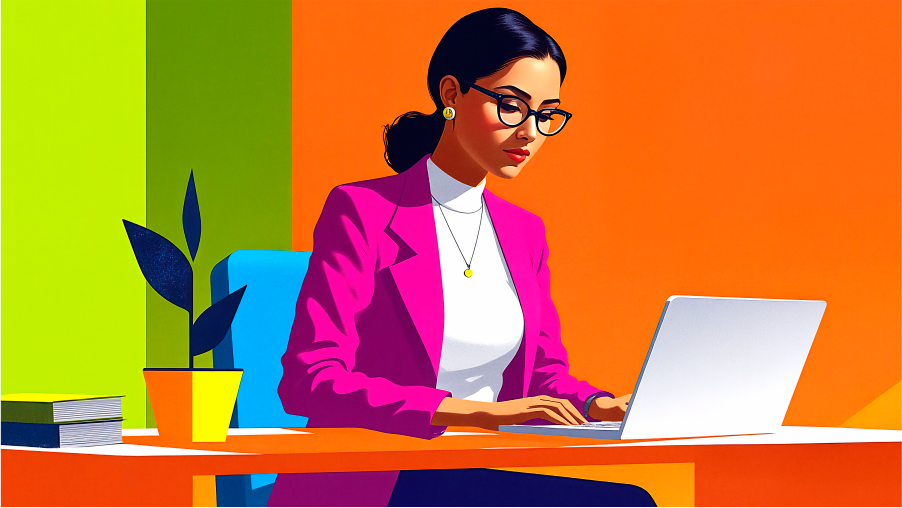
The modern workday feels natural today — clock in at 9, leave at 5, repeat five days a week. It is treated as a universal structure of productivity. Yet historically, the famous 9–5 work model was never designed with women in mind.
It was built for a very specific worker: a man with a full-time caregiver at home.
The origins of the modern workplace lie in the Industrial Revolution of the 19th century, when factories replaced agrarian economies. Work moved out of homes and into centralised industrial spaces. Labour systems became standardised to maximise efficiency — fixed hours, strict supervision, and physical presence.
By the early 20th century, labour movements in Europe and North America successfully campaigned for shorter working hours, leading to the institutionalisation of the eight-hour workday. While this was a major social victory, it quietly assumed a gendered social arrangement: men worked for wages, women managed unpaid domestic labour.
The workplace and the home became separate worlds.
Throughout much of the 20th century, women’s work — childcare, elder care, cooking, emotional management, and household organisation — remained economically invisible despite being essential to sustaining the workforce itself. Economists later described this as the “second shift,” where women participated in paid employment while continuing unpaid responsibilities at home.
Even when women entered professional spaces in large numbers during and after World War II, workplace structures barely changed. Office timings, career progression models, travel expectations, and promotion systems continued to reflect uninterrupted career paths — something historically easier for men who were not expected to pause work for caregiving.
The result was not exclusion by rule, but mismatch by design.
Research across OECD countries today shows that women still perform significantly more unpaid care work than men, even when employed full-time. The rigid 9–5 schedule often collides with school hours, caregiving demands, and reproductive health realities — factors rarely considered when workplace norms were created.
Ironically, technology has exposed this structural flaw. Remote work during the COVID-19 pandemic demonstrated that productivity does not always depend on physical presence or fixed hours. Flexible schedules, hybrid work, and outcome-based evaluation systems revealed that many long-standing workplace practices were cultural habits rather than operational necessities.
The conversation has since shifted from work-life balance to workplace redesign.
Increasingly, organizations are experimenting with flexible hours, parental leave policies for all genders, caregiving support, and results-driven performance models. These changes are not merely accommodations for women; they represent a broader rethinking of how modern societies define productivity itself.
Because the question is no longer whether women can adapt to the workplace.
It is whether workplaces can evolve to reflect the realities of the people who sustain them.
The future of work may ultimately move away from the rigid industrial timetable toward systems that recognize human complexity — caregiving, wellbeing, creativity, and collaboration.
After all, the most enduring institutions are not those that resist change, but those redesigned for everyone.


Leave a Reply