

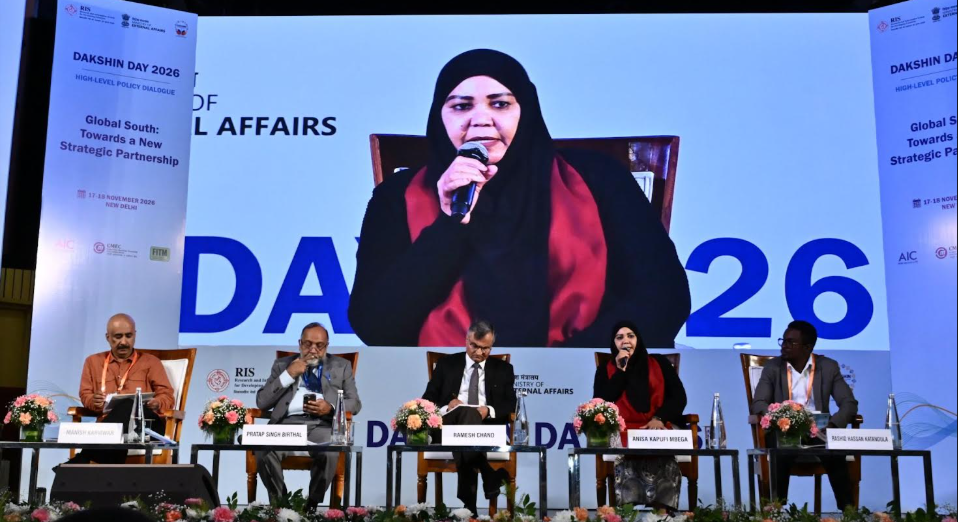
High Commissioner Anisa Kapufi Mbega calls for technology transfer, agro-processing and investment to turn agricultural potential into shared prosperity.
Agriculture must become a driver of structural transformation in India–Tanzania relations, moving bilateral cooperation beyond the traditional exchange of raw commodities towards technology, local processing and greater value creation, said H.E. Ms. Anisa Kapufi Mbega, High Commissioner of Tanzania to India, at DAKSHIN Day 2026 in New Delhi on 17 November.
Speaking during the session on *Food, Agriculture and Rural Transformation* at the India Habitat Centre, the High Commissioner highlighted agriculture as a vital pillar of Tanzania’s economy and a major source of livelihoods, particularly for rural communities. She said Tanzania’s priority was to strengthen smallholder farmers through improved technology while developing domestic industries capable of processing agricultural produce into finished goods.
“Tanzania, we see agricultural partnership with India as an opportunity to shift or move away from their long-term traditional trade and development assistance towards structural transformation,” she said.
Recalling the state visit of Tanzanian President Dr. Samia Suluhu Hassan to India in October 2023, during which bilateral relations were elevated to a Strategic Partnership, Mbega underlined agriculture as an important area for advancing the relationship. She noted that bilateral trade had reached approximately US$9 billion in the 2025–26 financial year, but stressed that the next priority was to translate these figures into tangible economic benefits for ordinary people.
Tanzania, she explained, faces challenges including limited irrigation capacity, inadequate storage facilities and rural transport constraints. India’s experience in agricultural mechanisation, research, digital infrastructure and high-yielding, climate-resilient seeds offers opportunities for cooperation. She called for technology transfer, research partnerships, training and capacity-building initiatives that are adapted to Tanzania’s local conditions.
The High Commissioner also highlighted Tanzania’s strategic location, its ports and its links to regional markets as important advantages for Indian investors. Through stronger connectivity with neighbouring countries and the African Continental Free Trade Area, Tanzania can serve as a gateway for agricultural trade and processed products across the region.
She specifically encouraged Indian companies to invest in Tanzania’s agro-processing sector, including the local processing of products such as lentils, pigeon peas and cashew nuts, which are already traded between the two countries. Such investment, she said, could expand employment opportunities, particularly for women and young people, while strengthening local industries.
“We are looking forward now to make sure that we strengthen our industries, local industries, so that we produce our products, our commodities, we add the value addition and we sell them as finished products rather than raw materials,” she emphasised.


Leave a Reply