

Trade and agricultural cooperation between India and Nigeria has grown into one of the most significant South–South economic partnerships in recent years. This evolution has been fueled by increasing food demand, investments from the private sector, and a boost in technology transfer. Nowadays, India stands out as one of Nigeria’s key trading partners, with over 200 Indian-owned businesses thriving in various sectors, including agriculture, agro-processing, pharmaceuticals, and manufacturing. Overall, Indian investments in Nigeria are estimated to be around $27 billion, creating thousands of jobs and enhancing local value chains.
In the grand scheme of things, agricultural trade has really become a vital part of the economic relationship between India and Nigeria. The Indian High Commission in Abuja reported that the bilateral trade between the two nations hit $7.89 billion in the 2023–2024 fiscal year. This is a drop from the high of $14.95 billion seen in 2021–2022, largely due to global economic challenges and fluctuations in currency.
During this period, India sent $3.66 billion worth of goods to Nigeria, while imports from Nigeria amounted to $4.23 billion. This highlights just how crucial agricultural products like cocoa, sesame seeds, and cashew nuts are to Nigeria’s export profile.
Over the last ten years, this agricultural exchange has really taken off, both in size and variety. Trade in agricultural products between India and Nigeria has more than doubled, jumping from around $1.4 billion in 2015 to about $3.2 billion in 2024, according to figures from India’s Directorate General of Foreign Trade and Nigeria’s National Bureau of Statistics. A big part of this growth comes from India’s exports of rice, pulses, spices, sugar, and edible oils to Nigeria, which includes over 1.5 million metric tonnes of both basmati and non-basmati rice each year. Analysts believe that if logistics improve and policies align, this number could soar past $5 billion by 2030.
This expanding trade relationship is closely tied to Nigeria’s economic goals. Agriculture plays a vital role in the country’s efforts to diversify its economy, making up about 23 percent of the national Gross Domestic Product and providing jobs for over a third of the workforce. In fact, in the first quarter of 2025, agriculture represented 23.33 percent of Nigeria’s real GDP, according to official figures. Initiatives like the Anchor Borrowers’ Programme and the Special Agro-Industrial Processing Zones, backed by around $520 million from the African Development Bank, are designed to tackle the significant post-harvest losses, which are estimated to exceed 50 percent of total production.
In light of these structural challenges, Indian-linked companies have made significant inroads into Nigeria’s agro-industrial sector. Firms like Olam Group, Dufil Prima Foods, Indorama Eleme Fertiliser, and Stallion Group are actively involved in various activities, including rice milling, fertiliser production, sesame processing, and edible oil manufacturing. For instance, Indorama’s fertiliser plant alone churns out around 1.5 million tonnes each year, playing a crucial role in filling essential input supply gaps for Nigerian farmers.
Absolutely, India’s private sector has played a crucial role in boosting agricultural cooperation between India and Nigeria. Numerous Indian companies have poured investments into food processing infrastructure throughout Nigeria.
One standout player in Nigeria’s agricultural landscape is the Export Trading Group (ETG). Last year, the Federal Government of Nigeria embraced ETG’s renewed multi-million-dollar investment initiative, with Vice President Kashim Shettima assuring the company of the administration’s unwavering support for its projects throughout the nation.
During a meeting with an ETG delegation led by its Global Chief Operating Officer, Mr. Niren Murugan, at the State House in Abuja, the Vice President highlighted that the company’s expanded investments are set to create over 6,000 jobs, showcasing the growing global confidence in the economic reforms introduced by President Bola Ahmed Tinubu.
Senator Shettima noted that ETG’s focus on agro-logistics, fertiliser systems, seed production, industrial processing, and other areas of the agricultural value chain is not only timely but also aligns perfectly with the goals of the Renewed Hope Agenda. He praised the conglomerate’s plans for Centres of Agro-Excellence and commended ETG’s efforts in seed development, oil processing, fertiliser blending, and agricultural extension services. He urged the company to maximise the opportunities available across states to boost food production and expand its role in the nation’s agricultural transformation.
Earlier, ETG Global COO Murugan said the group’s mission was to reinforce its investment footprint in Nigeria, secure strategic alignment with the government, and strengthen collaboration with federal and state actors. He disclosed that ETG’s expanded oil processing facility in Sagamu, Ogun State, will begin operations in the second quarter of 2026.
Murugan also announced proposed investments in fertiliser blending, seed production and integrated agro-logistics, alongside a major collaboration to establish Centres of Agro-Excellence in Kaduna, Ebonyi, Cross River, Ekiti, Jigawa, Nasarawa and Borno States.
The centres are expected to serve as regional hubs for input distribution, mechanisation, storage, and primary processing. Cross River State Governor, Senator Bassey Otu, who participated in the meeting, pledged the state’s readiness to partner with ETG to unlock its vast agricultural potential.
As we look to the future, Africa’s food market is set to skyrocket to a staggering $1 trillion by 2030, with food demand anticipated to double by 2050. This presents amazing opportunities for sustainable investments in key areas such as farm mechanisation, irrigation, food processing, nutrient management, and agricultural research and development.
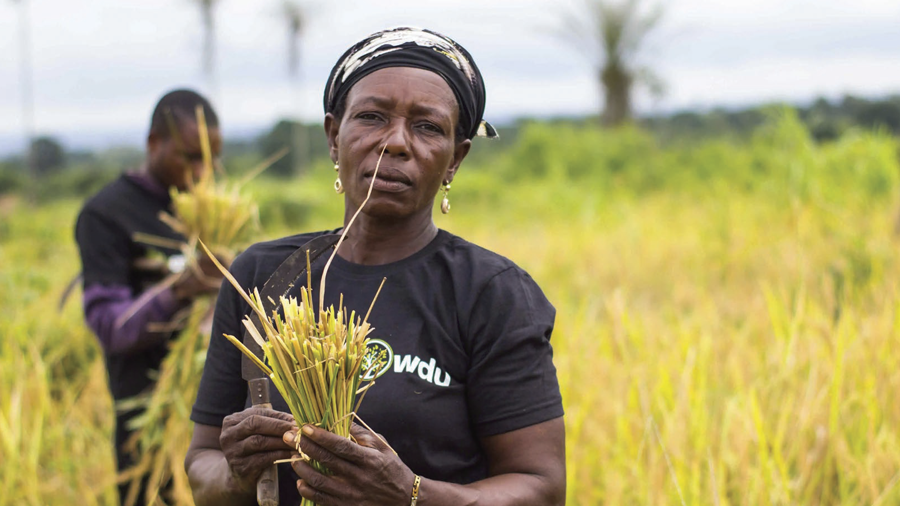
India’s journey in bringing smallholder farmers into modern value chains, cutting down on post-harvest losses, and boosting farm incomes serves as a valuable blueprint for Nigeria to consider when exploring affordable, suitable, and adaptable technologies. Industry experts are already seeing the fruits of this collaboration at the farm level. Pandian Balamurugun, a director at Stallion Group, shared that their backward integration initiatives aim “to foster a strong agricultural partnership between India and Nigeria and to help local rice farmers enhance their production.” He also mentioned that the company has teamed up with farmer cooperatives nationwide to ramp up rice output, providing support to over 5,000 farmers across 16 states through training, seed distribution, and market access programs. Farmers associated with Olam and Stallion Group have reported that the backing from these organisations has significantly boosted their productivity and income potential.
Beyond just production, this partnership has been growing into areas like research and climate-resilient farming systems. In 2023, Nigeria and India teamed up to sponsor the United Nations’ International Year of Millets, which is part of a larger effort to tackle Nigeria’s annual production gap of around 4.4 million metric tonnes, given that domestic demand is estimated at 6.4 million tonnes. Interestingly, the International Crops Research Institute for the Semi-Arid Tropics, based in India, already has a centre in Kano State dedicated to researching crops like millet.
Building on this solid groundwork, both governments have reaffirmed their commitment to enhancing bilateral relations through increased trade, investment, and collaboration in vital economic sectors such as energy, agriculture, and pharmaceutical manufacturing. During a business seminar organised by the Lagos Chamber of Commerce and Industry in 2025, the Acting Indian High Commissioner to Nigeria, Vertika Rawat, highlighted her country’s commitment to Africa’s development. She pointed out that Prime Minister Narendra Modi has prioritised Africa in India’s foreign and economic policy, emphasising that India’s involvement with the continent is guided by African needs and aims to foster long-term socio-economic growth.
Rawat pointed out that India’s relationship with Africa is all about putting African priorities first, making sure that “it will be on terms that will unleash African potential and not limit African futures.” She emphasised India’s reliability as a partner and its dedication to helping Nigeria grow socio-economically. She recognised Nigeria’s preference for partnerships based on investment rather than debt. “Your priorities are our guiding principles for economic cooperation,” she stated.
At the same time, Rawat encouraged Nigerian businesses to tap into India’s strengths in areas like fintech, artificial intelligence, and health, especially in vaccine production and digital advancements. She highlighted the importance of Nigerian companies getting involved in Indian trade exhibitions to build stronger collaborations.
The acting Indian High Commissioner praised the partnership between India and Nigeria in agricultural research, mentioning that the International Crops Research Institute for the Semi-Arid Tropics, based in India, is already running a centre in Kano State focused on crops like millet. Rawat also urged Indian investors to look into large-scale agricultural production in Nigeria, which could create jobs, generate income, and enhance agro-processing. Similarly, LCCI President Gabriel Idahosa emphasised the growing trade ties between Nigeria and India.
He pointed out that in the last quarter of 2024, Nigeria’s total merchandise trade reached an impressive ₦36.6 trillion, marking a significant 68.32 percent increase compared to the previous year. India has emerged as Nigeria’s fourth-largest export market, with exports valued at ₦1.60 trillion, while imports from India amounted to ₦1.90 trillion.
However, despite these positive developments, structural challenges still hinder the full potential of this partnership. Issues like poor road infrastructure, port congestion, unreliable electricity, and insufficient cold-chain facilities lead to post-harvest losses estimated at around ₦3.5 trillion each year—almost eight percent of Nigeria’s GDP. Additionally, currency fluctuations and regulatory hurdles further complicate trade dynamics and pricing for both exporters and importers.
Nevertheless, policymakers remain optimistic that strengthened institutional frameworks such as the Nigeria–India Business Council will unlock new opportunities in agro-processing, mechanisation and digital agriculture.
As both nations seek to diversify their economies away from traditional dependencies, analysts say the expanding agricultural partnership offers a viable pathway to improved food security, rural employment and sustainable trade growth—an outcome that aligns closely with ongoing initiatives promoting local value addition, organic inputs and farmer productivity across Nigeria.



Leave a Reply