

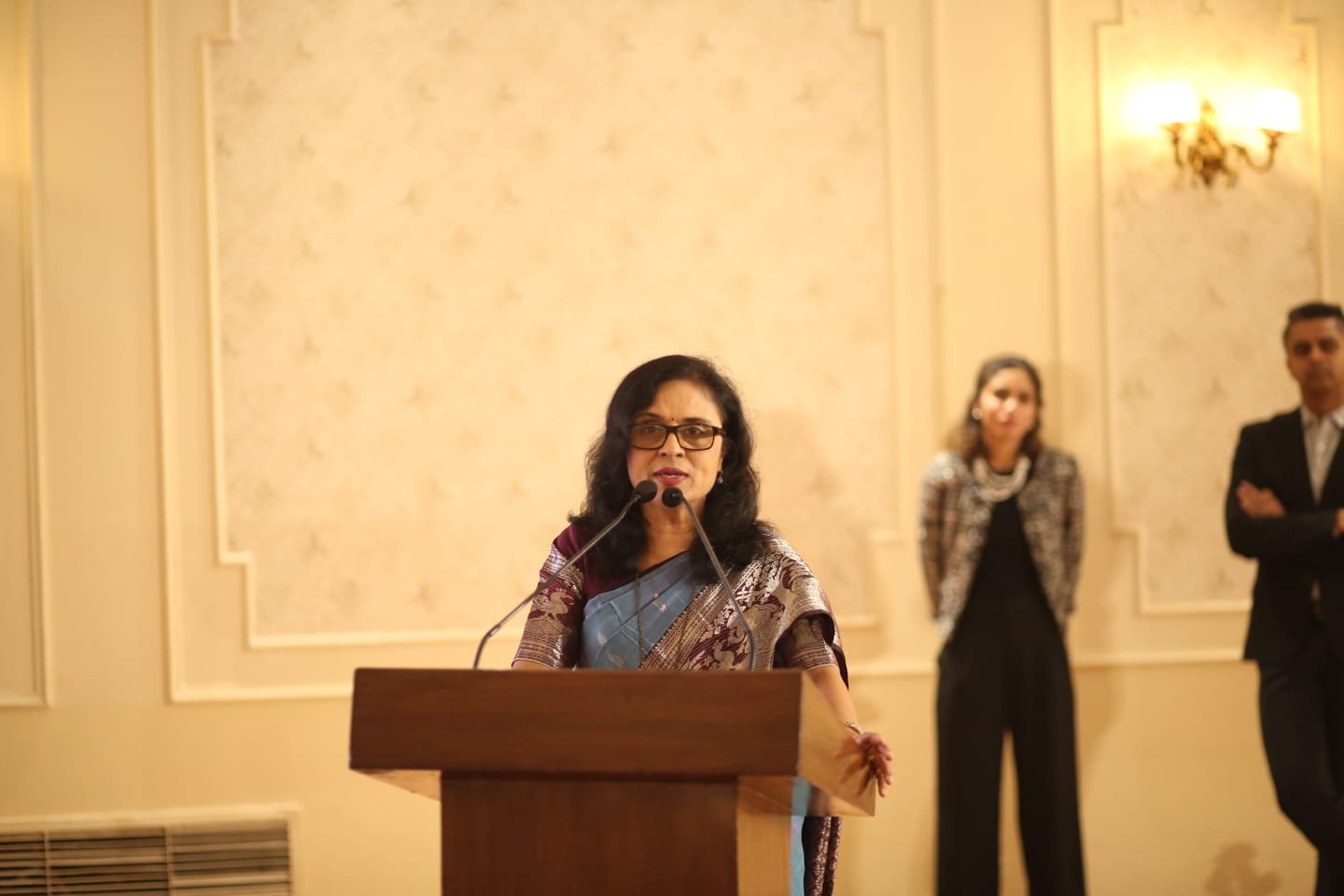
At an annual dinner in New Delhi, Dr Vidya Yeravdekar, Chancellor of Symbiosis International (Deemed University), highlighted the institution’s five-decade journey in international education, its growing global footprint and its commitment to fostering cross-cultural understanding.
Education has the power to transcend borders, build lasting relationships and bring nations closer. This philosophy was at the heart of the remarks delivered by Dr Vidya Yeravdekar, Chancellor of Symbiosis International (Deemed University), at the university’s annual dinner in New Delhi on 9 October 2026, attended by ambassadors, diplomats and key stakeholders.
Welcoming the gathering, Dr Yeravdekar reflected on the vision that led to the establishment of Symbiosis in 1971, long before internationalisation became a prominent theme in higher education.
The institution was founded by Prof. (Dr) S.B. Mujumdar, then a teacher at Fergusson College in Pune, who recognised the need to support international students coming to India. His vision was to create an environment where students from different countries could study, live and learn together, carrying positive memories of India back to their home countries.
As Dr Yeravdekar explained, international students were envisioned as “unofficial ambassadors” who could strengthen their countries’ relationships with India through their personal experiences and connections.
The founding philosophy continues to guide the university today. The name Symbiosis reflects a mutually beneficial relationship between different organisms, while its guiding motto, Vasudhaiva Kutumbakam: the world is one family, captures its broader commitment to international understanding.
“Students should carry good memories, not just of the education that they went through, but also of the country they studied in,” she emphasised, underscoring the importance of cultural exchange alongside academic learning.
From an Indian Institution to a Global Community
Over the past five decades, Symbiosis has evolved into a multidisciplinary university with campuses across six Indian cities and an international campus in Dubai. It welcomes students from more than 85 countries, creating opportunities for young people from diverse backgrounds to interact and learn from one another.
Dr Yeravdekar highlighted the importance of Pune, where the university originated, as an educational and industrial hub. The city’s manufacturing sector, services industry and growing start-up ecosystem offer international students opportunities to experience India beyond the classroom, including through short-term academic programmes and internships.
The university’s international expansion reached a significant milestone with the establishment of its Dubai campus in 2024. Explaining the rationale behind the choice of location, Dr Yeravdekar described Dubai as a global gateway and a meeting point for people from diverse nationalities and cultures.
She also expressed satisfaction with the campus’s early progress, noting that it was attracting students from several countries and extending the university’s international reach.
Addressing the diplomats present, she acknowledged their contribution to the institution’s journey and the role played by diplomatic missions in encouraging educational exchanges.
“The success that Symbiosis has achieved today is possible because of the blessings and support of each one of you,” she said, expressing gratitude to the ambassadors, high commissioners and their representatives.
Expanding Horizons: Healthcare, Research and Entrepreneurship
While international education remains central to Symbiosis’s identity, Dr Yeravdekar outlined the institution’s expanding priorities, particularly in healthcare, medical education and technology.
She highlighted the university’s work in medical and health sciences, including nursing, allied health sciences and medical technology. These programmes are particularly relevant for students from Africa, South Asia and Southeast Asia, where developing skilled healthcare professionals remains an important priority.
The university’s evolving academic portfolio reflects a broader ambition to respond to changing societal needs while contributing to capacity-building across countries.
Dr Yeravdekar also pointed to the growing emphasis on entrepreneurship and research. With an incubation ecosystem supporting more than 80 start-ups, the university is encouraging students to move beyond conventional employment pathways and develop innovative ventures. She noted that international students, too, had collaborated with their Indian peers to establish start-ups.
Describing this transition, she said the institution was moving from being primarily an employment-oriented university towards an entrepreneurship-led model, while strengthening its focus on research.
For Symbiosis, this evolution represents an effort to equip young people with the skills, confidence and international outlook required to navigate a rapidly changing world.
Education as a Bridge to Global Understanding
Throughout her address, Dr Yeravdekar returned to the idea that the university’s achievements must be understood in the context of its founding purpose. For Symbiosis, international education is not simply about attracting students from overseas; it is about creating an environment in which cultural differences become opportunities for learning and mutual respect.
She also spoke of the institution’s extensive alumni network, whose members have progressed into professional roles across different sectors and countries. Their achievements, she suggested, are a source of satisfaction because they reflect the lasting impact of an educational experience that extends beyond academic qualifications.
Dr Yeravdekar invited the diplomats who had not yet visited the university to experience its campuses in Pune and witness its multicultural environment firsthand.


Leave a Reply