

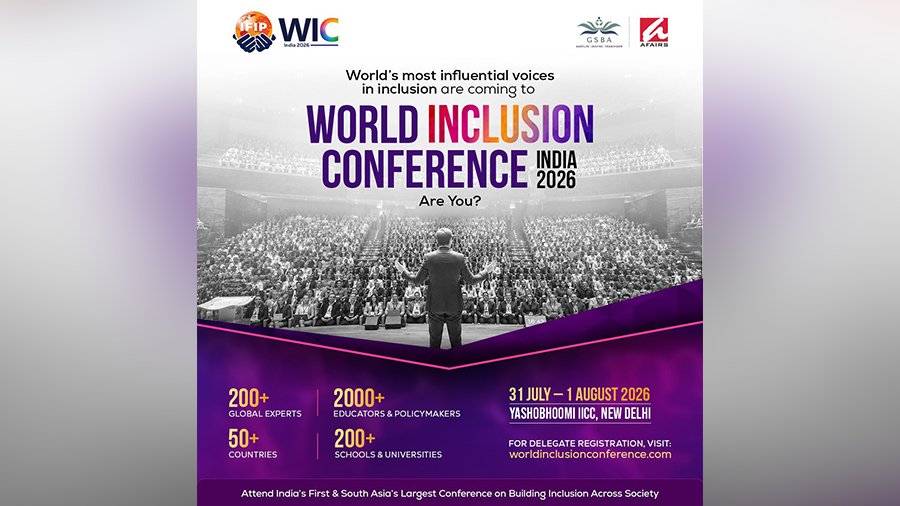
The World Inclusion Conference (WIC) India 2026 brings 200+ international experts and 1,000+ policymakers to Yashobhoomi this July, positioning inclusive education as a new frontier of India’s global engagement.
From 31 July to 1 August 2026, New Delhi’s Yashobhoomi convention centre will host the World Inclusion Conference (WIC) India 2026 — billed as India’s first, and South Asia’s largest, gathering dedicated to building inclusion across education and society. The event is organised by the International Forum of Inclusion Practitioners (IFIP), a global network active in 140 countries, in partnership with AFAIRS Exhibitions & Media Pvt. Ltd., one of Asia’s leading education-event organisers. IFIP is a professional membership body uniting educators, policymakers, school and university leaders in the shared work of building inclusive systems, offering its members accreditation, training, research and a global forum through which practice and policy can be exchanged across borders.
WIC India’s arrival carries significance beyond the classroom. The conference follows the inaugural World Inclusion Congress held in Almaty, Kazakhstan, in 2025, and a landmark gathering at UNESCO Headquarters in Paris in 2024, both convened by IFIP as it has built working relationships with the G20, UNESCO and the European Union. Through 2026, that movement has continued to expand, with editions of the World Inclusion Congress and Conference convening in Lagos and Sydney over the course of the year, and New Delhi now hosting the largest edition staged anywhere to date. Bringing that momentum to New Delhi effectively adds education policy to the growing list of subjects on which India is positioning itself as a convener of global dialogue, alongside its recent turns hosting major multilateral platforms.
The choice of venue reinforces that reading. Yashobhoomi — the India International Convention & Expo Centre is among the largest convention facilities in the world. Organisers describe it as a “borderless campus,” a phrase that doubles as a statement of intent: India as host, rather than merely participant, in the next phase of global education dialogue.
The programme itself is substantial. Organisers expect more than 200 global experts and speakers, over 1,000 educators and policymakers, and upward of 50 plenary and breakout sessions spread across five tracks covering school leadership and governance, diversity and boarding-school wellbeing, neurodiversity, higher-education leadership, and education technology. Formats range from global and India keynotes to plenary panels, fireside chats, and dedicated roundtables for policymakers and vice-chancellors.
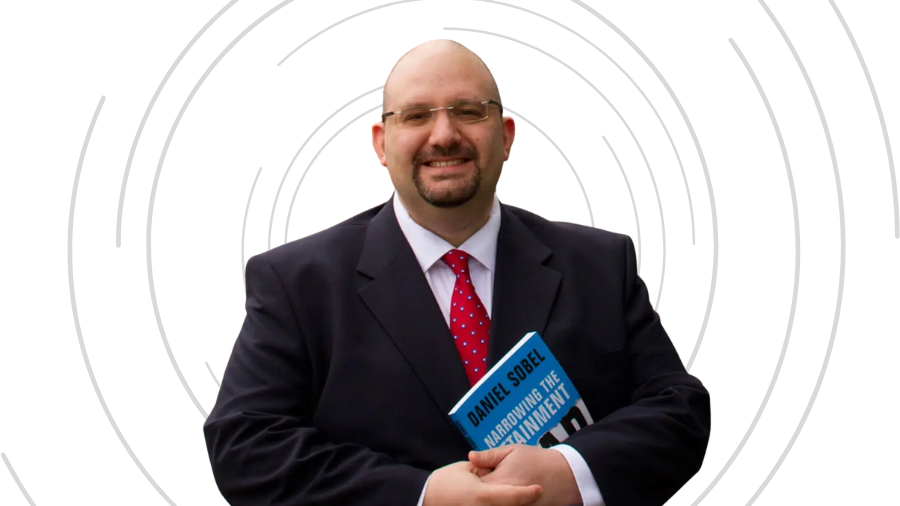
“Education systems that maximise the potential of every learner are the systems that succeed in the modern world.”
— Daniel Sobel, President, World Inclusion Conference & Founder, IFIP
The guest list reads as a cross-section of India’s policy and public establishment. Confirmed special guests include Union Minister of State Shri Prataprao Jadhav; Dr Harsh Vardhan Shringla, Member of Parliament and former Foreign Secretary of India; the Hon’ble Dr Justice Dhananjaya Y. Chandrachud, former Chief Justice of India; Shri Asim Arun, Minister of State for Social Welfare, Government of Uttar Pradesh; Ira Singhal IAS of the Ministry of Education; and Padma Shri awardees Dr Mithu Alur and Dr Uma Tuli, both long-standing figures in India’s disability-rights and inclusive-education movements. Their presence signals that the conference’s ambitions extend past school administration and into questions of law, public policy, and civil-service delivery.
Institutionally, WIC India 2026 has assembled a partner roster spanning sectors: QS (Quacquarelli Symonds) as Knowledge Partner, the International Baccalaureate as Academic Inclusion Partner, and O.P. Jindal Global University as Thought Leadership Partner, alongside government-linked and industry organisations including IREDA, Aditya Birla Hindalco, CISCE and Central Sanskrit University. The line-up is designed to give the conference standing with both the international accreditation bodies that certify schools and universities, and the domestic institutions responsible for implementing policy on the ground.
That dual audience reflects the conference’s stated purpose: aligning India’s National Education Policy (NEP) 2020 with international benchmarks such as UNESCO’s Sustainable Development Goal 4. Organisers describe an intent to move “internationalisation” in Indian education away from a narrow focus on access, toward a model built on equity from the outset, alongside plans for standardised accreditation for inclusive institutions and a professional-development roadmap addressing India’s neurodiverse workforce, in line with NEP 2020’s continuing professional development mandate.
Beyond the conference halls, a Global Inclusion Expo will run in parallel alongside grand-stage events such as the IFIP National Inclusion Awards, a showcase of India’s first 30 IFIP Foundation Inclusive Schools, and a closing Networking Gala Dinner & Cultural Evening.
“At the World Inclusion Conference, we believe inclusion is not an option —it is the foundation of meaningful education,” said Vivek Shukla, CEO of WIC India 2026 and Director & CEO of AFAIRS Exhibitions & Media. “This is a moment for India to show what it means to build education systems for everyone.”
AT A GLANCE
| DATES | 31 July – 1 August 2026 |
| VENUE | Yashobhoomi (India International Convention & Expo Centre), New Delhi |
| ORGANISERS | International Forum of Inclusion Practitioners (IFIP) & AFAIRS Exhibitions & Media Pvt. Ltd. |
| SCALE | 200+ global experts · 1,000+ educators & policymakers · 50+ sessions · 140+ countries in the IFIP network |
| THEME | “Inclusive Education Without Borders: Equity, Global Collaboration & the Future of Internationalisation” |
Diplomatist Magazine has been designated as the Media Partner for the World Inclusion Conference & Awards.


Leave a Reply