

For much of the twentieth century, oil was the lifeblood of industrial civilisation. It powered automobiles, factories and militaries, shaped international alliances and conflicts, and created immense wealth for countries fortunate enough to possess abundant reserves. The familiar phrase, “oil is the lifeblood of the modern economy,” captured the geopolitical reality of an era dominated by fossil fuels.
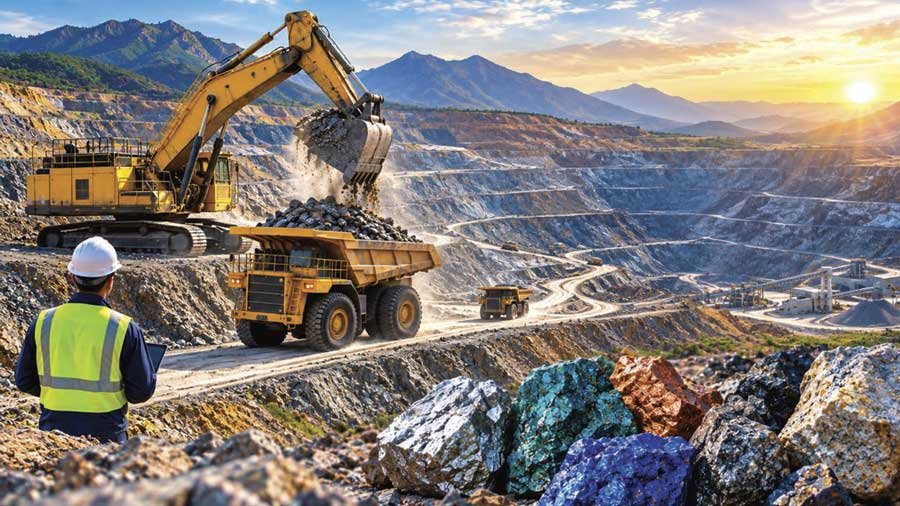
Today, however, the global economy is entering a profound technological and energy transition. As countries pursue their decarbonisation and digitalisation goals, hinged on renewable energy, electric mobility, artificial intelligence, advanced electronics and strategic technologies, a new set of resources has emerged at the centre of economic and geopolitical competition and contestation i.e., critical minerals. Lithium, cobalt, nickel, graphite, copper, rare earth elements (REEs) and several other minerals have increasingly come to be described as the “new oil” of the twenty-first century.
Yet, unlike the oil age, the emerging critical minerals era presents a far more complicated geopolitical and economic landscape. The world is not merely replacing one strategic resource with another. It is entering a complex quagmire involving resource concentration, fragile supply chains, technological dependence, environmental pressures, trade restrictions and an intensifying contest for strategic autonomy.
Foundations of a New Resource Geopolitics
Critical minerals are indispensable to the technologies shaping the future. Lithium, nickel and cobalt are central to batteries and electric vehicles (EVs). REEs are essential for permanent magnets used in wind turbines, electric motors and defence technologies. Copper is critical for electricity networks and renewable energy infrastructure. Gallium, germanium and other specialised materials are increasingly important for semiconductors, communications and advanced electronics.
The International Energy Agency (IEA) and other global institutions have repeatedly highlighted that the clean energy transition is significantly more mineral-intensive than the fossil-fuel economy it seeks to replace. A transition towards electric vehicles, solar energy, wind power and battery storage will therefore require enormous quantities of minerals.
This creates an uncomfortable paradox. The global transition towards cleaner technologies depends upon intensive extraction of natural resources. The question, therefore, is not whether the world will need critical minerals. It unquestionably will! The more important question is whether the world can secure these minerals in a manner that is economically viable, environmentally sustainable and geopolitically stable.
From Oil Dependence to Mineral Dependence
The comparison between oil and critical minerals is compelling but imperfect. Oil was primarily consumed as a fuel. Critical minerals, by contrast, are inputs embedded in complex technological products and manufacturing systems. Their strategic importance therefore extends beyond mining.
The greatest strategic advantage may not necessarily belong to the country that owns or extracts the minerals. It may belong to the country that controls processing, refining, technological standards, intellectual property and downstream manufacturing. This distinction is particularly important because mineral resources are geographically concentrated. For several critical minerals, mining production or processing capacity is dominated by a small number of countries. A case in point is China, which currently controls over 90% of the world’s processing capacity for REEs and a dominant share of refining for critical minerals like cobalt and lithium, having built a formidable industrial sector that takes raw ore, turns it into high-purity metals and produces batteries, magnets, and semiconductors.
Such concentration creates vulnerabilities for countries dependent on external supply chains. The experience of recent global disruptions, from the COVID-19 pandemic to geopolitical conflicts and trade tensions, has demonstrated that economic efficiency alone cannot guarantee supply security. Resilience is becoming as important as efficiency.
Emerging Quagmire of Supply Chains
Critical mineral supply chains are remarkably complex. The journey from mine to market can involve exploration, extraction, beneficiation, processing, refining, chemical conversion, component manufacturing and final assembly. A disruption at any stage can affect the entire value chain. In addition, mining projects require substantial capital, geological expertise and long gestation periods. Processing and refining require sophisticated technology and environmental safeguards. Downstream manufacturing requires skilled human resources, industrial ecosystems and access to markets. The result is a strategic quagmire: countries are competing simultaneously for resources, technologies, investments and geopolitical partnerships.
Resource nationalism is also becoming more visible. Governments increasingly recognise that exporting unprocessed minerals may provide limited long-term economic benefits. Consequently, several resource-rich countries have placed restrictions on raw mineral exports (recently exercised by DRC, Indonesia) while encouraging domestic processing and manufacturing. While understandable from a developmental perspective, such policies may further complicate global supply chains.
Environmental Contradiction
Perhaps the most significant challenge in the critical minerals race is environmental sustainability. The world is pursuing renewable energy and electric mobility to reduce carbon emissions. Yet the extraction and processing of minerals can create environmental degradation, water stress, biodiversity loss and pollution if poorly managed. Communities located near mining areas often bear the social and environmental consequences of extraction without necessarily receiving proportional economic benefits.
The critical minerals transition must therefore avoid reproducing the inequities associated with earlier resource booms. A truly sustainable mineral economy requires responsible mining practices, stronger environmental governance, transparent supply chains and meaningful participation of local communities. Circular economy approaches, including recycling, reuse, material substitution and improved resource efficiency, will also become increasingly important.
India and the Imperative of Strategic Autonomy
For India, critical minerals represent both a strategic challenge and an enormous opportunity. India’s ambitions in renewable energy, electric mobility, semiconductor manufacturing, defence technologies, digital transformation and commitment to achieve net-zero emissions by 2070 will significantly increase demand for critical minerals. Apart from that, certain critical minerals such as Potash play an important role in the food production and food processing value chains in India. Dependence on external supply chains of critical minerals could therefore emerge as a major strategic vulnerability.
Recognising this reality, India has initiated various policy reforms related to critical minerals, starting with identifying critical minerals (with the Ministry of Mines releasing a list of 30 critical minerals in June 2023) and strengthening domestic exploration (with the amendments to the MMDR and OAMDR Acts in August 2023). Along with the policy reforms, efforts have also been made towards developing and shaping international partnerships for securing overseas resources, with India joining the US-led Mineral Security Partnership (MSP) in June 2023 and Pax Silica initiative in February 2026. Quad (of which India is a member along with the USA, Japan and Australia) has also come out with a Quad Critical Minerals Initiative Framework in May 2026.
With the launch of a dedicated National Critical Minerals Mission (NCMM) in 2025 with a 7-year budgetary outlay of INR 34,300 Cr/USD 3.6 Bn (between FY 2024-25 to 2030-31), India has embarked on the journey of securing a long-term sustainable supply of critical minerals and strengthening India’s critical minerals value chains encompassing all stages from mineral exploration and mining to beneficiation, processing and recovery from end-of-life products. The NCMM seeks to develop a holistic action plan through strategic interventions in the form of policy reforms, financial support, infrastructure facilities, human resources development, technological advancements, and international cooperation. NCMM aims to build a globally competitive and resilient critical mineral ecosystem for India. NCMM, thus, is not merely a policy document; it is a strategic response to address India’s vulnerabilities. By prioritizing domestic exploration, overseas acquisitions, and recycling, India seeks to reduce its import dependence and build resilience against supply shocks.
Within this endeavour, India should particularly focus on developing technological capabilities in mineral processing and refining. Possessing mineral resources without the capacity to transform them into high-value materials may provide only limited strategic advantage. Research institutions, universities and industry must therefore collaborate on new technologies for extraction, separation, recycling and substitution. The development of a robust recycling ecosystem could be particularly important. As electric vehicles, batteries and electronic devices proliferate, urban mining could become a significant supplementary source of critical materials. India’s large domestic market provides another advantage. Demand for batteries, renewable technologies and electronics can help create the scale necessary for domestic industrial development.
Diplomacy in the Age of Critical Minerals
The geopolitics of critical minerals will increasingly require a new form of resource/mineral diplomacy. No single country can realistically achieve complete self-sufficiency across all critical minerals. Strategic partnerships will therefore be essential. Through its mineral diplomacy, India is forging its bilateral partnerships with resource-rich regions like Latin America (Argentina and Chile for lithium), Australia (cobalt and lithium), and Africa (Namibia, Zambia, and Zimbabwe). India must deepen cooperation with other mineral-rich countries as well across the globe while ensuring that such partnerships are based on mutual benefit rather than extractive relationships. Technology transfer, infrastructure development, skill creation and local value addition should become integral components of international mineral partnerships.
Multilateral cooperation will also be necessary. The world needs greater transparency in mineral markets, diversified supply chains and internationally accepted standards for responsible mining and trade. Without such cooperation, the critical minerals race could intensify geopolitical fragmentation and create new forms of economic dependency.
Beyond the “New Oil” Narrative
Calling critical minerals the “new oil” is useful because it conveys their growing strategic importance. But the analogy should not be taken too literally. The world has an opportunity to learn from the mistakes of the oil era. Critical minerals should not become another source of geopolitical conflict, environmental destruction and unequal development. Instead, they should become the foundation of a more resilient, sustainable and technologically inclusive global economy.
The real challenge lies in navigating the quagmire between strategic competition and international cooperation, economic growth and environmental responsibility, resource security and equitable development. For India and other emerging economies, the critical minerals moment represents a defining strategic crossroads. The winners of the coming decades will not simply be those who possess the largest mineral reserves. They will be those who can build resilient supply chains, master processing technologies, promote innovation, develop circular economies and forge trustworthy international partnerships.
Navigating the Quagmire: Strategies for a Secure Transition
Bridging the gap between current supply vulnerabilities and a secure, clean energy future requires a multi-pronged global strategy.
| Strategic Pillar | Actionable Mechanisms | Target Outcome |
| Strengthening Domestic Production, Processing and Refining Capacities | Expanding exploration and mining activities, setting up mineral processing and refining plants. NCMM’s target of 1,200 exploration projects by 2031 is ambitious but necessary. Formation of Mineral Processing Parks, as envisaged in the NCMM, is a welcome step. | Increasing domestic production of critical minerals and lowering import dependence. |
| Supply Chain Diversification and Development of Critical Mineral Stockpile | Acquiring mines and processing facilities in Latin America, Africa, Southeast Asia and Australia. Khanij Bidesh India Ltd. (KABIL), a joint venture of three PSUs, namely National Aluminium Company Ltd. (NALCO), Hindustan Copper Ltd. (HCL) and Mineral Exploration and Consultancy Ltd. (MECL), need to aggressively pursue the acquisition of new mines overseas. Development of National Critical Minerals Stockpile/Reserves to guard against supply disruption and aid mineral supply for domestic utilisation is important, as stated in the NCMM. | Reducing absolute dependence on a single nation (China) and mitigating supply chain disruption shocks. |
| Diplomatic Alliances | Expanding partnerships like the Minerals Security Partnership (MSP), Pax Silica, IPEF, QUAD and the “Friend-shoring” of supply chains. Forging bilateral partnerships with mineral-rich countries. | Creating resilient, trusted trade and supply corridors among allied nations. |
| Circular Economy & Recycling | Promoting Urban Mining and framing Extended Producer Responsibility (EPR) norms. Investing in recycling infrastructure and incentivising recycling of critical minerals from e-waste/overburden/tailings/fly ash/red mud etc. | Lowering the demand for raw, newly mined materials over time. |
| Innovation & Substitution | Developing alternative chemistries, such as Sodium-ion batteries or LFP (Lithium Iron Phosphate), which substitute cobalt and nickel. | Bypassing the most geopolitically fraught mineral bottlenecks. |
| Regulatory & ESG Reform | Enforcing strict environmental, social, and governance (ESG) standards on mining operations. | Ensuring the green transition does not happen at the cost of human rights. |
Oil shaped the geopolitics of the twentieth century. Critical minerals are all set to shape the geopolitics of the twenty-first. The challenge now is to ensure that the race for these resources does not become a race towards another resource curse. Instead, it must become a collective effort to build technological prosperity that is secure, sustainable and shared. In this sense, critical minerals may indeed be the new oil but navigating their complex geopolitical landscape will require far greater wisdom than the world displayed during the age of oil. Countries may like to build global consensus around exploring ways to treat critical minerals as a global public good for the benefit of humanity, and not just as a commodity for making profits and an instrument for exploiting vulnerabilities and exacerbating the inequities!




Leave a Reply