

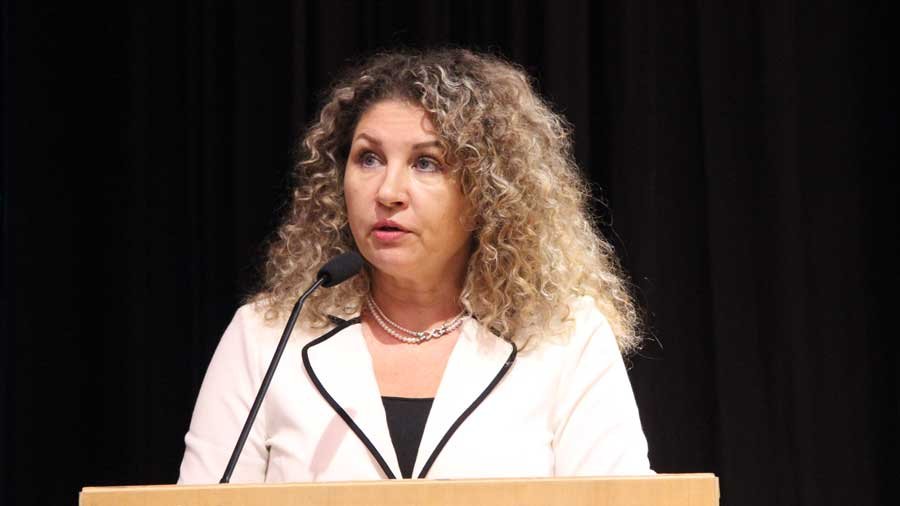
At the India–EU Diplomatic Dialogue organised by Diplomatist Magazine at Symbiosis International (Deemed University), Noida, Ambassador Inga Ionesii highlighted Moldova’s experience of European integration, demonstrating how trade agreements can become instruments of economic modernisation, institutional reform and long-term growth.
Moldova’s journey towards European Union membership offers valuable lessons for countries seeking to translate trade partnerships into tangible economic opportunities. Speaking at the India–EU Diplomatic Dialogue organised by Diplomatist Magazine at Symbiosis International (Deemed University), Noida, on 15 October 2026, H.E. Inga Ionesii, Ambassador of the Republic of Moldova to India, emphasised that economic integration must go beyond market access to strengthen domestic competitiveness, technological capabilities and institutional capacity.
For Moldova, European integration has become a central pillar of foreign policy and economic modernisation. Amb Ionesii described the country’s relationship with the European Union as entering a decisive phase, moving from political association and economic cooperation towards deeper integration and potential membership.
Moldova received EU candidate status in June 2022, and accession negotiations formally began in June 2024. The Ambassador outlined how the process requires sustained progress in the rule of law, public administration, economic competitiveness and alignment with EU standards.
Trade as a catalyst for transformation
Drawing on Moldova’s experience, Amb Ionesii pointed to the Deep and Comprehensive Free Trade Area (DCFTA), signed as part of the EU–Moldova Association Agreement in 2014, as an important instrument in the country’s economic transformation.
She noted that closer access to the European market had encouraged Moldovan businesses to diversify export destinations, improve product quality and align production standards with European requirements. According to figures cited in her remarks, the EU accounted for 67.5 per cent of Moldova’s exports in 2025.
The broader lesson, she argued, is that the success of a free trade agreement should not be measured by trade volumes alone. Export diversification, domestic value addition, productivity, investment and improvements in living standards are equally important indicators of its impact.
This perspective is particularly relevant to India and the European Union following the conclusion of negotiations on their free trade agreement in January 2026. Ionesii argued that the agreement could create opportunities not only for exporters but also for investors seeking to establish production facilities in India and access wider European markets.
She envisaged a relationship in which businesses on both sides could expand manufacturing, exchange technologies and strengthen their participation in international value chains.
Beyond commerce: building institutional capacity
The Ambassador also emphasised that deeper economic integration requires institutional preparedness. For Moldova, EU accession is linked to reforms across governance, infrastructure, energy security, cybersecurity and economic regulation. These efforts are particularly significant given the security pressures facing the country in the wider region.
Moldova’s experience, she suggested, demonstrates that market access becomes more meaningful when accompanied by domestic reforms and the capacity to meet common standards.
Turning to the wider India–EU relationship, Amb Ionesii encouraged both sides to move beyond a predominantly trade-centred approach towards a comprehensive partnership encompassing economic security, technology, energy and global governance.
The objective, in her view, should not simply be to increase trade between two large markets, but to build the economic, technological and institutional capabilities required to navigate an increasingly fragmented global economy.


Leave a Reply