

Great partnerships between nations are forged in their capitals but lived in their cities. If the Enhanced Comprehensive Strategic Partnership between Viet Nam and India was elevated in New Delhi in May 2026, it was in Mumbai — and across the wider state of Maharashtra — that it acquired much of its commercial substance. The concluding chapter of General Secretary and President To Lam’s State Visit was not a ceremonial epilogue but, in many respects, its most consequential business session. It is from this vantage point, at the Consulate General of Viet Nam in Mumbai, that I offer the following reflections on a relationship I believe will come to define a new model of cooperation between our two countries.
There is a natural logic to Maharashtra’s emergence as the Indian gateway of choice for Vietnamese business. Home to Mumbai — India’s financial and commercial capital — and to a manufacturing, services and innovation base of remarkable depth, Maharashtra accounts for a substantial share of India’s output, foreign investment inflows, and corporate and banking headquarters. For Vietnamese enterprises seeking entry into the Indian market, and for Indian companies looking toward Viet Nam and the wider ASEAN region, Maharashtra offers what every ambitious partnership requires: capital, connectivity, talent, and an administration that actively welcomes international business.
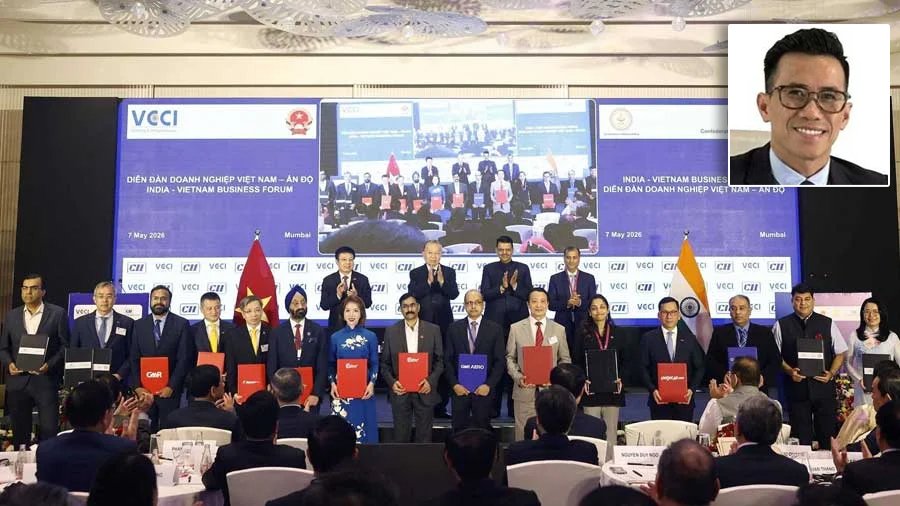
The Viet Nam – India Business Forum, held in Mumbai on 7 May 2026, brought this logic vividly to life. The participation of Chief Minister Devendra Fadnavis carried particular significance: it signalled that engagement with Viet Nam is not merely a matter of central-government policy, but a strategic priority of the state itself. The agreements concluded in the city reflected the breadth of what Maharashtra and Viet Nam can build together. In aviation infrastructure, strategic cooperation was forged between VietJet and GMR Airports, and between VietJet and the Bird Group — frameworks spanning airport operations, ground handling, travel technology and logistics that will reinforce the physical air bridge between our nations. In tourism and cultural promotion, the partnership linking Vietnam Airlines, Saigontourist Group and Innovations India brought aviation, destination tourism and cultural exchange together within a single, forward-looking framework. Beyond these headline agreements ran a wider current of cooperation across industry, logistics, finance, fintech and innovation — the sinews of a maturing economic relationship.
At the heart of this relationship lies a partnership of two commercial capitals: the emerging Maharashtra – Ho Chi Minh City corridor. The pairing is intuitive. Ho Chi Minh City is Viet Nam’s economic engine and southern gateway; Mumbai and the Maharashtra region anchor India’s financial and industrial west. Connecting these two dynamos — through direct air links, business-to-business networks, sub-national and sister-city arrangements, and cooperation among chambers of commerce — creates a corridor along which trade, investment and people can move with growing ease. As bilateral trade advances toward the shared target of USD 25 billion by 2030, corridors such as this will carry a meaningful part of that growth.
Looking ahead, the Consulate General sees several priorities for deepening Maharashtra – Viet Nam engagement. The first is two-way investment promotion: encouraging Maharashtra’s enterprises to regard Viet Nam as a manufacturing base and a gateway to ASEAN and global value chains, while positioning the state as a landing pad for Vietnamese companies entering India. The second is a sustained focus on the sectors where our complementarities are strongest — electronics and electrical equipment, pharmaceuticals and healthcare, information technology and fintech, renewable energy, smart agriculture and food processing, logistics and infrastructure. The third is the patient building of institutional links — between investment-promotion agencies, industry associations, financial institutions and academic bodies — so that cooperation rests on durable mechanisms rather than episodic events. The Consulate General is committed to serving as a bridge in each of these endeavours, working closely with the Government of Maharashtra and the business communities on both sides.
What is taking shape between Maharashtra and Viet Nam is, I believe, more than a regional success story — it is a model. In an era when the relationships between nations are increasingly carried by their states, cities, enterprises and citizens, sub-national diplomacy has become an indispensable complement to engagement between capitals. Maharashtra and Viet Nam are demonstrating how state-to-state and city-to-city cooperation can translate the strategic vision of the Enhanced Comprehensive Strategic Partnership into tangible outcomes: investments made, flights launched, jobs created, and friendships formed. It is my sincere hope that the partnership chronicled in these pages will continue to flourish, and that it will inspire other regions of both our great countries to build their own bridges across the enduring friendship between Viet Nam and India.



Leave a Reply