

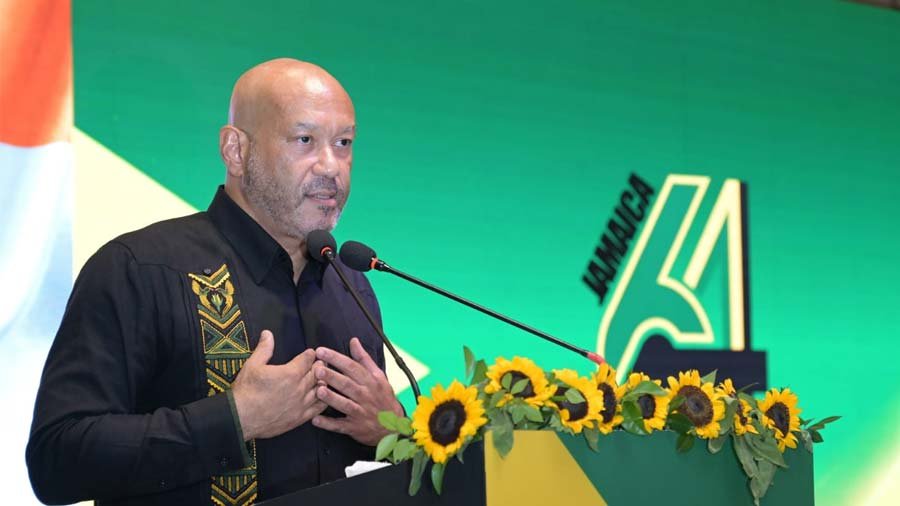
There are diplomatic receptions, and then there are evenings that feel unmistakably like the country they celebrate.
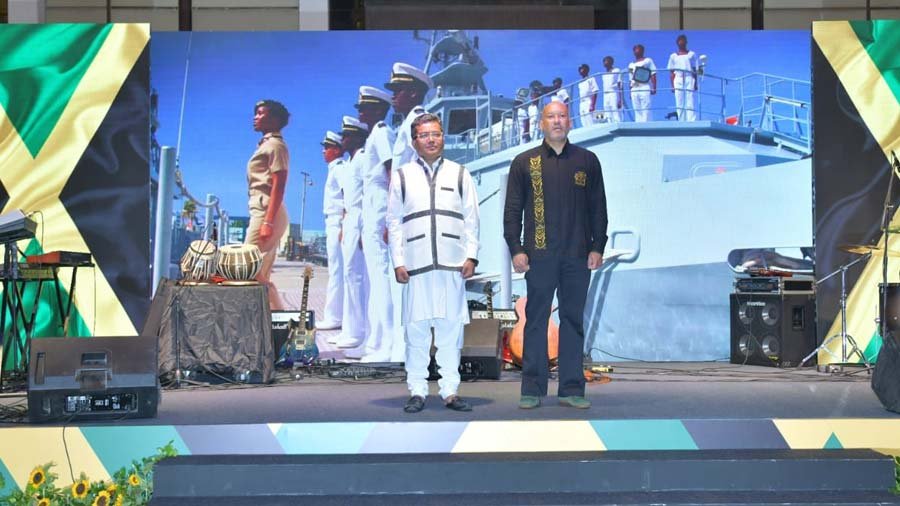
Jamaica’s 64th Independence anniversary was celebrated in New Delhi with a reception that went far beyond the traditional diplomatic address. H.E. Jason Keats Matthew Hall, High Commissioner of Jamaica to India, took guests on a lively journey through Jamaica’s history, its relationship with India, its cultural identity and its aspirations for the future.
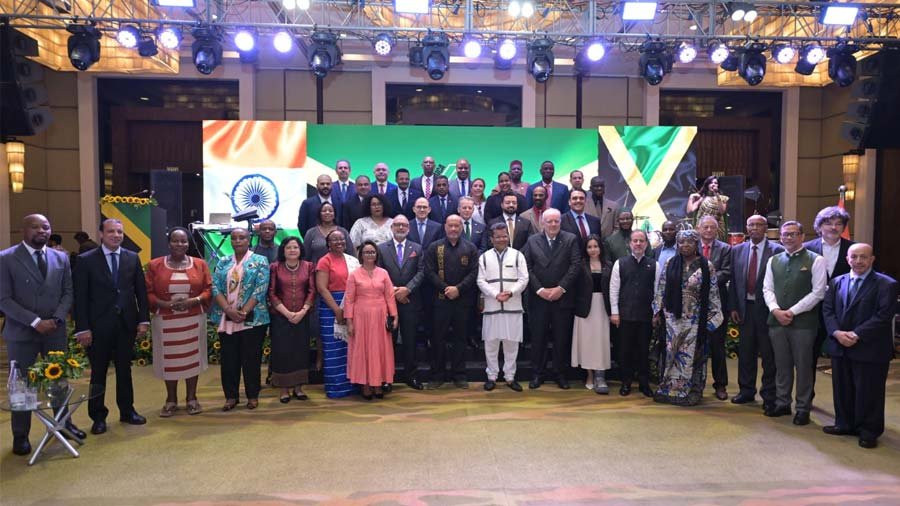
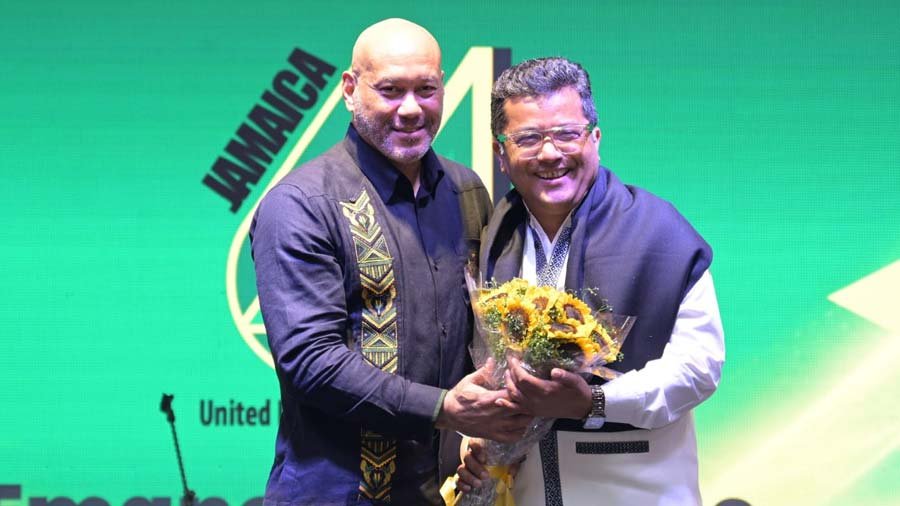
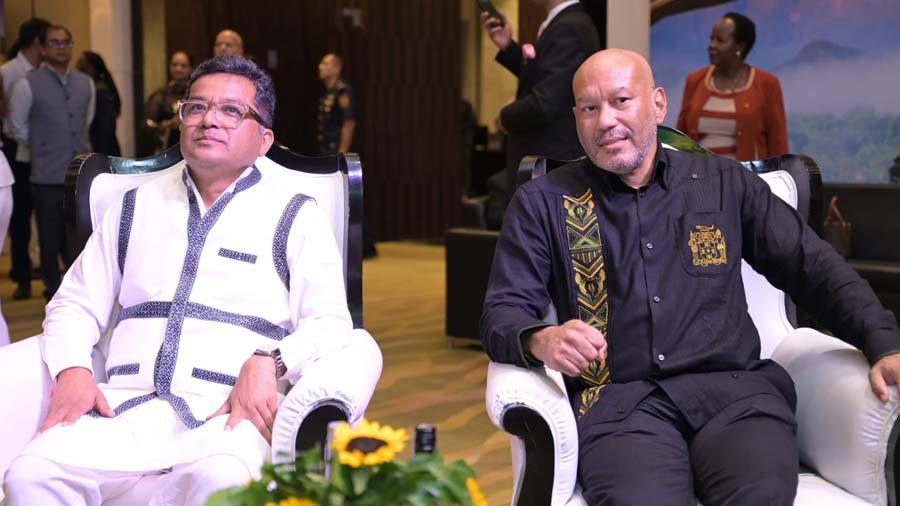
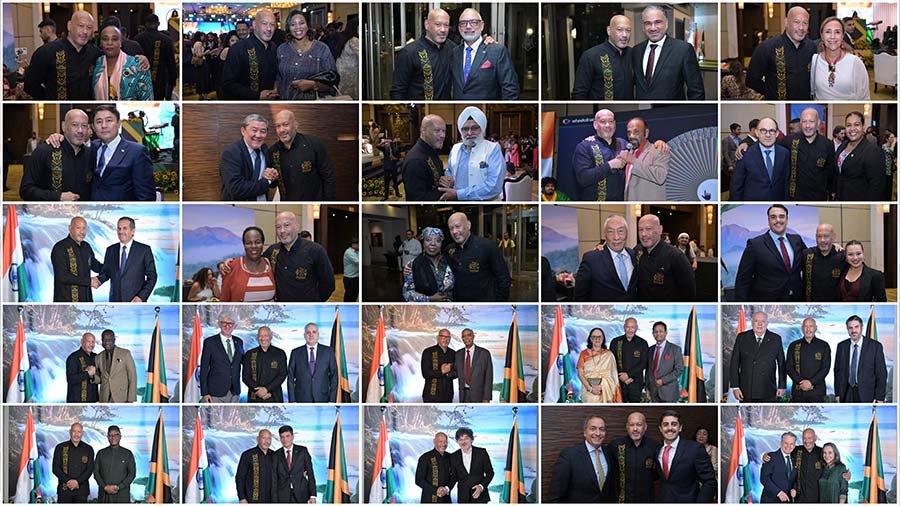
The occasion was graced by Minister of State for External Affairs and Textiles, Pabitra Margherita, H.E. Mayank Joshi, High Commissioner of India to Jamaica, alongside other High Commissioners and Ambassadors resident in Delhi, Members of Parliament, government representatives and members of the Consular and Diplomatic Corps.
With characteristic Jamaican warmth and humour, he opened the evening by greeting the gathering in several languages, “Namashkar. Good evening. Buenas noches. Bismillah. As-salaam-alaikum”—before reminding guests that Jamaica had prepared an evening they would not simply watch, but experience. “Tonight, Team Jamaica intends to impress you.”
And impress it did.
The reception brought together authentic Jamaican cuisine, Jamaica Blue Mountain Coffee, Jamaican rum, and a live musical performance featuring a 12-piece ensemble. The musicians even incorporated elements of Indian music into their arrangements, creating what the High Commissioner described as “a little bit of Jamaica, a little bit of India and a whole lot of rhythm.”
But beneath the music, food and humour was a deeper story, one of struggle, resilience, friendship and shared history.
From Emancipation to Independence
For Jamaica, August is much more than a month of celebration. It is part of the country’s Emancipation and Independence season, beginning with Emancipation Day on 1 August and culminating in Independence Day on 6 August.
The High Commissioner reflected on the abolition of slavery and the achievement of full emancipation in 1838, noting that freedom did not immediately erase the injustices and hardships endured by generations of enslaved and formerly enslaved people.
“The injustice, cruelty and brutal conditions endured by enslaved and subsequently emancipated people did not disappear overnight. The struggle continued for generations.”
It took another 128 years for Jamaica to achieve independence in 1962.
That journey, he said, was marked by rebellion, sacrifice and countless acts of courage, many of which were never recorded in history books.
“Where we are today, and whatever we have achieved, we owe in no small measure to the sacrifice and indomitable spirit of those who came before us.”
The Jamaican flag, raised for the first time as the national flag of an independent Jamaica 64 years ago, has consequently come to represent far more than national identity.
“Today, that flag stands as a symbol of resilience, excellence and global competitiveness.”
A Friendship That Began Six Decades Ago—and Much Earlier
The High Commissioner then turned to one of the most fascinating aspects of Jamaica’s relationship with India: the connection between the two peoples predates diplomatic relations by more than a century.
India was among the first countries to recognise Jamaica following independence, with diplomatic relations formally established on 12 August 1962, just days after Jamaica became independent.
But the people-to-people connection goes back to the nineteenth century, when Indians arrived in Jamaica as indentured labourers.
More than 36,000 Indians arrived in British Jamaica between 1845 and 1917, and many eventually settled there and became part of Jamaica’s multicultural society.
For the High Commissioner, this was not simply a historical statistic. It was a story of human endurance. “I sometimes think about the epic stories that must have emerged from those first pioneers travelling for months across the sea, from colonial India to colonial Jamaica. What they must have endured.”
And with Bollywood figures in the audience, he could not resist turning history into a cinematic proposition. “Bollywood, consider this your invitation!”
Jamaica, he added, could provide the perfect setting for such a story. Despite being relatively small in geographical size, the island offers remarkable diversity in landscapes, culture, music, cuisine and experiences.
More Than Geography: A Relationship Built on Values
The India-Jamaica relationship, the High Commissioner emphasised, is rooted not simply in historical connections but in shared values.
“We believe in democracy. We believe in equality and self-determination. We believe in human rights and fundamental freedoms for all.”
The two countries also share two passions that require no diplomatic interpretation: music and cricket.
“And, of course, we share two other great passions: Music and cricket. Cricket, lovely cricket!”
The relationship has gained considerable momentum in recent years through high-level exchanges.
The High Commissioner highlighted the visit of President Ram Nath Kovind to Jamaica in May 2022, the first visit by an Indian Head of State to Jamaica, followed by the 2024 visit of Jamaican Prime Minister Dr Andrew Holness to India, the first bilateral visit to India by a Jamaican Prime Minister.
He also recalled the visit of Dr S. Jaishankar, India’s External Affairs Minister, to Jamaica in May 2026.
India and Jamaica: Partners in Resilience
Perhaps the most substantive part of the address was the High Commissioner’s acknowledgement of India’s support for Jamaica.
He highlighted India’s role as a development partner in areas including food and energy security, climate resilience, healthcare and wellness, while also recalling India’s assistance during the COVID-19 pandemic.
“Without India’s assistance, I fear the impact of that pandemic would have been far greater for Jamaica and many other developing countries.”
The partnership was tested again by disaster.
In October 2025, Jamaica was struck by Hurricane Melissa, a Category 5 storm. The High Commissioner recalled the devastation and the extraordinary force of the hurricane, before expressing gratitude for India’s response.
India provided 20 tonnes of humanitarian and disaster-relief supplies, transported by an Indian Air Force C-17 aircraft. The assistance included medicines, medical equipment, food, generators, tents and other essential supplies.
For Jamaica, this was more than material assistance. It was an expression of friendship at a moment of profound need.
The High Commissioner also placed this cooperation within the larger challenge facing small island developing states.
“Natural disasters, from hurricanes and storms to earthquakes, are occurring with increasing frequency and intensity, placing small island developing states such as Jamaica and the wider Caribbean at particular risk.”
He pointed to India’s leadership through the Coalition for Disaster Resilient Infrastructure (CDRI) and the International Solar Alliance (ISA) as examples of practical multilateral cooperation.
With another characteristic touch of humour, he noted that Jamaica is also home to an “ISA”, but in this case, the International Seabed Authority, headquartered in Kingston and central to discussions around the future of the blue economy.
“Many Rivers to Cross”
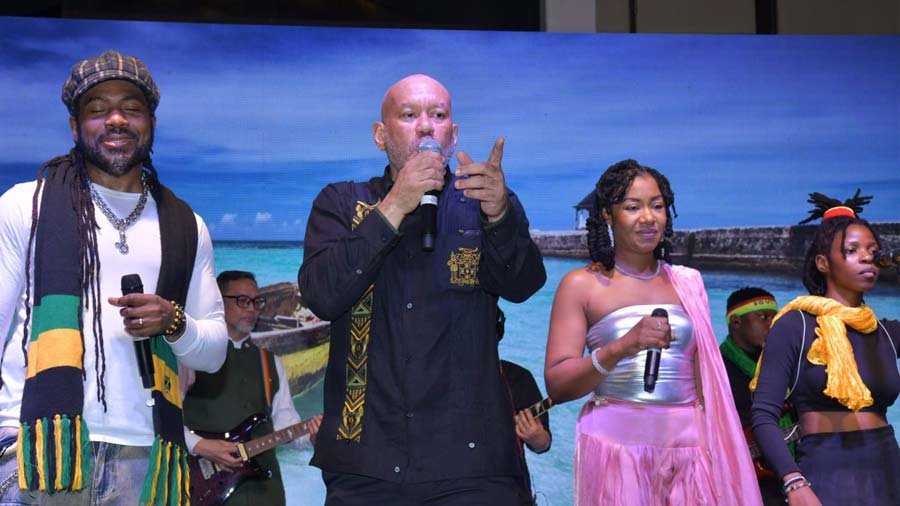
The High Commissioner was candid about Jamaica’s journey. The country has made significant progress, but the journey is not over.
“Today, Jamaica is back on track. We still have some way to go.”
He invoked legendary Jamaican musician Jimmy Cliff and his iconic song Many Rivers to Cross to capture the continuing journey of the Jamaican people.
For High Commissioner Hall, resilience is not simply measured in economic statistics. It is also reflected in the country’s reputation for excellence, quality, creativity and authenticity.
“That is the Jamaica we want the world to know. And that is the Jamaica we invite you to experience.”
Bringing Jamaica to New Delhi
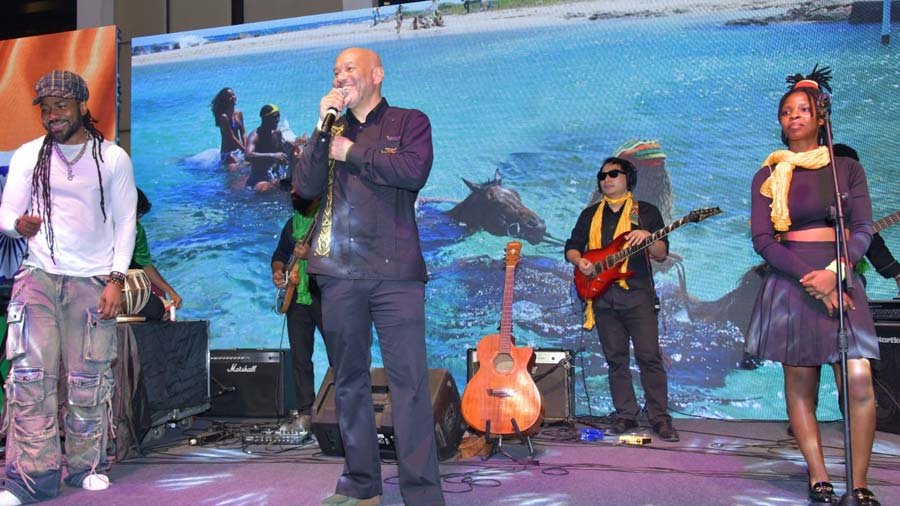
That invitation was made tangible throughout the evening.
Guests experienced Jamaican food and drink, including Jamaica Blue Mountain Coffee and rum from the historic Appleton Estate, whose origins date back to 1749. Jamaican music took centre stage through a powerful live performance, while the 12-member ensemble incorporated Indian musical elements into its presentation.
The result was not simply a national-day reception. It was a carefully curated cultural experience, an evening designed to allow guests to taste, hear and feel Jamaica.
And perhaps that was the most distinctive aspect of the High Commissioner’s remarks. Rather than simply describing Jamaica, he brought Jamaica into the room.
One Love
As he brought his remarks to a close, High Commissioner Hall returned to the spirit that has become synonymous with Jamaica around the world.
Quoting Bob Marley, the original voice of the Global South, he said, “One Love. One heart. Let’s get together and feel all right.”
He then offered a final invitation: “And when you get the chance, come and visit Jamaica.”
Jamaica at 64 is a story of emancipation, resilience, creativity and friendship. And in New Delhi, the message was unmistakable: Jamaica is ready to share that story with the world.
Jamaica to the world. One Love.


Leave a Reply