

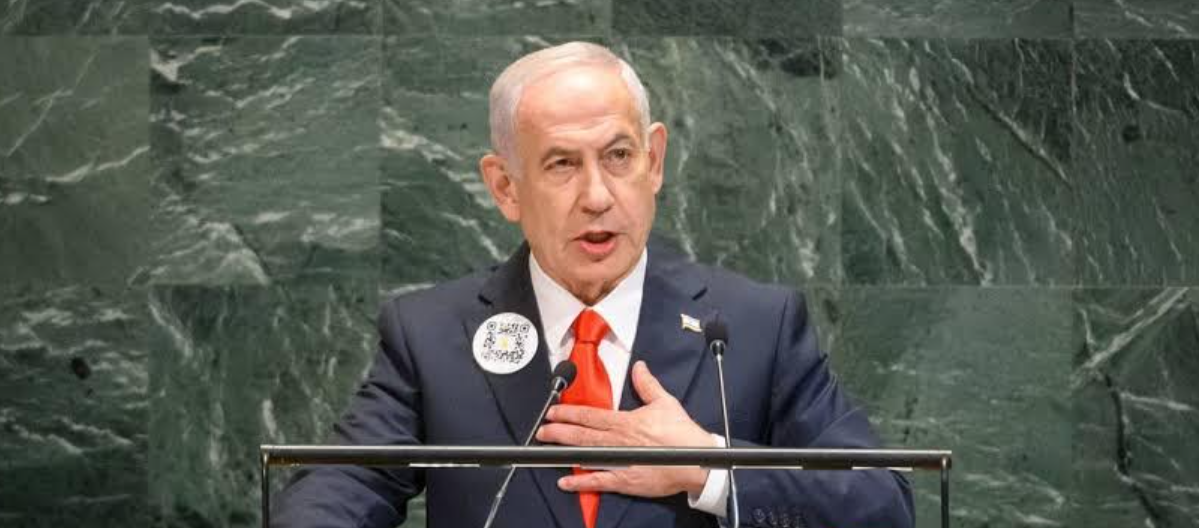
As Benjamin Netanyahu pushes for one more term, a transformed Middle East and a growing relationship with India await their reckoning.
On 27 October, the Israeli public will vote for the first time in four years. It is a significant milestone: the first Knesset since 1988 to complete a full term without the government collapsing in between. That fact says a great deal about the durability and political skill of Netanyahu, whose current coalition has survived in a way Israeli governments often do not — though not without fights, especially between Itamar Ben-Gvir and other members of the coalition. Israelis must now decide whether that government deserves another term. The outcome will shape not only the country’s future but a region that stands on the brink.
A career on trial
Netanyahu’s career is long and complicated. He first became prime minister in 1996, returned in 2009, and is Israel’s longest-serving leader. He was voted out in 2021, largely on anti-incumbency. A year later, in December 2022, he came back at the head of a coalition more religious and nationalist than any the country had seen. That government has presided over a judicial overhaul that divided the country and filled the streets with protest; the 7 October surprise attack, widely described as a catastrophic intelligence failure; two years of war; and a showdown with Iran that has recast the region. Few prime ministers have had to make so many legacy decisions in so short a time. Yet Netanyahu himself is a more uncertain, more tainted figure than before. The return to power was controversial. What another term would mean for the country and for Likud is still unclear.
Two issues now sit over everything. The first is personal. Netanyahu is on trial for bribery, fraud and breach of trust — the first Israeli leader to be prosecuted while still in office. He has already given testimony across 98 hearings from December 2024 to June this year, with delays when national-security duties kept him away. The case is moving to final arguments. No verdict has been reached. Netanyahu denies wrongdoing and calls the trial a political witch hunt. Donald Trump has publicly backed him and asked Israel’s president to pardon him or halt the trial. The opposition says that involvement is an improper interference in Israel’s justice system; supporters treat it as solidarity in a difficult moment.
For many Israelis, 7 October remains an open wound. Fairly or not, the security failure and the corruption trial have fused in the public mind. For a large share of voters, the election is about Netanyahu’s character. That is why it is being read as a referendum on the man rather than a choice among parties and programmes — not only about policy, but about what people think of the leader whose decisions have reshaped the region.
A fractured field
The latest polls are poor news for the prime minister. Likud could finish with 18 to 27 seats, against 32 in 2022. A new party led by Gadi Eisenkot, the former IDF chief of staff, leads in many surveys. Naftali Bennett, another former prime minister, is also competitive. The problem for both camps is that neither has a clear path to a majority without Arab parties — and many Zionist conservative parties in both blocs still refuse to sit with them. A long stretch of bargaining after the vote is the most likely result.
A recent poll found that only about a third of Israelis think Netanyahu should remain prime minister, though 82 percent of his own supporters want him to stay. More striking still: 62 percent of Israelis are worried about how the rest of the world sees the country. That may be the most important thing this government is remembered for. Israel’s global standing has declined quickly. Even Western allies have condemned its conduct in Palestine and called for a political settlement, reinforcing the image of an isolated Israel.
The region Netanyahu leaves behind
The Middle East is more complicated than Gaza alone. On 28 February, Israel and the United States launched joint pre-emptive strikes on Iran after nuclear talks collapsed. The first wave killed Iran’s Supreme Leader, Ali Khamenei, setting a new regional precedent. Forty days of war followed, with attacks on major American bases and on the economic infrastructure of GCC states. Hezbollah entered the fighting before a ceasefire on 8 April. That truce has not held cleanly: it frayed in June, and by September the United States and Iran were exchanging strikes again — what some analysts call a war of attrition. The Israeli government says the campaign’s aim is to remove a nuclear threat and, possibly, to change the regime. Critics, including some foreign governments, argue that killing a head of state is an illegal escalation, whatever the motive. How the next Israeli government handles this file will be watched closely, and will shape how Israel is seen abroad.
The humanitarian crisis in Palestine is deepening, adding pressure from international organisations and other states. A ceasefire agreed in September 2025 under a plan proposed by Donald Trump has largely held since October. All the hostages have been accounted for; the last body was returned in January. The harder parts of the plan — disarming Hamas, standing up a new administration, and paying for reconstruction — have been stuck for months. Both sides have also chipped at the truce in small ways. Israel’s next leader will inherit this unfinished fight, alongside the Iran file. Gaza is wrecked and needs urgent assistance. The new government will have to treat different groups of residents differently. It will be a hard brief, even if a workable outcome is still possible.
The view from New Delhi
India’s relationship with Israel has continued to thicken. When Narendra Modi visited in February — his first trip in nine years — the two sides gave the partnership a new name: a Special Strategic Partnership for Peace, Innovation and Prosperity. A defence understanding had already been reached in November. Talks on a free-trade agreement began, along with new arrangements on artificial intelligence and digital payments. The personal chemistry is real — Netanyahu calls Modi a brother — but the lasting work is structural: trade and defence agreements that outlast any one leader. Partnerships of that kind survive a change of government.
The visit’s timing was still sensitive in India. The war was under a global scanner, and Israel was expanding its circle of partners even as India kept its own lines to Iran and the Gulf. New Delhi has invested in Chabahar even as ties with Israel have grown. That is the point. Whether the next Israeli government is led by Eisenkot or by a re-elected Netanyahu, India’s interests stay the same. The relationship is not about the person. It is about what Israel can offer a country navigating a volatile region. India will keep talking to Israel, Iran and the Gulf at once — a hedge designed to protect its own stability in a fast-changing neighbourhood.
If you are watching from outside Israel, the vote will settle Netanyahu’s personal fate. It may begin to heal, or it may deepen, years of bitter polarisation in Israeli politics. What it will not settle is the shape of the region this government leaves behind: a Middle East in which the old deterrence order built around Iran is in ruins, Gaza’s future is still unwritten, and whoever governs Israel next simply inherits both — ready or not.


Leave a Reply