

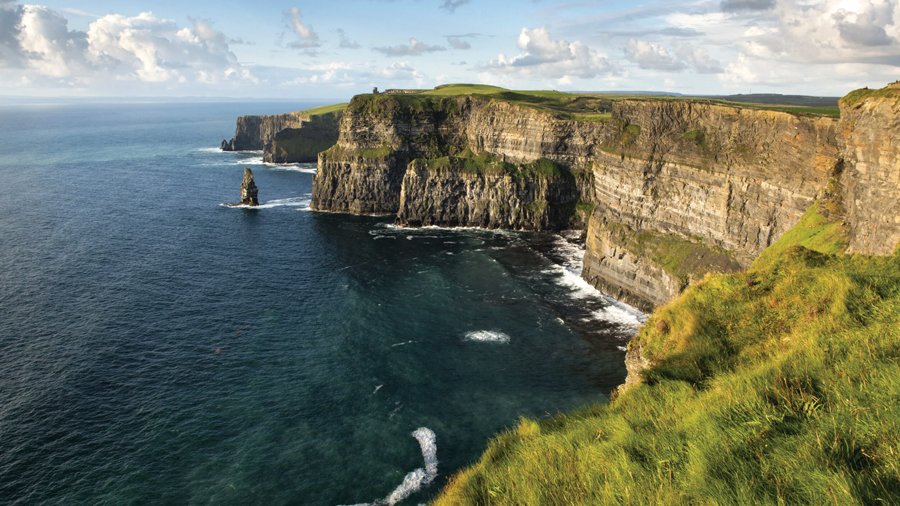
There is an old Irish belief that every place carries a story, if only one is willing to listen.
On an island where the Atlantic crashes against towering cliffs and mist settles gently over emerald hills, stories have never been mere entertainment. They have been memory, history, resistance and hope. Long before Ireland became known for its Nobel laureates, its bustling bookshops or the literary cafés of Dublin, it was a land where words travelled not through ink, but through voices. Around glowing hearths, in the halls of kings and beneath ancient oak trees, the seanchaí, Ireland’s revered storytellers, passed down legends that outlived empires. They carried entire histories in memory, preserving tales of heroes like Cú Chulainn and Fionn mac Cumhaill, of enchanted landscapes and mythical kingdoms, ensuring that a nation’s identity survived through storytelling.
Perhaps that explains why this island of just over five million people has exercised such an extraordinary influence on world literature. Ireland did not simply produce remarkable writers; it cultivated a civilisation in which storytelling became a way of understanding the world. Few nations have demonstrated so convincingly that words can preserve cultures, inspire revolutions and outlive history itself.
When much of Europe entered the uncertainty that followed the fall of the Roman Empire, Ireland quietly became one of the continent’s great guardians of knowledge. Across its monasteries, monks painstakingly copied not only sacred texts but also the works of classical antiquity, preserving manuscripts that might otherwise have disappeared forever. It was an act of remarkable intellectual stewardship, earning Ireland the reputation, in the words of historian Thomas Cahill, as the island that helped keep civilisation’s learning alive.
Nowhere is this devotion to knowledge more beautifully expressed than in the Book of Kells, one of the world’s most celebrated illuminated manuscripts. Created more than twelve centuries ago and now housed at Trinity College Dublin, its intricate pages are not merely works of religious devotion but masterpieces of artistic imagination. Looking upon its vibrant colours and delicate calligraphy, one is reminded that, for Ireland, books have always been objects of reverence.
History, however, ensured that Ireland’s literature would never be detached from its people. Centuries of colonial rule, political upheaval, the Great Famine, migration and the struggle for independence profoundly shaped the nation’s imagination. For generations of Irish writers, literature became both witness and resistance, a means of preserving identity when language, culture and sovereignty were under immense pressure. Themes of exile, belonging, memory and resilience emerged not as literary devices but as lived realities.
It was from this landscape of longing and resilience that some of the world’s greatest literary voices emerged. Jonathan Swift transformed satire into one of literature’s sharpest instruments through Gulliver’s Travels. Oscar Wilde elevated wit into an enduring art form, exposing the hypocrisies of Victorian society with elegance and humour. George Bernard Shaw redefined modern theatre by proving that drama could entertain while challenging convention. Then came James Joyce, whose Ulysses altered the course of the modern novel so profoundly that every year, on 16 June, readers from around the world celebrate Bloomsday, retracing the fictional footsteps of Leopold Bloom through the streets of Dublin.
The poet W.B. Yeats gave voice to Ireland’s myths, dreams and national awakening, while Samuel Beckett stripped language to its barest essence, forever changing modern theatre with Waiting for Godot. Decades later, Seamus Heaney found poetry in the fields and boglands of rural Ireland, revealing that the most local of landscapes could speak to the universal human experience. Together, these writers did more than produce masterpieces; they reshaped the possibilities of literature itself.
Yet Ireland’s story did not conclude with its literary giants. The country continues to nurture voices that command global attention. Writers such as Anne Enright, Colm Tóibín, John Banville, Claire Keegan and Sally Rooney have carried Ireland’s storytelling tradition into the twenty-first century, proving that the country’s literary imagination remains as vibrant as ever.
Walking through Dublin today, one quickly realises that literature is woven into the city’s everyday rhythm. Statues of writers stand in public squares. Historic pubs still echo with conversations about poetry and politics. Independent bookshops thrive alongside world-renowned libraries. Every June, the city celebrates a fictional character with Bloomsday, perhaps the only literary festival in the world where an entire city joyfully retraces the journey of a man who never existed. It is hardly surprising that Dublin was designated a UNESCO City of Literature: a recognition not simply of its remarkable authors, but of a society that continues to cherish books as part of its civic life.
For Ireland, literature has also become one of its most enduring instruments of cultural diplomacy. Long before global branding became fashionable, Irish writers carried the nation’s voice across oceans. Their novels, poems and plays introduced the world to Ireland’s humour, melancholy, resilience and imagination, creating connections that politics alone could never achieve. Writers became ambassadors, and books became passports through which generations of readers discovered the Irish spirit.
Perhaps that is Ireland’s greatest lesson. Nations are remembered not only for the battles they fought or the monuments they built, but also for the stories they chose to preserve.
Ireland’s greatest export has never been confined to its shores. It has travelled instead through poems whispered across generations, novels that transformed modern literature, and stories that continue to remind us that words possess an extraordinary power, to preserve memory, transcend borders and connect humanity.
For Ireland, storytelling is not merely a literary tradition.
It is the heartbeat of the nation.


Leave a Reply