

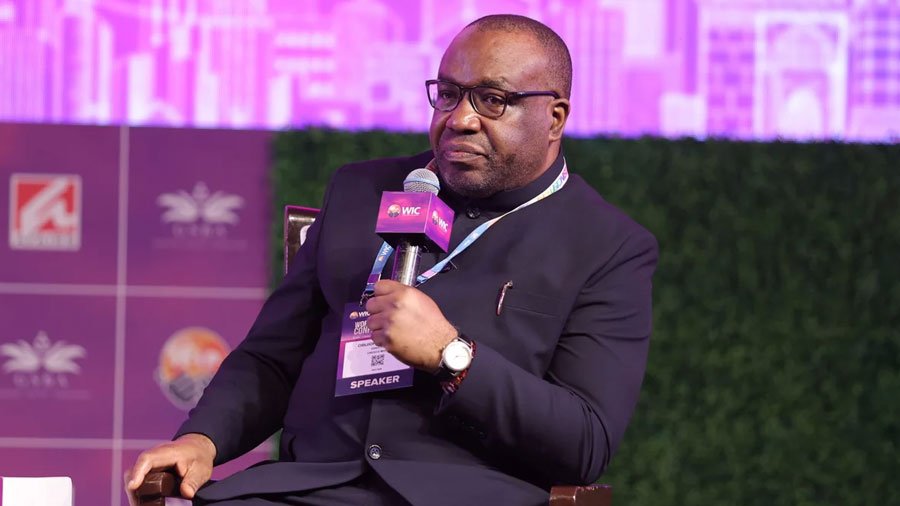
Speaking at the Diplomatist Magazine-curated session, The Diplomatic Dialogue on Global Learning, Equity & Internationalisation, during the World Inclusion Conference India 2026, Dr. Obijiofor Aginam, Director of the UNESCO Mahatma Gandhi Institute of Education for Peace and Sustainable Development (MGIEP), called for a more balanced and ethical approach to international education, one that expands opportunities without depriving developing nations of their critical human resources.
Addressing policymakers, diplomats, education leaders and industry representatives, Dr. Aginam observed that internationalisation is far more complex than simply increasing student mobility or academic partnerships. In an interconnected world of 193 United Nations Member States, he said, countries possess vastly different capacities and developmental needs, making equity an essential consideration in designing international education policies.
“We live in an interdependent world, but countries have different capacities and capabilities. The way we design internationalisation projects must ensure that we do not, intentionally or unintentionally, encourage brain drain,” he said.
Drawing attention to the widening talent gap in many developing countries, Dr. Aginam cautioned that international education should not become a one-way movement of skilled professionals towards wealthier nations.
Using healthcare as an example, he noted that a significant proportion of doctors trained in several African countries eventually migrate to Europe and North America in search of better opportunities. While recognising migration as a fundamental human right, he stressed that recruitment and visa policies must be designed responsibly.
“Migration is a human right, but we must be careful not to create systems that actively recruit talent from countries where those skills are needed the most,” he remarked.
Dr. Aginam emphasised that many developing countries continue to face acute shortages of teachers, university faculty, doctors, nurses and engineers. International cooperation, he said, should strengthen national capacities rather than weaken them by accelerating the loss of skilled professionals.
“International cooperation has to be fair, equitable and designed in a way that does not encourage the poaching of talent from countries that are already struggling,” he said.
Dr. Aginam urged governments, universities and international institutions to adopt a more balanced approach to global education, one that promotes knowledge exchange, mobility and collaboration while safeguarding the long-term development needs of emerging economies.
His intervention reinforced one of the central themes of the Diplomatist-curated dialogue: that the true success of internationalisation lies not merely in expanding global opportunities, but in ensuring that those opportunities are inclusive, equitable and beneficial for all nations.


Leave a Reply