

Redefining Indo-Pacific Economic Geometry
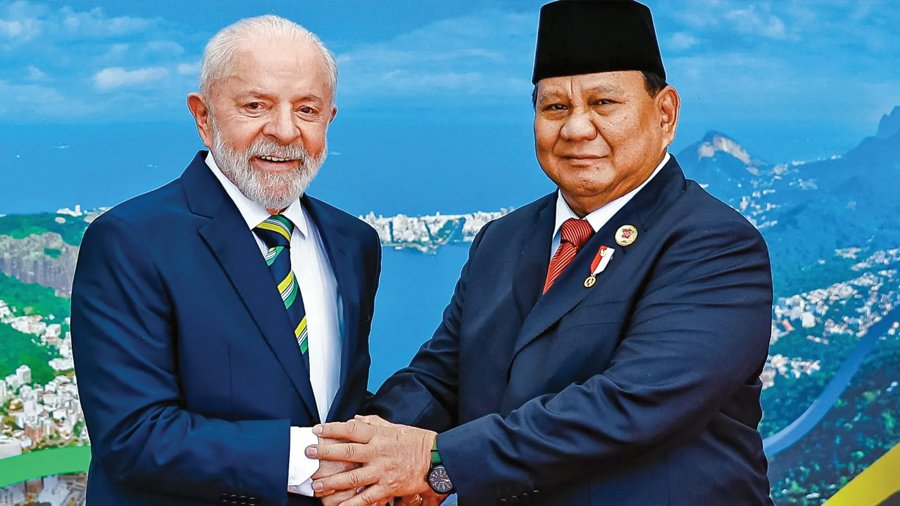
The inclusion of Indonesia in the BRICS on January 6, 2025, is a significant milestone in the changing economic situation in the Indo-Pacific region. Indonesia is a G20 member and the largest economy in Southeast Asia, which makes it have a unique geographical and economic location.[i][ii] The country has also become the driver of the development in the region with its GDP (PPP) of over 6.5 trillion and annual growth rate of around 5 percent. It has a high level of integration in the global trade networks, as its volume of exports is estimated at approximately $258 billion in 2023.[iii]
In addition to its economic magnitude, Indonesia is strategically important because of its command of key marine chokepoints, one of them being the Malacca Strait that supports about one-third of the global trade.[iv] This geographic centrality makes Indonesia a natural connection point between the Indian and the Pacific oceans, making it an important element in the development of Indo-Pacific connectivity. The inclusion of Indonesia in BRICS would benefit not only by boosting membership of the bloc but also pinning the bloc to Southeast Asia, thus extending its reach to one of the most vibrant economies in the world.
Transition from Linear to Networked and Multipolar Economic Structures:
The BRICS membership of Indonesia would radically alter the economic geometry of Indo-Pacific transforming into a networked and multipolar framework instead of a linear and West-centric one.[v] Historically, a hub-and-spoke approach to trade has been practised in the region, with economies in Southeast Asia, such as Indonesia, relying heavily on Western markets, like the United States and the European Union.
Nevertheless, BRICS, which comprises almost 40% of global GDP, provides an alternative channel for economic interaction. The inclusion of Indonesia in this bloc would enable the growth of South-South trade corridors, connecting ASEAN economies with the emerging markets in Africa, Latin America and Eurasia. This diversification reduces reliance on any single economic centre and promotes multidirectional goods, capital and technology flows.
As a result, the Indo-Pacific would take the form of a multipolar system with several economic powerhouses besides the US and China. Indonesia’s involvement strengthens this shift by introducing a Southeast Asian centre into BRICS, thereby redistributing economic power more evenly across the regions.
Reconfiguration of Trade, Supply Chains, and Financial Architecture:
The other important aspect of the impact of Indonesia is the reorientation of trade networks, supply chains and financial systems. Indonesia is a major producer of nickel, which is an essential component in electric vehicle batteries, as well as other strategic resources including coal and palm oil. These resources may become even more integrated into intra-BRICS supply chains, reducing dependence on Western–controlled production systems.[vi]
The shift has broader implications for global value chains, especially in emerging areas such as green energy and digital technologies. It enables the establishment of an alternative industrial ecosystem with BRICS economies at the centre, thereby reshaping the flow of production and investment in the Indo-Pacific.[vii]
In finance, BRICS has been promoting the greater use of local currency trade and the strengthening of institutions such as the New Development Bank (NDB). The inclusion of Indonesia would extend these efforts to Southeast Asia, thereby promoting de-dollarisation and enhancing financial resilience. In the long run, it could lead to a more diversified and decentralised financial architecture, in which multiple currencies and institutions coexist, reshaping the economic foundations of the Indo-Pacific.[viii]
ASEAN Centrality, Maritime Power Redistribution, and Strategic Flexibility:
The transformation is further augmented by the fact that Indonesia was a founding and a leading member of ASEAN. The fact that it has joined BRICS would establish a direct institutional connection between the Global South and ASEAN that would improve the status of Southeast Asia in global economic governance. Neither would ASEAN continue being a peripheral actor, but would come out as a central hub linking the regional and global economies.[ix]
In addition, the control of Indonesia over key sea routes increases its bargaining power in the maritime trade. These routes may become more BRICS-oriented trade networks, leading to the redistribution of maritime economic power. It reduces the influence of the traditional sea routes that are controlled by the West and enhances a more balanced distribution of power.[x]
Meanwhile, Indonesia has a long-standing policy of non-alignment and independent foreign policy, which means that its involvement in BRICS is unlikely to reinforce rigid bloc politics. Rather, it is encouraging flexible strategic alignments whereby the countries in the Indo-Pacific are able to interact with various partners at any given time. Indonesia can act as a balancing force between the BRICS, especially between key players like China and India, thereby promoting stability and inclusivity within the bloc.
Conclusion:
The inclusion of Indonesia in BRICS has been a structural shift in the economic geometry of Indo-Pacific. It incorporates ASEAN into the Global South, facilitating a shift away from a hierarchical and West-centric system to a networked, multipolar order that is decentralised. Indonesia redefines the nature of economic interactions in the region by reshaping the architecture of trade networks through diversification, restructuring of supply chains, transformation of financial systems, and redistribution of maritime power. By so doing, it has not only become part of a new Indo-Pacific economic order but has also emerged as one of its key architects.
[i] Brazil announces Indonesia as full member of BRICS. (2025, January 6). Planalto. https://www.gov.br/planalto/en/latest-news/2025/01/brazil-announces-indonesia-as-full-member-of-brics
[ii] Manggala, P. U. (2025, February 4). Indonesia’s bold step into BRICS and beyond | East Asia Forum. https://eastasiaforum.org/2025/02/04/indonesias-bold-step-into-brics-and-beyond/
[iii] Vietnam new agency. (2025, February 4). IMF ranks Indonesia 8th in the world for PPP-based GDP in 2024. The Investor VAFIE Magazine. https://theinvestor.vn/imf-ranks-indonesia-8th-in-the-world-for-ppp-based-gdp-in-2024-d14398.html
[iv] Spotlight on Global Straits: The Strait of Malacca—Land, Sea, & Air Shipping Services—InterlogUSA. (n.d.). Interlog USA. Retrieved March 29, 2026, from https://www.interlogusa.com/answers/blog/spotlight-on-global-straits-the-strait-of-malacca/
[v] Hogan, E., & Patrick, S. (2024, May 20). A Closer Look at the Global South. Carnegie Endowment for International Peace. https://carnegieendowment.org/research/2024/05/global-south-colonialism-imperialism
[vi] Fünfgeld, A., & Kammler, L. (2025, November 14). A Harmful Transition: Nickel Mining in Indonesia – Rosa-Luxemburg-Stiftung. https://www.rosalux.de/en/news/id/54050/a-harmful-transition-nickel-mining-in-indonesia
[vii] Cahayani, I. (2024, October 27). Indonesia joins BRICS? Prospects for Indonesia’s Political Economy Impact. Modern Diplomacy. https://moderndiplomacy.eu/2024/10/28/indonesia-joins-brics-prospects-for-indonesias-political-economy-impact/
[viii] Indonesia commits investment to New Development Bank | TV BRICS, 03.12.25. (n.d.). TV BRICS. Retrieved March 29, 2026, from https://tvbrics.com/en/news/indonesia-expands-global-role-through-new-development-bank-membership/
[ix] Chintalapudi, V. R. (March 5). A First for ASEAN: Indonesia Joins BRICS, Reshaping Regional Economics. IR Insider. https://www.irinsider.org/south-east-asia-oceania/m2lduiqry36ct3rkz1lojy1t8ud7f7
[x] Pradnyana, H. (2024, October 28). Navigating Global Power Dynamics: Indonesia’s BRICS Entry and the Future of Global South. Modern Diplomacy. https://moderndiplomacy.eu/2024/10/29/navigating-global-power-dynamics-indonesias-brics-entry-and-the-future-of-global-south/



Leave a Reply