

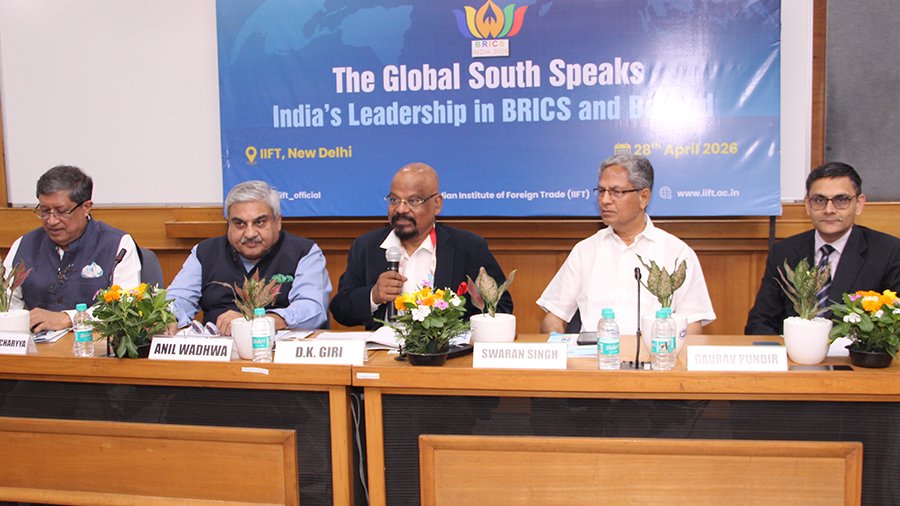
The Diplomatist Magazine jointly with IIFT organised “The Gloal South Speaks: India’s Leadership in BRICS & Beyond” on 28th April 2026 at IIFT. The first panel discussion on “India’s 2026 BRICS Presidency – Strategic Vision for Global South Cooperation” unfolded as a candid, layered, and intellectually rich conversation on the evolving character of BRICS in a turbulent global order. Chaired by Prof. D.K. Giri, Professor of International Politics, Author, Journalist, and Political Consultant, the session moved well beyond formal remarks and into a deeper interrogation of what BRICS is, what it aspires to be, and whether India’s upcoming presidency can meaningfully shape its trajectory.
Setting the tone, Prof. Giri described BRICS as a vehicle whose outline is now visible, but whose internal mechanics, its “nuts and bolts”, still need careful examination. Drawing from his own engagement with the European Union as a model of institutional integration, he raised a series of questions that framed the discussion. He reflected on the transformation of BRICS from an idea coined in 2001 as an investment narrative into a geopolitical platform that now carries expectations far beyond economics. The expansion of the grouping, he noted, resembled a “Kumbh Mela moment,” with dozens of countries expressing interest, though only a few were accommodated. This widening, he suggested, inevitably raises questions of coherence, efficiency, and purpose.
At the heart of his intervention were five critical concerns. He questioned whether BRICS is still seeking space within existing global structures such as the UN Security Council, or whether it is attempting to create an alternative platform altogether. He pointed to the absence of a clear rule-based framework within BRICS, especially when compared to more institutionalised bodies, and asked whether India’s presidency might contribute even a “single page” to such a rulebook. He also highlighted the divergence of priorities within BRICS, ranging from India’s focus on UNSC reform to Brazil’s interest in WTO mechanisms and Africa’s emphasis on climate finance and asked whether the grouping could ever truly speak in one voice.
The metaphor of the “microphone” was particularly striking: while many voices claim to represent the Global South, who actually gets heard? Finally, he raised the question of institution-building, suggesting that enduring influence depends not just on dialogue, but on structures that outlast leadership cycles.
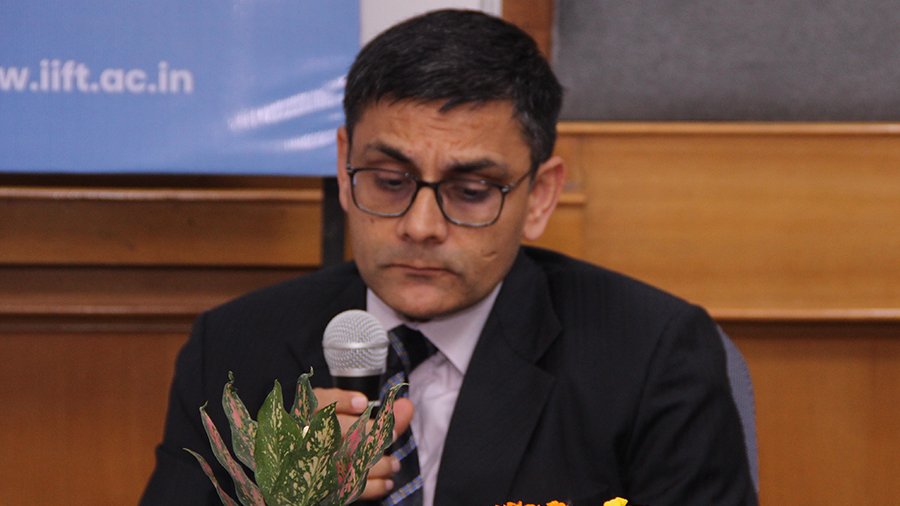
Responding to these concerns, Gaurav Pundir, Director, Department of Commerce, Ministry of Commerce and Industry, Government of India, offered a grounded perspective from within government, particularly from the trade track of BRICS engagement. He began by gently challenging the assumption that BRICS is exclusively a Global South platform, pointing out that members like China and Russia complicate that categorisation. Instead, he emphasised that India’s presidency is approaching BRICS with a broader, more pragmatic lens. While acknowledging that the group is far from reshaping global governance structures in any immediate sense, he expressed confidence that incremental progress is both possible and meaningful.
Pundir highlighted that despite ongoing geopolitical tensions, including the reality of conflict involving a BRICS member, there remains strong engagement across the grouping. The participation of all members in recent meetings, even in a virtual format, underscored the continued relevance of the platform. At the same time, he was realistic about the difficulty of achieving a unified voice, especially in such a diverse and politically complex grouping. However, he pointed to a “silver lining” in the relative convergence on trade-related issues.
He explained that India is deliberately steering BRICS discussions away from becoming overly theoretical or contentious, particularly by avoiding the replication of WTO-style debates. Instead, the focus is on practical and widely relevant areas such as MSMEs, global value chains, services, and elements of the multilateral trading system. The aim, he suggested, is to build consensus where it is most achievable, thereby ensuring tangible outcomes rather than rhetorical alignment. On the question of institutionalisation, he expressed caution, arguing that even more structured forums like the G20 function effectively with rotating leadership, though he did acknowledge that introducing a “troika” system could improve continuity in BRICS.
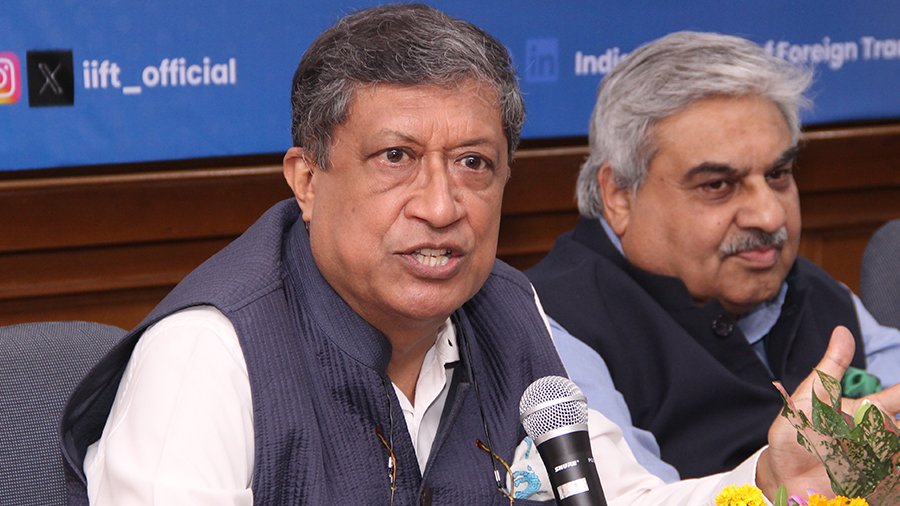
Ambassador Sanjay Bhattacharyya, Professor, O.P. Jindal Global University (JGU) Former Ambassador of India to Switzerland, Turkey and Egypt and BRICS Sherpa (India), brought both historical depth and conceptual clarity to the discussion, particularly in addressing the widely circulated notion that BRICS is inherently anti-Western. He firmly rejected this characterisation, tracing the origins of BRICS to a moment of engagement rather than opposition. The early interactions among emerging economies, he recalled, took place alongside existing global platforms, with the intent of complementing, not confronting, the global order.
Over time, however, frustration with the pace of reform in institutions such as the IMF and World Bank led BRICS countries to explore alternative mechanisms, including the establishment of their own institutions. This evolution, he argued, should not be mistaken for antagonism. Instead, it reflects a desire for greater space, voice, and representation within the global system.
Amb Bhattacharyya also unpacked several misconceptions around concepts like de-dollarisation. He clarified that BRICS is not pursuing a common currency, nor is it attempting to displace the dollar outright. Rather, it is experimenting with diversified financial arrangements, including local currency trade and new settlement mechanisms. Importantly, he argued that consensus within BRICS should not be seen as an obstacle. While unanimity on all issues may be unrealistic, consensus in agenda-setting and decision-making fosters inclusivity and ownership. Differences, he noted, are inevitable, even natural, in a grouping of this nature, and progress need not be contingent on resolving every disagreement.
He went a step further to suggest that BRICS could actually engage more constructively with the West, proposing that outreach to G7 countries might help dissolve the perception of opposition and instead position BRICS as a bridge between global blocs.
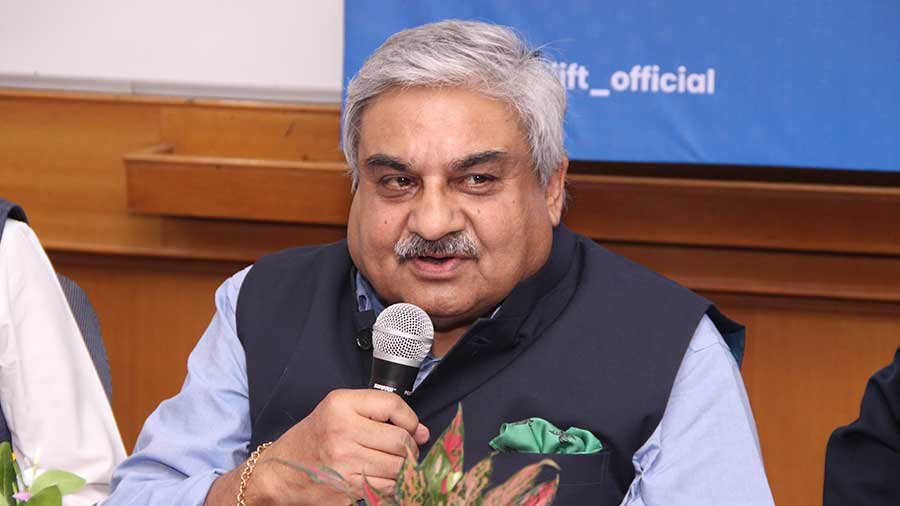
Ambassador Anil Wadhwa, Senior Fellow, Vivekananda International Foundation, Former Indian Ambassador to Italy, Poland, Oman and Thailand, offered a more cautious and, at times, sceptical perspective, particularly on the question of expansion. In his view, BRICS was more cohesive when it was smaller, and the inclusion of additional members inevitably introduces greater divergence and complexity. He located this expansion within a broader geopolitical context, noting that dissatisfaction with the so-called “rules-based order” particularly among countries like China and Russia, played a significant role in driving the push for enlargement.
At the same time, Amb Wadhwa emphasised that BRICS’ real strength lies not in geopolitics but in development cooperation. He pointed to India’s achievements in areas such as digital public infrastructure, food security, and public service delivery as examples of what can be shared within the grouping. For many newer members, these practical models of development are likely to be far more relevant than abstract debates on global order.
On institutional questions, he expressed reservations about creating a formal secretariat, suggesting that such a move could lead to imbalances in influence, particularly favouring larger economies. He also reflected on the limitations of BRICS in addressing issues like UNSC reform, noting that divergent interests, even within the grouping, make consensus difficult. However, he saw greater potential for alignment in economic governance, particularly in reforming Bretton Woods institutions.
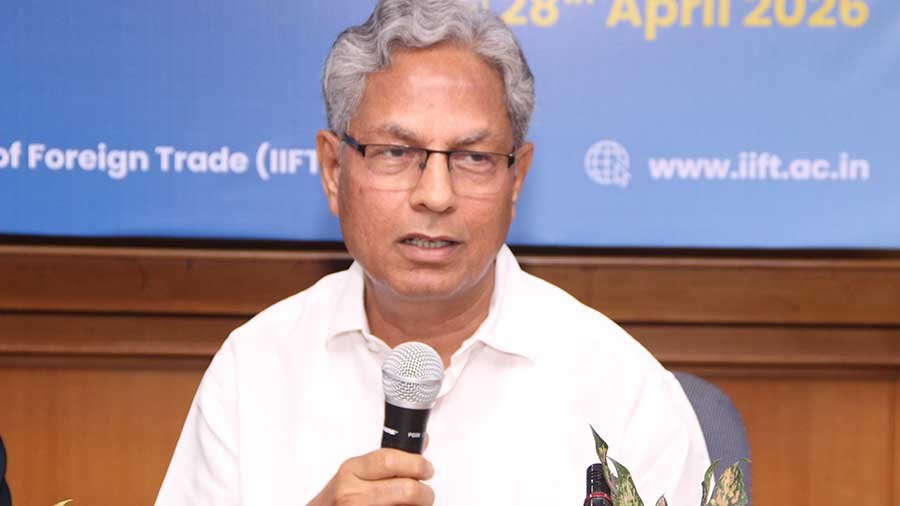
Prof. Swaran Singh, Professor of International Relations, JNU, brought the discussion back to first principles, offering a nuanced and intellectually layered interpretation of BRICS and India’s role within it. He challenged the very premise that BRICS should aim to speak in one voice, arguing that diversity is not a weakness but a source of creativity. In his view, the expectation of uniformity is misplaced; BRICS is, by design, a heterogeneous platform.
On the question of rule-making, he suggested that India is unlikely to produce a rigid or prescriptive framework. Instead, it will contribute to a more flexible and evolving set of norms, reflecting the broader shift from traditional multilateralism to more fluid and network-based forms of cooperation. Institutionalisation, he argued, will also take a different form, multi-layered and adaptive, rather than centralised and rigid.
A central theme in his remarks was India’s pursuit of strategic autonomy. Unlike many countries that align themselves within fixed blocs, India seeks to engage across multiple platforms simultaneously, from BRICS to other global groupings. This approach, he argued, is not merely tactical but deeply embedded in India’s worldview. It allows India to maintain flexibility while also positioning itself as a bridge between competing global narratives.
At the same time, he acknowledged the internal complexities within BRICS, particularly the dynamic between India and China. While cooperation is possible and indeed necessary in functional areas such as trade and development, deeper strategic divergences will persist. The challenge, therefore, is not to eliminate these tensions, but to manage them in a way that allows the grouping to move forward.
As the discussion progressed into a second round of interactions, the conversation turned more conversational and reflective. Questions on the relationship between politics and trade, the nature of consensus, and the realities of strategic autonomy further enriched the dialogue. A key takeaway was the understanding that consensus in diplomacy does not imply uniform agreement; it often involves negotiated silences and flexible formulations that allow diverse interests to coexist.
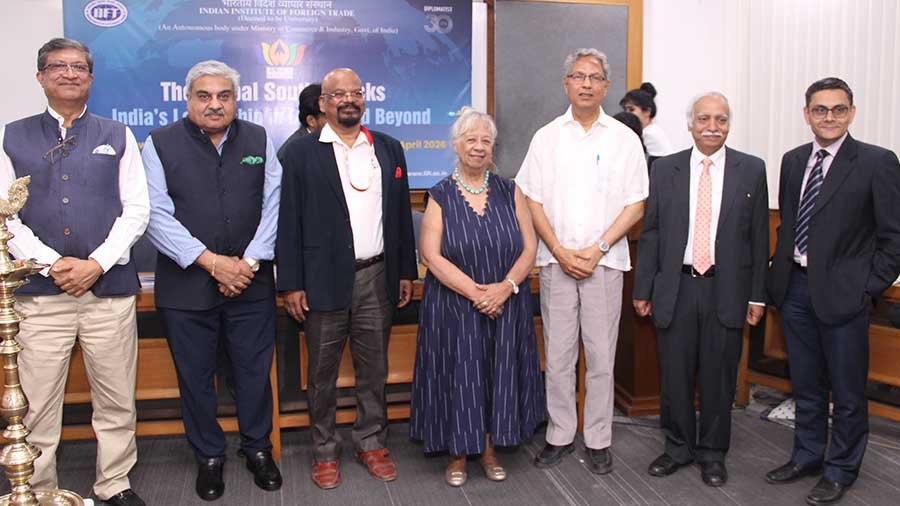
The panel did not offer easy answers, but it did provide clarity. BRICS today stands at a critical juncture, shaped by expansion, geopolitical tensions, and rising expectations from the Global South. India’s presidency in 2026 will not simply be about leadership, it will be about navigation. The task ahead is not to impose coherence, but to manage complexity; not to silence differences, but to create space for them; and ultimately, to ensure that in a crowded and contested global arena, the many voices of BRICS are not just speaking, but being heard.


Leave a Reply