

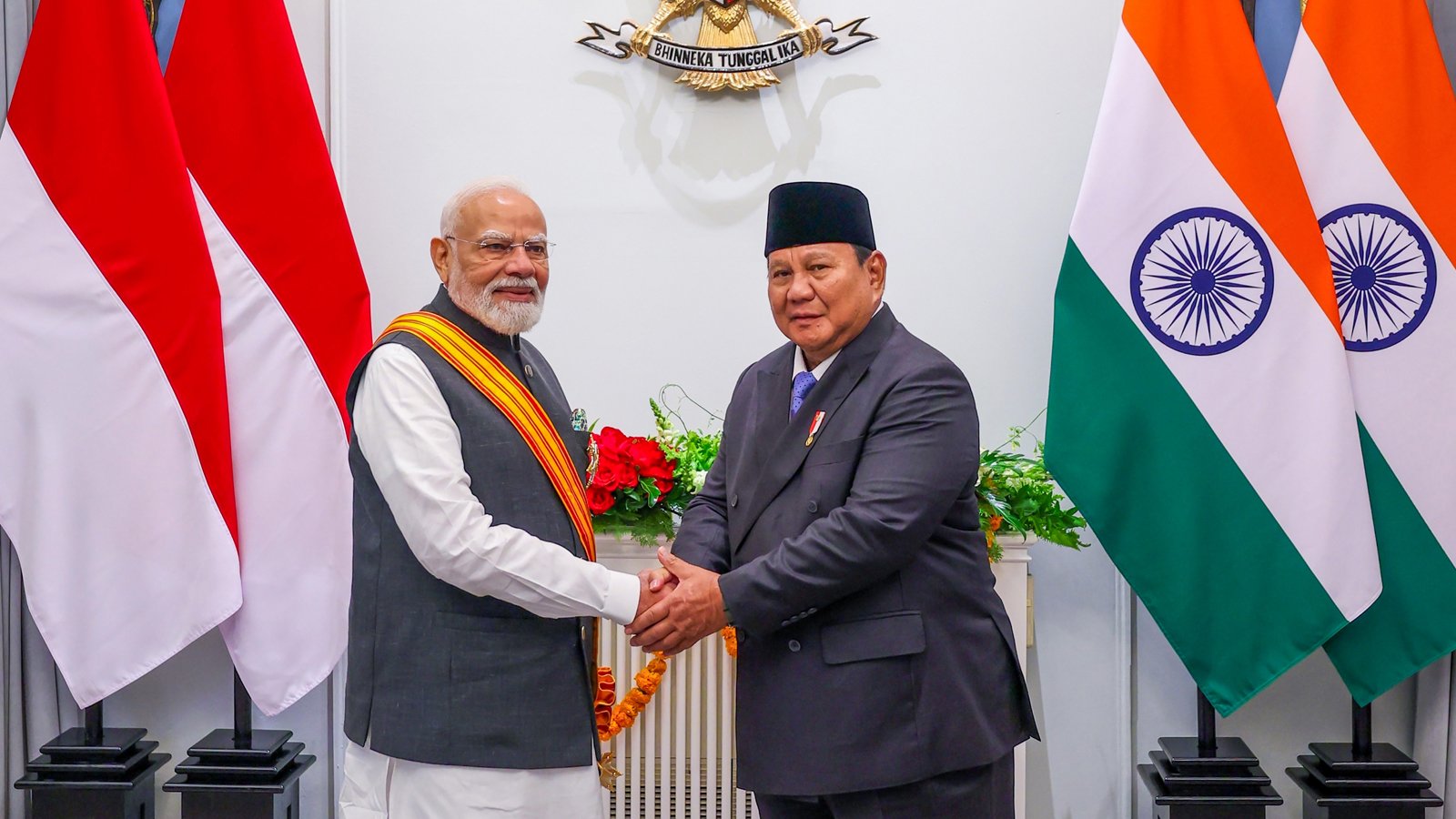
Indian Prime Minister Narendra Modi’s recent state visit to Indonesia marks a significant milestone in the geopolitics of the Indo-Pacific and may have far-reaching implications for the international system.
The visit assumes even greater significance as Indonesia was the first destination in Modi’s tour of the Indo-Pacific, followed by visits to Australia and New Zealand.
To begin with, India and Indonesia will jointly develop Sabang Port in Aceh, near the Strait of Malacca, one of the world’s busiest and most strategically significant maritime chokepoints. Together with the Great Nicobar Transshipment Port, this initiative will significantly strengthen India’s strategic footprint in the Indo-Pacific and create powerful operational synergies across the region.
This development becomes even more important considering that India is also developing a strategic roadmap for the Andaman and Nicobar Islands.
It is understood that the Strait of Malacca carries nearly one-third of global trade and serves as the principal maritime artery for East Asia, including the overwhelming majority of China’s energy imports and commercial shipping. A credible presence around this vital sea lane translates into enormous geopolitical and economic leverage.
Furthermore, the strategic visit assumes greater significance as Indian Prime Minister Narendra Modi and Indonesian President Prabowo Subianto sealed a major defence agreement for Indonesia to acquire the Indian-made BrahMos supersonic cruise missiles to counter China’s expanding maritime presence.
It is understood that the BrahMos missiles are manufactured by BrahMos Aerospace Private Limited, a joint venture between India’s Defence Research and Development Organisation (DRDO) and Russia’s NPO Mashinostroyeniya. The missile can be launched from land-based batteries, naval ships, submarines, and aircraft at speeds of up to three times the speed of sound.
Indonesia is the third foreign buyer of the BrahMos missile after the Philippines and Vietnam, according to local media, as the missile offers powerful coastal defence and anti-ship capabilities. Its high speed makes it extremely difficult to intercept, and it can help deter hostile naval forces in strategic waterways, including areas around the South China Sea and other key maritime chokepoints in Southeast Asia.
The strategic agreement assumes even greater significance as it comes just a day after China test-launched a long-range ballistic missile. The deal is expected to boost India’s defence exports while strengthening strategic cooperation between Jakarta and New Delhi.
On the other hand, Indonesia holds a significant position within the Global South and plays an increasingly important role in the geopolitics of the Indo-Pacific region. Its strategic location, at the intersection of the Indian and Pacific Oceans, has positioned it as a key player not only in regional affairs but also on the global stage.
It is understood that Indonesia occupies a vital geo-strategic location in the Indo-Pacific, connecting Asia with the Southern Hemisphere while controlling crucial maritime routes. The country straddles two major regions—the Indian Ocean and the South-West Pacific—making it a central hub for global trade. The Strait of Malacca, one of the busiest and most important maritime passages in the world, runs through its territory, further emphasising Indonesia’s importance in maintaining regional stability.
Indonesia’s location enhances its geopolitical significance, as it oversees key sea lanes that are vital for global shipping and energy transportation. This proximity to critical maritime chokepoints has prompted Indonesia to reframe its security strategy by placing greater emphasis on maritime defence and positioning itself as a key player in Indo-Pacific security.
In response to the evolving Indo-Pacific security landscape, Indonesia has shifted its defence focus towards maritime security, having previously maintained a primarily continental strategic orientation. The country has unveiled a new maritime doctrine, signalling a departure from its earlier inward-looking security approach.
As part of this strategic shift, Indonesia has initiated a comprehensive naval modernisation programme to expand its capabilities and assert its presence in the Indo-Pacific. This ambitious project represents Indonesia’s most significant naval expansion in more than four decades and aims to enhance its maritime defence capabilities and regional influence.
Indonesia’s maritime strategy is also supported by its expanding diplomatic outreach. The country’s growing profile in the Indo-Pacific has prompted it to broaden its diplomatic initiatives and strengthen ties with key regional and global partners.
Earlier, after following divergent paths during much of the Cold War, New Delhi and Jakarta discovered shared interests and common concerns in the Indo-Pacific region. The training of pilots, anti-submarine warfare exercises, hydrographic mapping, and joint materiel production are areas of immense potential for mutual defence cooperation. India could also assist Indonesia in upgrading its Supadio Air Base, which serves as an aerial surveillance centre capable of responding to both traditional and non-traditional security challenges.
India and Indonesia also need to maintain a long-term strategic perspective, particularly in the event of an expanding Chinese naval footprint in the Second Island Chain.
Although unconfirmed, there have been reports that China has sought to establish naval bases in Myanmar and Timor-Leste, developments that would directly affect the strategic interests of both India and Indonesia. Cooperation between the two countries is therefore becoming increasingly important, particularly in light of India’s maritime doctrine, which identifies the entire Indian Ocean region—from the Persian Gulf to the Strait of Malacca, as its “legitimate area of interest.”
As an emerging Indo-Pacific power, Indonesia is expected to further its strategic objectives by addressing its evolving security concerns. A resilient Indonesian military with expanding maritime capabilities will help counter the growing Chinese maritime presence in the Indo-Pacific, a development that is likely to be welcomed by countries such as India, Japan, the United States, and Australia.
In conclusion, India’s strategic engagement with Indonesia through Prime Minister Narendra Modi’s state visit is a game-changer in the evolving geopolitics of the Indo-Pacific. It has the potential to significantly strengthen bilateral strategic cooperation, enhance maritime security, deepen defence ties, and contribute to a more stable and balanced regional security architecture.


Leave a Reply