

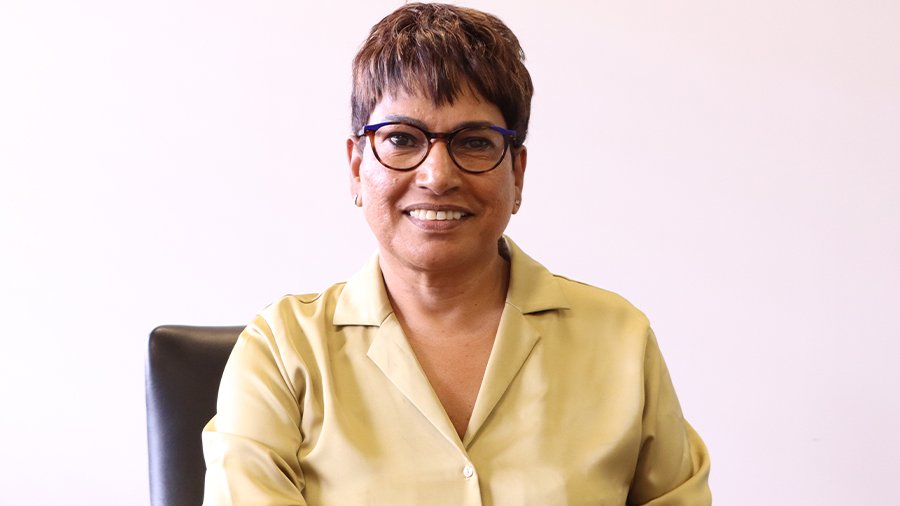
Diplomatist spoke with Prof. Nirmala Gopal to examine South Africa’s evolving role within BRICS and the broader trajectory of the grouping. In this conversation, she reflects on South Africa’s position as a key voice for the African continent within BRICS, its role in shaping development-oriented agendas, and the implications of the bloc’s recent expansion. She also discusses India–South Africa cooperation, expectations from India’s BRICS Presidency, and the growing importance of academic collaboration in strengthening Global South partnerships. The interview offers a nuanced perspective on how BRICS can evolve into a more inclusive and influential force in an increasingly multipolar world.
Prof Nirmala Gopal, Academic Leader of Research & Higher Degrees, College of Humanities, School of Social Sciences, Professor at the University of KwaZulu-Natal, Durban, South Africa
Since its accession in 2010, South Africa has emerged as a strategically indispensable actor within BRICS, functioning not merely as a participant but as a continental interlocutor and normative force. While it’s economic scale may be modest relative to its counterparts, its influence stems from its ability to embed African developmental priorities within the bloc’s structural logic.
South Africa has consistently advanced a development-centred agenda focused on infrastructure, industrialisation, regional integration, and equitable access to finance, thereby ensuring that BRICS remains attentive to the structural constraints facing African economies. Its role in shaping and operationalising the New Development Bank has been particularly significant, as it has championed financing paradigms aligned with the socio-economic realities of the Global South.
Crucially, South Africa’s contribution is not reducible to representation alone. It has acted as a norm entrepreneur, shaping the intellectual and developmental trajectory of BRICS through advocacy for inclusive growth and multilateral reform. This is further reinforced by historically grounded partnerships, particularly with India, which anchor its engagement in a shared commitment to justice and equity. South Africa does not merely bring Africa into BRICS; it ensures that Africa helps define what BRICS becomes.
The recent expansion of BRICS constitutes a structural articulation point in the bloc’s evolution, fundamentally reshaping its institutional character, strategic reach, and global positioning. From South Africa’s perspective, enlargement enhances the bloc’s legitimacy as a representative platform of the Global South while simultaneously deepening South Africa’s role as a principal custodian of African interests within an increasingly heterogeneous coalition.
Expansion creates unprecedented opportunities to elevate African priorities, particularly in development finance, infrastructure investment, and debt sustainability, within global governance frameworks. In this sense, BRICS evolves from a coalition of emerging powers into a conduit for systemic representation of historically marginalised regions.
However, this expansion is not without complexity. Greater diversity introduces challenges related to institutional coherence, coordination, and decision-making efficiency, necessitating more sophisticated governance mechanisms. South Africa’s diplomatic praxis is grounded in consensus-building and multilateral negotiation, positioning it to play a stabilising and integrative role.
Thus, for South Africa, BRICS expansion is not about numbers. It is about transforming representation into influence and diversity into strategic cohesion.
BRICS has increasingly consolidated its position as a critical platform for articulating Global South agency, particularly in challenging entrenched asymmetries within global governance structures. Its significance lies not only in its economic weight, but in its capacity to reconfigure the normative foundations of international cooperation.
For South Africa, engagement with BRICS is deeply aligned with its foreign policy ethos of multilateralism, solidarity, and developmental justice. Within this framework, South Africa operates as a strategic bridge, linking African priorities with broader Global South agendas and ensuring their incorporation into collective BRICS positions.
Its historical partnership with India enhances this role, demonstrating how shared experiences of marginalisation can be translated into coordinated leadership within multilateral platforms. Yet, the credibility of BRICS as a Global South actor will ultimately depend on its capacity to move beyond declaratory politics toward institutional delivery and measurable impact.
The relationship between India and South Africa within BRICS is distinguished by its historical depth and strategic continuity. Rooted in shared struggles against colonialism and apartheid, this partnership has evolved into a multidimensional and forward-looking alliance.
Within the BRICS framework, cooperation spans trade, investment, digital transformation, pharmaceuticals, and renewable energy, underpinned by strong alignment in multilateral forums on issues such as global governance reform and climate justice.
What sets this relationship apart is its ability to translate historical solidarity into institutional agency. It exemplifies how deeply embedded political affinities can be operationalised within contemporary multilateral structures to produce both strategic coordination and normative coherence.
Ultimately, the India–South Africa partnership is not only a legacy of shared struggle but also a blueprint for shared leadership within BRICS.
As the current chair, India occupies a pivotal position in shaping the trajectory of BRICS at a moment of expansion and transformation. From South Africa’s perspective, India’s presidency offers an opportunity to consolidate BRICS as a coherent, effective, and development-oriented platform.
South Africa expects India to advance a focused agenda centred on deepening intra-BRICS trade, strengthening institutional capacity, particularly through the New Development Bank, and accelerating cooperation in digital and technological domains. Equally important is the promotion of South–South partnerships, especially in integrating new members into a cohesive framework.
Given the historical and normative convergence between the two countries, there is a clear expectation that India’s leadership will reflect shared commitments to sovereignty, inclusivity, and developmental equity, thereby reinforcing BRICS as both a strategic and principled actor.
India’s presidency carries a dual responsibility, namely: to lead BRICS efficiently and to lead it justly.
South African universities and research institutions have become increasingly influential in shaping BRICS discourse through rigorous scholarship, policy engagement, and participation in transnational academic networks. Their contributions have been instrumental in advancing both the conceptual and empirical understanding of BRICS as a geopolitical and developmental formation.
From an academic standpoint, these institutions serve as sites of knowledge production and critical interrogation, informing policy debates and shaping the intellectual architecture of BRICS cooperation. However, there remains significant scope to enhance their impact through the establishment of dedicated BRICS research centres, expanded collaborative initiatives, and stronger integration with policymaking processes.
If BRICS is to shape the future of global governance, its intellectual foundations must be as robust as its political ambitions, and this year, we look to India for specific guidance based on its experiences.
Higher education and research partnerships within BRICS constitute a foundational pillar for innovation, capacity-building, and societal connectivity. These collaborations enable the co-production of knowledge, the development of human capital, and the formulation of contextually relevant solutions to shared developmental challenges.
From a South African perspective, such partnerships are particularly valuable in advancing context-specific research, skills development, and institutional competitiveness. Cross-sectoral collaboration in fields such as science, technology, and public health illustrates the transformative potential of BRICS academic cooperation.
To fully realise this potential, sustained investment in joint research programmes, academic mobility, and institutional networks is needed, thereby embedding collaboration within durable structures.
The future of BRICS cooperation will be written not only in policy but in classrooms, laboratories, and shared knowledge systems as we concretise these partnerships.
Looking ahead, South Africa’s engagement within BRICS must be guided by a strategic vision that integrates continental leadership with global ambition. Key priorities include advancing African integration within BRICS mechanisms, deepening economic and financial cooperation, and advocating for substantive reform of global governance institutions.
In an increasingly multipolar international system, the BRICS could emerge as a central pillar of alternative global governance, capable of reshaping norms and institutions. South Africa’s role will be to ensure that this transformation remains anchored in inclusivity, equity, and developmental relevance, with Africa positioned at the centre rather than the margins.
South Africa’s vision for BRICS is clear, namely a global order in which Africa is not merely included but indispensable.


Leave a Reply