

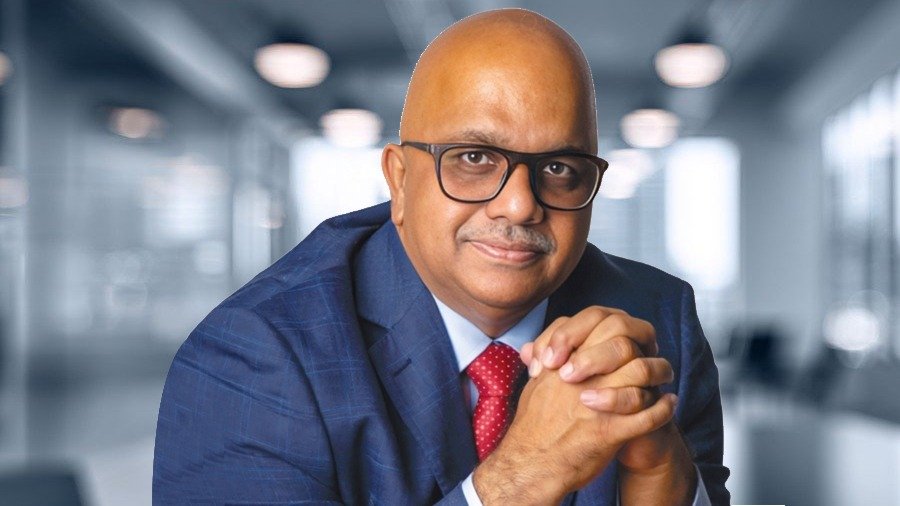
Speaking at the launch of TERI’s latest study, Indian Armed Forces and Environmental Sustainability: A Comprehensive Assessment of Simulators in ‘Green Training’, held at the Constitution Club of India, New Delhi, on 26 May 2026, Mr. Ashok Atluri, Chairman and Managing Director of ZEN Technologies, highlighted the transformative role of simulation technologies in military preparedness, sustainability, and future warfare.
Participating in a panel discussion on the evolving role of simulators in defence training, Mr. Atluri reflected on ZEN Technologies’ pioneering journey in the field of simulation and highlighted how India has emerged as a global leader in advanced military training systems.
Recalling the early days of the industry, Mr. Atluri noted that when ZEN Technologies began developing simulators in the early 1990s, the concept itself was unfamiliar to many within the defence establishment.
Over the decades, however, simulation technology has moved from being a niche concept to becoming an integral component of modern military training. Mr. Atluri emphasised that ZEN Technologies was established with a clear objective: to develop indigenous capabilities that could replace dependence on imported technologies.
“One thing we decided from the beginning was that this should be a replacement for foreign technology. At that time, nobody in India was doing it,” he said.
Highlighting the company’s innovation-driven approach, he noted that ZEN’s intellectual property portfolio extends beyond India and includes global patents. According to him, several advanced simulation systems developed in India are unique in the international defence landscape.
“Today, the extensive simulators that we have in the Indian Army and Navy are capabilities that nobody else in the world has. In fact, we now go to various countries and provide combat training solutions,” he observed.
Mr. Atluri pointed out that while simulators are increasingly recognised for reducing costs and minimising environmental impact, they also contribute significantly to enhancing operational readiness and generating export opportunities for India. The adoption of simulation technologies reduces the need for extensive use of ammunition, fuel, and equipment during training exercises, thereby contributing to greener military practices while simultaneously strengthening combat effectiveness.
Referring to the Government of India’s efforts to promote simulation-based training through policy initiatives introduced in recent years, he welcomed the growing demand for simulators across the armed forces.
“We are seeing that more and more simulators are being demanded and they are being used,” he noted.
However, he argued that the pace of adoption must accelerate in light of the rapidly changing character of warfare. According to Mr. Atluri, future conflicts will increasingly be shaped by emerging technologies, autonomous systems, and large-scale drone operations, requiring military forces to train in complex virtual environments that replicate real-world combat scenarios.
“Today, war is completely changing. It is no longer the old kind of war. You have to visualise the equipment, visualise the war scenarios. For example, how does a unit respond when it is attacked by thousands of drones? There is no conventional way to train for that. That is the reality of modern warfare,” he said.
He stressed that simulation technologies provide the only practical and cost-effective means of preparing soldiers for such evolving battlefield conditions.
Calling for India to become a global benchmark in simulation-based military training, Mr. Atluri argued that the country should move beyond merely matching international standards and instead establish new ones.
“When we started, we used to compare ourselves with how much simulation training was being conducted in countries like the United States or Russia. Today, we should aim much higher. We should be in a position where 80 percent of our training is simulation-based, and the rest of the world should be asking how much simulation training India is doing and trying to catch up with us,” he asserted.
His remarks echoed a broader theme emerging from TERI’s study, that simulation technologies can simultaneously enhance military preparedness, reduce environmental impact, conserve resources, and support India’s vision of self-reliance in defence.
As armed forces across the world adapt to increasingly technology-driven conflicts, Mr. Atluri’s intervention highlighted the strategic importance of indigenous simulation ecosystems in shaping the future of military training, operational readiness, and sustainable defence practices.


Leave a Reply