

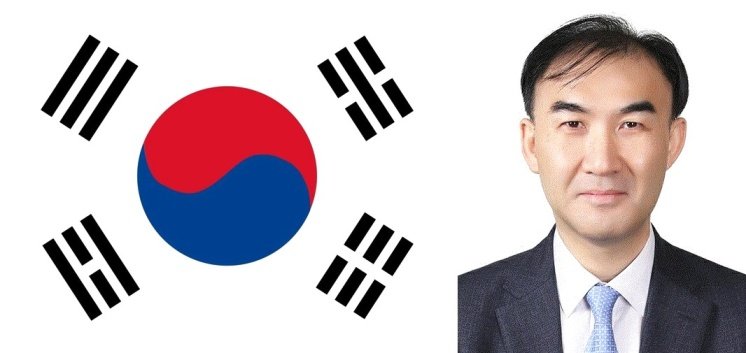
Calling India and the Republic of Korea “natural partners,” H.E. Lee Seong-ho, Ambassador of the Republic of Korea to India, highlighted the enormous potential for expanding bilateral cooperation in advanced manufacturing, digital technologies, shipbuilding, defence, semiconductors, artificial intelligence, and resilient supply chains while addressing the Indo–Korea Economic Conference, jointly organised by the Research and Information System for Developing Countries (RIS) and the Egrow Foundation in New Delhi.
The conference brought together diplomats, policymakers, academicians, industry leaders and strategic experts to discuss the future trajectory of India–Korea economic relations amid an increasingly complex global economic environment.
A Partnership for a Changing Global Order
Ambassador Lee observed that the global economy is undergoing a profound transformation, driven by geopolitical uncertainties, the restructuring of global supply chains, and intense competition in advanced technologies.
Against this backdrop, he said, the recent summit between the leaders of India and the Republic of Korea reaffirmed both countries’ commitment to elevating their Special Strategic Partnership. “The global economy is undergoing profound changes. Geopolitical uncertainty, the reconfiguration of global supply chains and intense competition in advanced technologies are reshaping the international economic landscape. Against this backdrop, our leaders have reaffirmed their shared determination to deepen the India–Korea Special Strategic Partnership.”
Natural Partners with Complementary Strengths
Describing India and the Republic of Korea as “natural partners,” Ambassador Lee said the relationship is built upon shared democratic values, market-oriented economies and mutual trust. “Korea and India are natural partners. Our two countries share the common values of democracy and the market economy, and our relationship is not constrained by historical baggage or political sensitivities. This enables us to pursue an ambitious and forward-looking partnership with confidence.”
He emphasised that India’s dynamic economy, skilled workforce, thriving innovation ecosystem and expanding domestic market complement Korea’s globally recognised strengths in manufacturing, industrial development and advanced technologies.
According to the Ambassador, these complementary advantages provide a strong foundation for expanding bilateral economic cooperation and creating new opportunities for shared prosperity.
Three Decades of Industrial Partnership
Reflecting on the economic partnership, Ambassador Lee noted that Korean companies have played a significant role in India’s industrial development over the past three decades.
He highlighted the contributions of companies such as Hyundai Motor Group, Kia, Samsung Electronics, LG Electronics, POSCO, and other Korean enterprises, which have invested extensively in manufacturing, technology and services. “Korean companies have not only invested in India but have also helped transform the country into a manufacturing and export hub by generating employment, strengthening local supply chains and contributing significantly to India’s industrial development.”
A New Strategic Vision
The Ambassador said that the recent summit between the leaders of the two countries marked the beginning of a new phase in bilateral cooperation.
Several agreements and Memoranda of Understanding (MoUs) were concluded, while business partnerships and new institutional mechanisms were launched to strengthen long-term collaboration.
Most importantly, the two leaders unveiled a Joint Strategic Vision for the India–Korea Special Strategic Partnership, providing a comprehensive roadmap for future cooperation.
Recalling Prime Minister Narendra Modi’s remarks during the joint press statement, Ambassador Lee quoted: “From ships to chips, from talent to technology, and from environment to energy, we will realise new opportunities for cooperation across all sectors. Together, we will ensure the progress and prosperity of both our nations.”
Strengthening Economic Security
Highlighting the key economic outcomes, Ambassador Lee announced that both countries have agreed to establish a Korea–India Economic Security Dialogue and an Industrial Cooperation Committee.
These institutional mechanisms, he said, would strengthen supply-chain resilience, enhance economic security and reinforce trusted industrial partnerships. “These are not merely new institutional mechanisms. They represent our shared commitment to strengthening supply chain resilience, enhancing economic security and building a trusted partnership in an increasingly uncertain global environment.”
Upgrading CEPA
The Ambassador also announced renewed efforts to accelerate negotiations on upgrading the Comprehensive Economic Partnership Agreement (CEPA).
The upgraded agreement is expected to expand cooperation in emerging sectors, including the digital economy, artificial intelligence, semiconductors, critical minerals and clean energy.
He noted that both governments have also set an ambitious target of increasing bilateral trade to US$50 billion by 2030, nearly doubling current trade volumes.
Addressing concerns over India’s trade deficit with Korea, Ambassador Lee acknowledged the issue candidly. “The current trade imbalance is, to some extent, an inevitable consequence of Korean investments importing intermediate goods during the initial stages of industrial development. As CEPA is upgraded and local manufacturing expands, I believe this imbalance will gradually be addressed.”
New Opportunities in Shipbuilding
Another major pillar of future cooperation is maritime and shipbuilding collaboration.
Recognising Korea’s global leadership in shipbuilding and India’s ambitious maritime development initiatives, Ambassador Lee said both countries have adopted a Comprehensive Framework for Partnership on Shipbuilding, Shipping and Maritime Logistics.
He noted that this framework would facilitate collaboration in shipbuilding, shipyard development, port modernisation, maritime logistics and associated industries.
Expanding Defence Industrial Cooperation
Ambassador Lee also emphasised the growing importance of defence cooperation.
Referring to the successful K9 Vajra-T self-propelled artillery programme, he said it demonstrates that defence collaboration has evolved beyond simple procurement towards joint manufacturing and technology partnerships.
The launch of the Korea–India Defence Accelerator (KINDEX), he added, would further strengthen collaboration between defence companies, startups, research institutions, universities and investors from both countries. “KINDEX will promote innovation, facilitate technology partnerships and support the development of next-generation defence capabilities.”
Building the Digital Future
The Ambassador further highlighted the launch of the Korea–India Digital Bridge, describing it as a landmark initiative to deepen cooperation in artificial intelligence, semiconductors, digital governance, data technologies and innovation. “By combining Korea’s technological expertise with India’s exceptional talent and innovation ecosystem, we can create entirely new opportunities for research, technological advancement and sustainable economic growth.”
Looking Ahead
Concluding his address, Ambassador Lee expressed confidence that the future of India–Korea economic cooperation has never been brighter. “Building on the achievements of the past three decades and guided by our Joint Strategic Vision, our two countries are well-positioned to take the India–Korea economic partnership to the next level.”
He expressed hope that the conference would generate practical recommendations for implementing the vision articulated by the two leaders and further strengthening one of Asia’s most promising strategic and economic partnerships.


Leave a Reply