

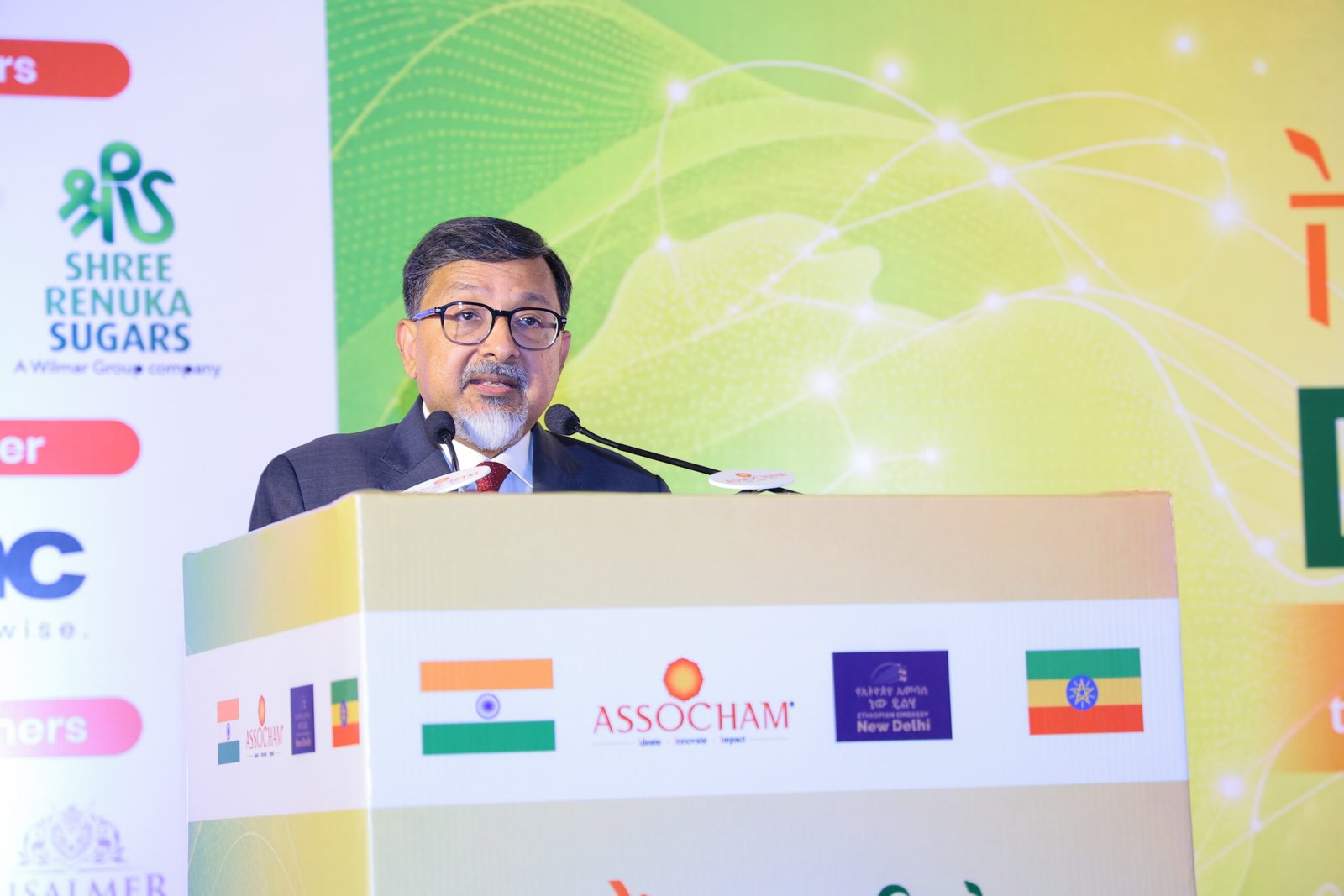
At a time when the global order is being reshaped by economic uncertainty, geopolitical shifts, and technological disruption, India and Africa are positioning their partnership as a stabilising and forward-looking force. Addressing the India–Africa Dialogue & Networking Gala hosted by ASSOCHAM at the Embassy of Ethiopia in India, Mr. Sudhakar Dalela, Secretary (Economic Relations), Ministry of External Affairs, Government of India, highlighted the strategic depth and future potential of this relationship.
A Partnership Anchored in History, Oriented to the Future
India–Africa ties are rooted in centuries of civilisational exchange and shared historical experiences, particularly the struggles against colonialism. This shared legacy continues to shape a partnership grounded in solidarity and mutual respect.
“Today, this shared history continues to inform a partnership built on common aspirations and a vision for inclusive growth,” Mr. Dalela noted.
At the same time, both regions are aligning their long-term development frameworks, India’s vision of Viksit Bharat 2047 and Africa’s Agenda 2063, creating new opportunities for collaboration, knowledge-sharing, and co-creation.
India–Africa Engagement: Expanding in Scale and Scope
Over the past decade, India’s engagement with Africa has deepened significantly across political, economic, and developmental dimensions. Diplomatic outreach has expanded, with India increasing its on-ground presence across the continent.
“Today, India maintains diplomatic missions in 46 out of Africa’s 54 countries, reflecting our commitment to engaging with the entire continent,” Mr. Dalela highlighted.
Economic ties have also strengthened. India is among Africa’s top trading partners, with a diversified trade basket spanning energy, pharmaceuticals, automobiles, agriculture, and services. Indian investments in Africa have crossed US$80 billion cumulatively, reflecting strong private sector confidence and long-term commitment.
“India has been a reliable development partner for Africa, supporting projects across diverse sectors through concessional finance and grant assistance,” he said.
Global South Solidarity and Institutional Reform
A defining feature of India–Africa relations, Mr. Dalela emphasised, is a shared vision for a more inclusive and representative global order. Both regions have consistently advocated reforms in global governance institutions, particularly the United Nations.
India has also strongly supported Africa’s greater role in global decision-making forums. This commitment was reflected during India’s G20 Summit 2023, when the African Union was admitted as a permanent member of the G20.
“India has always championed Africa’s rightful place in global decision-making,” he affirmed.
Emerging Areas of Cooperation
Looking ahead, Mr. Dalela outlined a wide spectrum of sectors that will define the next phase of India–Africa engagement. These include agriculture, healthcare, education, skilling, digital public infrastructure, renewable energy, critical minerals, artificial intelligence, and innovation-led partnerships.
“These areas offer immense opportunities for both Indian and African businesses, particularly with a focus on building local capacities and creating shared value,” he said.
He stressed that the future of the partnership lies in moving beyond traditional models towards co-creation and mutual investment aligned with long-term development goals.
Security, Sustainability, and Human Development
India and Africa are also deepening cooperation in maritime security, anti-piracy operations, and capacity-building initiatives. At the same time, collaboration in climate action and sustainability continues to gain momentum.
Several African nations are active participants in India-led global initiatives such as the International Solar Alliance and the Coalition for Disaster Resilient Infrastructure, reflecting shared priorities in addressing climate challenges.
Human resource development remains central to this engagement. Through scholarships, training programmes, and digital learning platforms, India continues to support skill development for thousands of African students and professionals.
People-to-People Connect: The Enduring Bridge
Beyond policy and economics, the India–Africa relationship is reinforced by strong cultural and societal linkages. From the Indian diaspora across Africa to shared traditions in yoga, medicine, cinema, and cuisine, these connections continue to deepen engagement.
“For centuries, the Indian Ocean has served as a bridge connecting our societies,” he said, pointing to the enduring role of people-to-people ties.
A Partnership for a Complex World
In an increasingly interconnected and uncertain world, the India–Africa partnership carries renewed significance. It is not merely about economic growth, but about building resilience, empowering societies, and creating opportunities for future generations.
“Ours is a partnership that seeks to empower people, build resilient societies, and create opportunities for the future,” Mr. Dalela observed.
Looking ahead, he pointed to the importance of sustained engagement and collaboration, particularly in the lead-up to future high-level interactions such as the India-Africa Forum Summit.
Looking Forward
Mr. Dalela called for renewed momentum in India–Africa engagement, particularly through continued dialogue, business collaboration, and cultural exchange. “As we move forward, let us continue to strengthen India–Africa friendship and partnership through sustained engagement and shared commitment,” he said.
In a world searching for stability and cooperation, the India–Africa partnership stands out, not only as a legacy of shared history, but as a blueprint for a more inclusive and collaborative global future.


Leave a Reply