

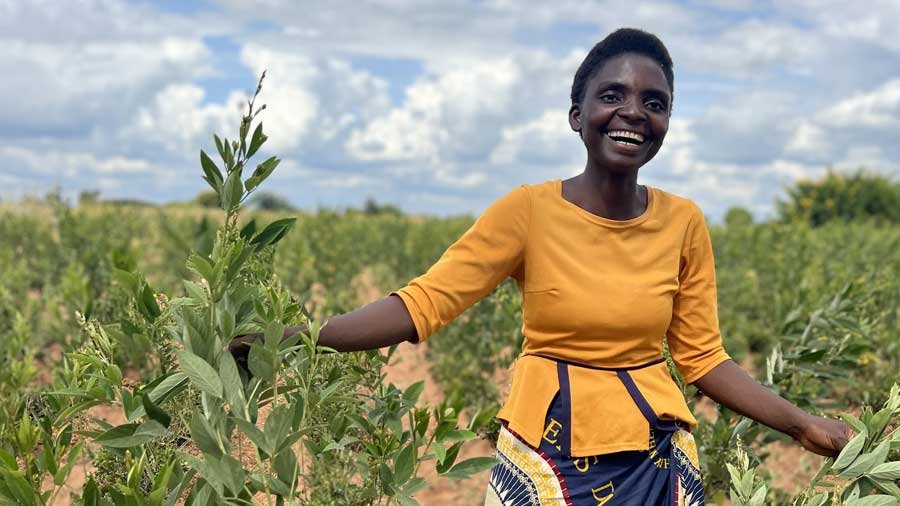
Agriculture has been one of mankind’s most important innovations. Today, our existence depends not only on natural resources, both renewable and non-renewable, but also on a regular supply of food. However, the exploitation of natural resources has negatively impacted the environment, which in turn has affected the agriculture sector as a whole.
Concerns Facing the African Agriculture Sector
Africa is one such example of the adverse effects of climate change, and it is a serious concern. What makes the situation particularly critical is the fact that nearly 60 percent of households depend, directly or indirectly, on the agriculture sector for their livelihoods.
Economically, agriculture employs 60–70 percent of Africa’s workforce. However, according to World Bank estimates, the sector contributes only about 30–40 percent to the continent’s GDP. Furthermore, nearly 70 percent of Africa’s population lives in rural areas and is largely dependent on agriculture.
Climatic threats such as droughts and heavy rainfall have negatively affected the agriculture sector between 1970 and 2020. In an age of artificial intelligence and technology-driven agriculture, the lack of basic modern infrastructure, along with inadequate financial support, continues to hinder growth. This is despite the fact that Africa possesses nearly 60 percent of the world’s uncultivated and fertile arable land.
Several other factors are frequently cited as impediments to agricultural growth in developing countries, including the lack of scientific innovation systems, weak institutional coordination, underdeveloped markets and value chains, and inadequate transportation infrastructure. African countries are no exception to these challenges.
India–Africa Cooperation in Agriculture
India and Africa share historical ties that date back to the 1st century AD, as evidenced by The Periplus of the Erythraean Sea, a sailor’s logbook that documents India’s trade with African regions.
Prime Minister Jawaharlal Nehru famously referred to Africa as “a sister continent,” linking India’s own struggle for freedom with Africa’s fight against apartheid and colonialism.
Beyond these historical connections, India and Africa today share a strong economic partnership. Bilateral trade between the two stands at approximately US$100 billion annually, with an ambitious target of reaching US$200 billion by 2030.
The trade basket between India and African nations includes refined petroleum products, pharmaceuticals, machinery, and equipment exported from India to Africa. Cereals also constitute an important component of India’s exports, helping address food security concerns across the continent.
India’s imports from Africa include crude oil, coal, agricultural products, precious stones, and other commodities.
In recent years, India–Africa agricultural cooperation has evolved into a strategic partnership. This partnership has played an important role in Africa’s agricultural transformation. Alongside government-to-government cooperation, the private sector has also made significant investments across African countries.
Millets: For a Sustainable and Environmentally Friendly Future
Millets are widely recognised for their nutritional value and are particularly well suited to arid and semi-arid regions. Unlike many other crops, millets require relatively low-cost inputs, making them an attractive option for African countries such as Kenya and others facing food security challenges.
Both India and Africa cultivate and consume several common varieties of millets, including Pearl Millet (Bajra), Finger Millet (Ragi), and Sorghum (Jowar).
Interestingly, Finger Millet is native to East Africa but has become a major staple crop in South India. Similarly, Sorghum serves as an important staple food for millions of households across both India and Africa.
The India–Africa International Millet Conference held in 2023 serves as a significant example of cooperation between the two regions. During the conference, both sides highlighted the importance of millets and discussed how these crops could help address nutritional deficiencies among low-income households while contributing to a more sustainable future.
Government-to-Government Cooperation
India’s agricultural partnership with African countries has largely focused on providing concessional loans and Lines of Credit (LoCs). These financial instruments have helped improve soil quality, promote agricultural mechanisation, and support the adoption of more efficient and modern farming practices.
India’s LoCs to countries such as Ethiopia and Ghana have facilitated the establishment of sugar mills, while support extended to Central and West African nations has contributed to the development of rice-processing units. A US$5 million LoC to Lesotho has assisted in upgrading agricultural equipment, while a US$1 million LoC to Malawi has helped develop agricultural training infrastructure.
India’s investments in research and development, coupled with the sharing of successful agricultural practices and technical expertise, have further strengthened this partnership.
Role of the Private Sector
In addition to government-to-government cooperation, private-sector investments have increased significantly over the past decade. Several Indian companies have invested in Africa’s agriculture sector, particularly in food processing, commercial farming, and irrigation.
Indian agricultural firm Midex Global Pvt. Ltd. formed a joint venture with Zimbabwe’s Industrial Development Corporation and established Southern Africa’s largest edible oil manufacturing unit near Harare with an investment of US$1.5 million.
In an effort to make better use of their vast arable land resources, several African countries have introduced innovative policies. One such initiative involves offering agricultural land to overseas farmers on long-term leases of up to 99 years. This opportunity has attracted interest from farmers in Punjab and other parts of India.
Another Indian company, Kirloskar Brothers Limited, has invested in several irrigation projects across Africa using advanced water-management technologies. These initiatives have reportedly contributed to a six-fold increase in rice production in Senegal.
Similarly, Varun Beverages, a company listed on India’s National Stock Exchange, has invested US$250 million in a bottling plant and fruit puree processing unit in Africa. This investment is expected to enhance local manufacturing capacity and generate employment opportunities for African youth.
Such investments not only expand revenues and business opportunities for Indian companies but also contribute to Africa’s economic development by creating jobs and providing opportunities beyond traditional agricultural practices.
The Road Ahead
Today, climate change is affecting every country in one way or another. India and Africa are no exceptions, particularly given their significant dependence on agriculture, a sector that remains highly vulnerable to climatic conditions.
At the same time, geopolitical instability, including disruptions in global energy markets and fluctuations in oil and gas prices, has indirect consequences for agriculture and those who depend on it. Such disruptions often create ripple effects across related sectors, including transportation and logistics, ultimately contributing to higher inflation.
Given these realities, enhanced cooperation between India and Africa can help both regions navigate future challenges. Such collaboration can strengthen food security across Africa while creating new investment opportunities for Indian enterprises.
A combination of India’s agricultural expertise, technological innovation, and experience, together with Africa’s vast natural resources and agricultural potential, can pave the way for a more secure and sustainable future for both regions.
References:
https://www.orfonline.org/research/india-africa-partnership-for-agricultural-development-and-food-security
https://www.mea.gov.in/Portal/ForeignRelation/Africa-India-Background-Brief-Final.pdf
https://pressroom.icrisat.org/millets-strengthen-relations-between-india-and-african-nations
https://www.niti.gov.in/sites/default/files/2024-01/Millet-Compendium.pdf
https://www.pib.gov.in/PressReleasePage.aspx?PRID=2161863®=3&lang=2
Agriculture as an Emerging Sector: Mutual Interests of India and Africa.
https://visionias.in/current-affairs/monthly-magazine/2026-01-28/international-relations/india-africa-relations-1
https://www.downtoearth.org.in/africa/agriculture-in-africa-science-and-research-cant-make-an-impact-without-investment-and-good-policies
https://www.fao.org/family-farming/regions/africa/en/
https://documents1.worldbank.org/curated/en/795321468191670202/pdf/769900WP0SDS0A00Box374393B00PUBLIC0.pdf
https://www.ilo.org/resource/article/can-africa-harness-agriculture-decent-job-creation


Leave a Reply