

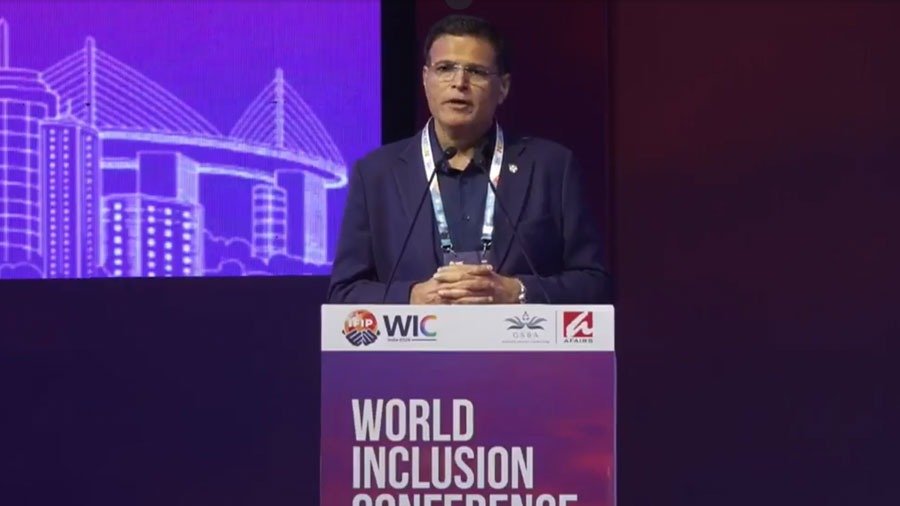
Inclusive education cannot be achieved through isolated interventions; it must be intentionally embedded into every aspect of the learning experience, from curriculum and assessments to classroom culture and school leadership, said Vinay Sharma, Senior Vice President – International Education, South Asia, Cambridge University Press & Assessment, during the World Inclusion Conference India 2026.
Speaking on the theme “Inclusion by Design: Creating Fair Opportunities for Every Learner to Succeed,” Sharma urged educators, school leaders and policymakers to rethink how education systems are developed, placing fairness and accessibility at the heart of every decision.
He observed that while discussions around inclusion often focus on supporting learners after barriers emerge, the real objective should be to design learning environments where those barriers do not exist in the first place.
“At the heart of inclusive education lies one simple but powerful belief: every learner deserves a fair opportunity to succeed.”
Sharma emphasised that every educational decision, from curriculum design and teaching practices to learning resources, assessments and classroom environments, shapes a learner’s experience.
“The question is not whether learners should adapt to education. The question is whether education is designed to respond to diversity.”
He argued that the quality of education should no longer be measured solely by academic outcomes, but also by whether every learner is given an equitable opportunity to achieve those outcomes.
“Quality education is not only defined by what learners achieve, but equally by whether every learner has been given a fair opportunity to achieve.”
Designing Inclusion from the Beginning
Explaining Cambridge’s philosophy of “Inclusion by Design,” Sharma said inclusive education is not a standalone programme or intervention. Instead, it should be integrated throughout the learner’s educational journey.
According to him, curriculum design must maintain academic rigour while recognising that learners engage with knowledge in different ways. An inclusive curriculum, he said, creates multiple pathways for progression without lowering standards or expectations.
He also highlighted the importance of accessible learning resources, describing Cambridge’s “Born Accessible” publishing approach, where accessibility is embedded into educational content from the very beginning rather than added later.
The approach includes clear page layouts, meaningful image descriptions, improved visual contrast and content designed to support learners with dyslexia and other neurodiverse learning needs.
“Accessibility should never be an afterthought. It must be built into educational resources from the very beginning.”
The Teacher Remains Central
While curriculum and resources are important, Sharma stressed that teachers remain the cornerstone of inclusive education.
Responsive teaching, thoughtful questioning, empathetic listening and collaborative classroom practices, he said, create learning environments where every learner feels valued and confident enough to participate.
He noted that Cambridge supports educators through professional development programmes, practical guidance and research that help teachers respond effectively to increasingly diverse classrooms.
Making Assessments Fair
Sharma also drew attention to the role of assessment in promoting inclusion.
He explained that assessment systems should remove unnecessary barriers that prevent learners from demonstrating what they know while maintaining academic integrity and standards.
“Fair access arrangements do not lower standards, they ensure that assessments measure what learners know and can do, rather than the barriers they face.”
Leadership Creates Inclusive Cultures
Beyond curriculum, teaching and assessment, Sharma underscored the importance of school leadership in building inclusive institutions.
According to him, truly inclusive schools are those where leaders cultivate a shared belief that every learner belongs, matters and has the potential to succeed.
This vision, he said, influences everything, from classroom organisation and communication practices to family engagement, teacher collaboration and the way success is recognised.
“Diversity is not a challenge to be managed; it is a strength that enriches education for everyone.”
Inclusion Is a Continuous Commitment
Concluding his address, Sharma reminded the audience that inclusive education is not about creating separate systems for particular groups of learners.
Instead, it is about designing better education for every learner, regardless of background, ability or learning style.
“Inclusive education is not about designing a different education for some learners. It is about designing better education for every learner.”
Reaffirming Cambridge University Press & Assessment’s commitment to supporting schools, educators and policymakers, Sharma said meaningful inclusion requires sustained collaboration and continuous improvement.


Leave a Reply