

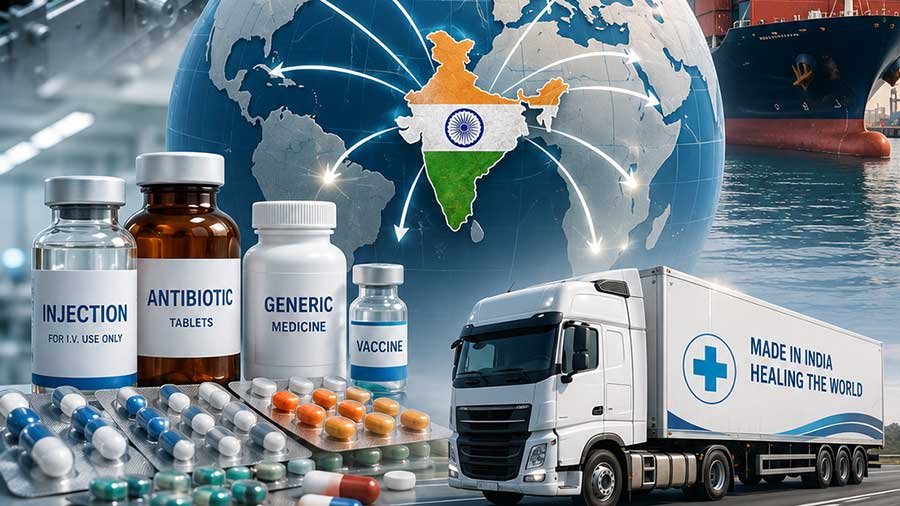
The global health order is at an inflection point. The COVID-19 pandemic and the recent US-Iran war exposed the fragility of international supply chains, the inequitable distribution of vaccines and diagnostics, and the uncomfortable reality that access to healthcare technologies is often determined as much by geography and purchasing power as by medical need. For the Global South, these lessons were particularly stark. Countries with large populations and significant disease burdens often found themselves competing for technologies developed and controlled elsewhere.
Against this backdrop, BRICS presents an increasingly important opportunity to rethink global health cooperation. With its expanding membership and extraordinary demographic, economic and geographic diversity, the grouping brings together countries facing vastly different healthcare realities but sharing many common challenges be it infectious and non-communicable diseases, ageing populations, unequal access to healthcare, dependence on imported technologies and the growing threat of future pandemics & regional wars.
For India, BRICS 2026 offers an opportunity to move healthcare diplomacy beyond declarations towards a more structured architecture of cooperation. India has already demonstrated its ability to operate at scale through pharmaceuticals, vaccines, digital public infrastructure, healthcare delivery and increasingly, medical technology & devices. The next phase should be about converting these capabilities into durable partnerships across the Global South.
Health Diplomacy Must Move from Aid to Partnership
Healthcare diplomacy has traditionally been understood through the prism of humanitarian assistance, development aid or emergency response. While these remain important, the future demands a more collaborative model. Countries of the Global South do not merely need products, they need resilient healthcare ecosystems.
India’s healthcare diplomacy can therefore be built around partnerships in manufacturing, technology transfer, clinical research, regulatory capacity, workforce development and digital health. A stronger BRICS health framework could facilitate joint capacity-building programmes, support the development of healthcare infrastructure and enable countries to build local capabilities rather than remaining perpetually dependent on imports. This approach would also strengthen strategic relationships. Health is increasingly becoming an important instrument of foreign policy. The ability to support another country’s healthcare system during a crisis, provide affordable medicines, devices and technologies, train healthcare professionals or establish local manufacturing partnerships creates a relationship that extends well beyond conventional trade.
For India, this presents a natural opportunity. Its pharmaceutical industry has already established global credibility, while Indian hospitals, doctors, researchers and health technology companies have built significant international capabilities. The rapid growth of Indian medical devices & technology further expands this proposition. The objective should therefore be clear, “India should move from being seen only as a supplier of affordable healthcare products to becoming a long-term healthcare development partner for the Global South”.
Pharmaceutical and Vaccine Cooperation: From Supply Security to Shared Capability
One of the strongest lessons of the pandemic was that concentration of manufacturing capability can become a global vulnerability. Even when scientific innovation is distributed globally, manufacturing capacity and procurement power often remain concentrated in a relatively small number of countries.
BRICS countries have an opportunity to create more resilient networks for pharmaceuticals, vaccines and essential medical technologies. This does not require each country to replicate the entire healthcare manufacturing value chain. Rather, cooperation can be based on complementary strengths.
India brings scale in generic medicines, vaccines, manufacturing and scientific talent. Other BRICS economies offer capabilities in biotechnology, research, raw materials, advanced manufacturing and large healthcare markets. A structured BRICS platform could encourage joint research programmes, manufacturing partnerships and supply-chain diversification.
Vaccine cooperation must similarly evolve beyond emergency procurement. Future preparedness requires sustained investment in platform technologies, clinical trial networks, surveillance systems and manufacturing readiness. BRICS could establish collaborative mechanisms that allow participating countries to rapidly share scientific information, coordinate clinical research and activate manufacturing capacity during a health emergency. The long-term objective should be preparedness before crisis, rather than competition after crisis.
The Next Frontier: Medical Technology and Health Innovation
The conversation on BRICS health cooperation has understandably focused on pharmaceuticals and vaccines. However, the next major frontier will be medical devices & technology.
The burden of cardiovascular disease, cancer, diabetes, neurological disorders and other non-communicable diseases is increasing rapidly across emerging economies. These conditions require not only medicines but also sophisticated diagnostics, implants, imaging, surgical technologies and digital monitoring systems.
India’s MedTech ecosystem is evolving rapidly, particularly in areas such as cardiovascular interventions, diagnostics, digital health and affordable technologies. Companies are increasingly investing in research, intellectual property, clinical evidence and advanced manufacturing. BRICS can become a platform for cooperation in these emerging technologies. This could include joint innovation programmes, clinical research partnerships, regulatory dialogue and technology transfer.
However, market access remains a major challenge. A medical device may be approved and clinically validated in one country, yet require lengthy and duplicative processes elsewhere. Differences in regulatory frameworks, testing requirements and documentation often increase costs and delay patient access. The answer is not weaker regulation. Patient safety and product quality must remain non-negotiable. The opportunity lies in developing greater regulatory cooperation, reliance and harmonisation. BRICS regulators could explore structured information-sharing mechanisms, common principles for quality systems and appropriate reliance pathways for products already evaluated by trusted regulatory authorities.
For high-risk medical technologies, robust clinical evidence will remain essential. But duplication without scientific necessity should be reconsidered. A future BRICS health architecture should therefore seek to balance scientific rigour with regulatory efficiency.
Health Equity Requires Innovation That Travels
Health equity is often discussed primarily in terms of affordability. Affordability is important, but it is only one part of the equation. A technology that is affordable but unavailable does not improve outcomes. A hospital that exists but cannot be reached does not create access. A medicine approved in one market but unavailable in another does not solve the patient’s problem.
Prime Minister Modi has increasingly articulated healthcare through the principles of affordability, availability and accessibility. These remain powerful foundations. However, as India seeks a greater role in global health, there is an opportunity to add a fourth dimension which is Advancement. The Global South should not become the destination for yesterday’s technologies while advanced innovation remains concentrated elsewhere. Healthcare equity must also mean equitable access to the technologies of the future.
This is where India can play an important leadership role. Indian companies are increasingly demonstrating that advanced technologies can be designed and manufactured at more affordable price points. The growth of Indian cardiovascular devices, diagnostics, digital platforms and other healthcare technologies demonstrates that innovation and affordability do not need to be mutually exclusive. The future objective should therefore be Affordable, Available, Accessible and Advanced healthcare. This fourth “A”—Advancement—is particularly important because it connects health equity with technological ambition. Patients in emerging economies should not have to choose between affordability and innovation.
Digital Health and the Power of Data Cooperation
Digital health could become one of the most transformative areas of BRICS cooperation. India’s experience with large-scale digital public infrastructure through the Ayushman Bharat Ditigal Health Mission has demonstrated the potential of technology to connect patients, providers and health systems.
Across BRICS, digital platforms can support telemedicine, electronic health records, disease surveillance, clinical decision support and healthcare logistics. However, technology alone will not create a stronger health system. Interoperability, data governance and cybersecurity will become increasingly important. A fragmented digital environment can create new barriers even while solving old ones. On the principles of Ayushman Bharat Ditigal Health Mission, BRICS countries could explore principles for interoperable health systems while respecting national sovereignty and privacy frameworks. Collaborative disease surveillance and health-data analytics could also improve pandemic preparedness.
There is also an opportunity to develop disease observatories focused on conditions that disproportionately affect populations across the Global South. Shared data, properly governed and anonymised, can help researchers better understand disease patterns and support more relevant innovation. Artificial Intelligence will further accelerate this transformation. AI can support diagnostics, workflow management, predictive healthcare and medical research. Yet it also raises questions around bias, transparency and accountability. India can advocate a model of AI governance that encourages innovation while ensuring responsible and equitable deployment.
Pandemic Preparedness Cannot Begin After the Pandemic
Future health crises are inevitable. Whether caused by infectious disease, antimicrobial resistance, climate-related events or other emerging threats like the recent H1N1 strain, health systems must be prepared before the emergency begins. A stronger BRICS preparedness architecture could include collaborative surveillance, joint simulation exercises, emergency manufacturing protocols and pre-established clinical trial networks.
India’s scientific institutions, pharmaceutical and MedTech industry and manufacturing ecosystem can play an important role in such an architecture. But preparedness must be genuinely collaborative. The pandemic demonstrated that nationalism can quickly replace international solidarity during a crisis. A structured framework based on pre-agreed principles could help BRICS members coordinate more effectively when the next emergency emerges. This is also where healthcare diplomacy and economic diplomacy intersect. For BRICS, Supply security, manufacturing capacity and logistics are no longer merely commercial issues, they are matters of health security.
FTAs, Global Integration and the Future of Healthcare Trade
India’s expanding network of Free Trade Agreements adds another dimension to its healthcare diplomacy. FTAs can create new commercial opportunities, strengthen partnerships and integrate Indian companies more deeply into global markets.
For healthcare industries, however, tariffs are only one part of the story. Meaningful market access increasingly depends on regulatory recognition, standards, clinical evidence and efficient approval pathways. A medical technology can enter a market tariff-free and still remain commercially inaccessible if regulatory processes are excessively duplicative or unpredictable.
India should therefore increasingly advocate for regulatory harmonisation, Mutual Recognition Agreements and reliance mechanisms alongside trade negotiations. This is particularly important for pharmaceuticals, vaccines and medical devices, where trust in quality and regulatory systems determines market access. Recent trade agreements also signal something more important and very proudly Indian products and capabilities are gaining wider global acceptance. The next challenge is to convert that acceptance into deeper institutional trust.
India’s Moment to Shape a More Inclusive Health Architecture
India’s strength lies in its ability to combine scale with diversity. It understands the healthcare challenges of a large and heterogeneous population while simultaneously building advanced capabilities in pharmaceuticals, biotechnology, medical technology and digital health. This gives India a distinctive voice within BRICS and the broader Global South.
The ambition should not be to create an alternative global health architecture simply for geopolitical reasons. The objective should be to make the existing global health ecosystem more representative, resilient and inclusive. India can champion an approach based on cooperation rather than dependency, innovation rather than imitation and capacity-building rather than one-way assistance.
The diversity of BRICS populations provides an enormous opportunity for collaborative research and healthcare innovation. Its countries collectively represent varied genetics, disease burdens, health systems and demographic realities. If responsibly connected through research and scientific cooperation, this diversity could generate insights that are globally significant. The coming years will test whether BRICS can convert political dialogue into practical health cooperation. The opportunity is substantial, but it will require institutions, funding, regulatory engagement and sustained private-sector participation.
For India, the strategic question is not simply whether it can supply the Global South with medicines and technologies. The larger question is whether it can help shape a future in which the Global South increasingly develops, validates, manufactures and governs its own healthcare solutions. That would be the true meaning of healthcare diplomacy in the next decade.
And perhaps that is where India can take the next step beyond the three A’s of healthcare to the fourth A of Advancements. Because for a healthier and more equitable Global South, access to healthcare must ultimately also mean access to the future.



Leave a Reply