

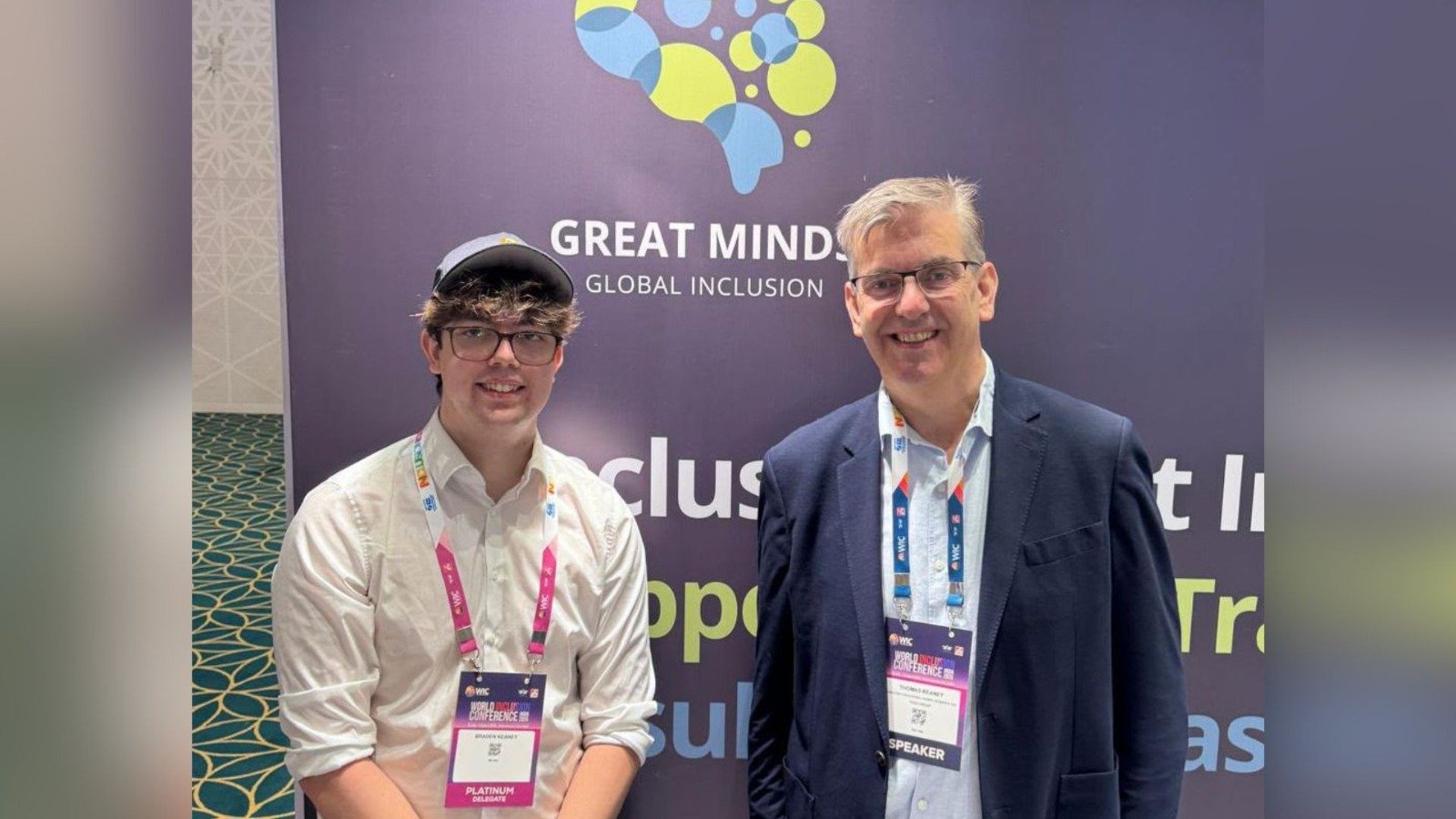
As conversations around inclusive education gather momentum across the world, one message resonated strongly at the World Inclusion Conference India 2026: inclusion is no longer a regional priority; it is a global responsibility.
Among the international delegates who drew significant attention were Thomas Keaney, Founder & CEO of TCES Group (The Complete Education Solution), UK, and Braden Keaney, Partnership Executive at Great Minds Therapy & Training Services.
Representing one of the United Kingdom’s leading therapeutic education organisations, the father-son team arrived in New Delhi not merely to participate in another international conference, but to explore meaningful partnerships with Indian schools and education leaders.
During an interaction with Diplomatist, the official Media Partner of the conference, the discussion centred on one fundamental question: Why India?
The answer was simple.
India is witnessing an unprecedented transformation in its education ecosystem. With the National Education Policy placing greater emphasis on equity, accessibility and learner-centred education, there is growing recognition that inclusion must extend far beyond infrastructure. It requires new teaching practices, trained educators, therapeutic support and leadership that understands every learner’s individual journey.
For Thomas Keaney, this represents an opportunity for collaboration rather than consultation.
Having spent more than twenty-five years building therapeutic education models in the United Kingdom, TCES has established itself as a specialist organisation supporting children with Special Educational Needs and Disabilities (SEND), autism, Social, Emotional and Mental Health (SEMH) needs and those at risk of exclusion.
Founded in 1999, the organisation has grown from supporting a single learner into a network of specialist schools, therapy services, a training academy and one of the UK’s pioneering accredited National Online Schools for learners requiring specialist support. Throughout its journey, TCES has remained committed to one defining principle, never giving up on a child and never permanently excluding a learner.
That philosophy now forms the foundation of Great Minds Therapy & Training Services, an initiative designed to take decades of practical experience beyond the walls of TCES schools. Rather than simply offering therapy, Great Minds works with teachers, school leaders and education professionals through online training, professional development programmes, leadership coaching, therapeutic guidance and practical demonstrations that help schools build genuinely inclusive environments. Its courses combine psychology, therapeutic education and experiential learning to strengthen the capabilities of educators working with diverse learners.
The World Inclusion Conference therefore presented an ideal platform to introduce these approaches to Indian educators.
Throughout the conference, Thomas and Braden Keaney met school leaders, educators, counsellors and institutional representatives from across India. Their objective was not simply to showcase programmes but to understand the realities faced by Indian schools.
As they explained during the conversation, the visit was as much about listening as it was about sharing.
India’s educational landscape is incredibly diverse. Metropolitan schools, international institutions, public schools and emerging private schools all encounter different inclusion challenges. Understanding these contexts is essential before proposing meaningful solutions.
One of the key initiatives the team is currently undertaking involves engaging with schools through surveys, consultations and online demonstrations. These interactions are intended to identify specific institutional needs and explore how international expertise can complement existing Indian educational practices rather than replace them.
This collaborative approach reflects a broader philosophy that inclusive education cannot be exported as a ready-made model. Every country has its own educational culture, policy framework and classroom realities. Effective inclusion emerges through partnership, adaptation and continuous dialogue.
Another area that generated considerable interest was technology-enabled learning.
While online education became commonplace during the pandemic, TCES has continued to refine digital therapeutic education for learners who cannot always access conventional classrooms. Their experience in delivering structured online support to students with complex educational needs offers valuable insights for education systems seeking flexible, personalised learning pathways.
For Indian schools increasingly embracing digital education, this expertise presents exciting possibilities, not as a replacement for classroom teaching but as an additional layer of support for learners requiring specialised intervention.
Equally significant was the emphasis placed on educator capacity building.
Rather than focusing exclusively on student interventions, Great Minds believes lasting inclusion begins with empowering teachers and school leadership. Professional development, therapeutic awareness and practical classroom strategies equip educators to identify challenges earlier, respond more effectively and create learning environments where every child feels valued.
This philosophy aligns closely with emerging conversations within India’s education sector, where teacher training is increasingly recognised as central to successful implementation of inclusive education policies.
Beyond the conference sessions themselves, the visit also reflected a growing international trend.
Education organisations are increasingly looking towards India, not simply as a large education market but as an innovation partner capable of contributing to global conversations on inclusive learning.
The World Inclusion Conference created this environment precisely, bringing together policymakers, researchers, school leaders, practitioners and international organisations committed to building more equitable education systems.
For Thomas and Braden Keaney, participation in India represented another important step in extending the global footprint of TCES and Great Minds. Having engaged with educators across Europe and Africa, India now forms an important part of their broader international engagement strategy focused on collaboration, knowledge exchange and long-term partnerships.
Their presence also reinforced an important message echoed throughout the conference. Inclusive education is no longer solely about special education.
It is about reimagining schools where diversity is recognised as a strength, where wellbeing becomes part of learning, where educators receive the support they need and where every learner, regardless of ability or background, is given an equal opportunity to succeed.


Leave a Reply