

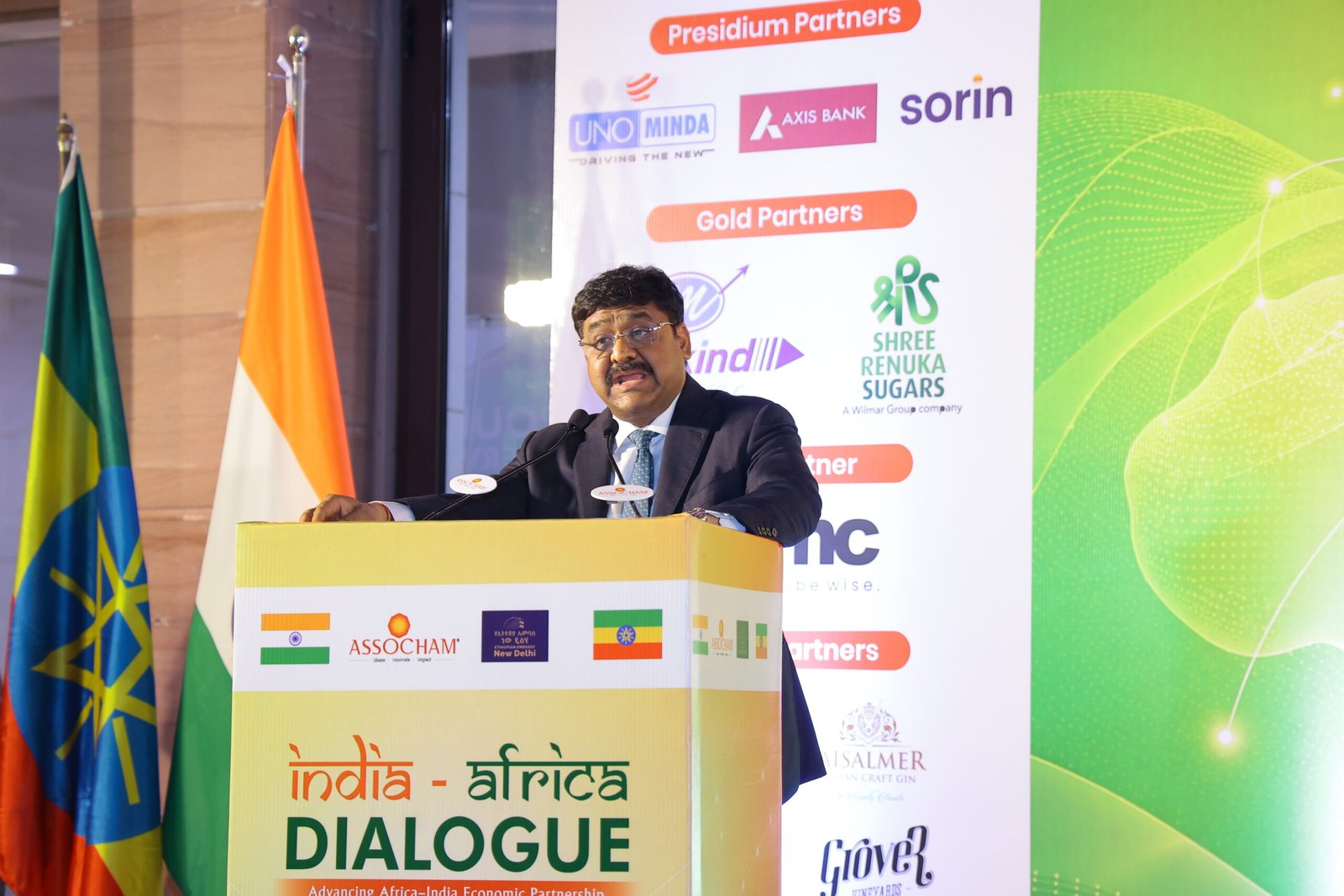
At a time when global economic alignments are undergoing rapid transformation, the India–Africa partnership is emerging as one of the most promising axes of growth and cooperation. Speaking at the India–Africa Dialogue & Networking Gala organised by ASSOCHAM at the Embassy of Ethiopia in India on May 4, 2026, Mr. Ravi Gupta, Executive Director, Shree Renuka Sugars, highlighted the urgency of transitioning this relationship from historical goodwill to a robust economic alliance.
A Relationship Rooted in History
India and Africa share a long-standing relationship shaped by centuries of maritime trade across the Indian Ocean. From the exchange of textiles and spices to gold and cultural influences, these interactions laid the foundation for enduring people-to-people connections.
“India and Africa share a relationship that goes far deeper than trade statistics or diplomatic engagements,” Mr. Gupta emphasised. “Our connection is rooted in centuries of civilisational exchange… and a shared history of struggle for sovereignty and self-determination.”
This historical depth, he argued, continues to inform contemporary engagement, giving the partnership a unique character grounded in trust and mutual respect.
Africa: The Next Growth Frontier
Africa today represents one of the most dynamic economic frontiers globally. With a population exceeding 1.4 billion, predominantly young and a rapidly expanding middle class, the continent is poised for sustained growth. The implementation of the African Continental Free Trade Area, the world’s largest free trade area by number of participating countries, is further expected to accelerate intra-African trade and industrialisation.
“Africa today stands as one of the world’s most promising growth frontiers,” Mr. Gupta observed, highlighting the continent’s demographic dividend and policy momentum.
India, in turn, brings complementary strengths in pharmaceuticals, digital innovation, agriculture, renewable energy, and infrastructure, areas that align closely with Africa’s developmental priorities.
From Solidarity to Strategic Co-Partnership
“As we often say, the future of India–Africa relations must move from historical solidarity to economic co-partnership,” he remarked.
He outlined three strategic priorities to drive this transformation. First, he emphasised the need to diversify trade and expand market access. While traditional sectors such as energy and commodities will continue to remain important, he stressed that the next phase of engagement must move towards value-added industries. “The next phase of engagement must focus on agri-processing, engineering goods, pharmaceuticals, digital services, and sustainable technologies,” he stated.
Equally critical, he noted, is the need to build resilient supply chains and manufacturing partnerships. Moving beyond a trade-centric model towards co-production, co-development, and technology transfer would not only strengthen supply chains but also generate employment and ensure long-term industrial growth. “By moving to co-production and technology transfer, we can create resilient supply chains, generate employment, and foster long-term industrial growth,” Mr. Gupta observed.
He also underscored the importance of empowering Micro, Small and Medium Enterprises (MSMEs) and strengthening digital trade ecosystems. MSMEs remain central to India’s economic framework, contributing nearly 30 percent to GDP and a significant share of exports. Leveraging digital platforms, e-commerce, and fintech solutions can enable these enterprises to access global markets more effectively. “MSMEs form the backbone of India’s export ecosystem… their integration into India–Africa trade will be transformative,” he emphasised.
Trust as the Cornerstone
Beyond economics, Mr. Gupta highlighted trust as a defining pillar of the India–Africa relationship, strengthened through cultural affinity, education, healthcare collaboration, and diaspora linkages. This trust, he argued, provides a strong foundation for scaling business partnerships and institutional collaboration.
Sectoral Opportunities: From Agriculture to Green Energy
He also outlined high-potential sectors for collaboration, including agriculture and agro-processing, food security, renewable energy, healthcare, pharmaceuticals, digital services, and infrastructure.
Drawing from his own experience in the agro-processing sector, Mr. Gupta highlighted the potential of integrating supply chains across regions. India is among the world’s largest producers of sugar, while several African nations offer opportunities for both production and distribution partnerships.
He pointed to strategic logistics hubs such as Djibouti as gateways for trade expansion. “By jointly investing in infrastructure and supply chain networks, India and Africa can unlock significant efficiencies and expand trade reach,” he said.
On energy, India’s progress in renewable energy and ethanol blending offers a replicable model. India has significantly expanded its renewable energy capacity over the past decade and has actively promoted ethanol blending in fuel to enhance energy security and reduce emissions.
The Road Ahead
Mr. Gupta reaffirmed the commitment of ASSOCHAM in deepening India–Africa engagement, particularly through MSME-driven trade and investment.
“The time has come to move beyond transactional trade and shape a new era of collaboration, based on co-creation, co-investment, and shared prosperity,” he asserted. In a powerful closing note, he summed up the spirit of the partnership: “Our partnership is not just about common interests, it is about a common purpose. Together, we can script the next chapter of global progress.”


Leave a Reply