

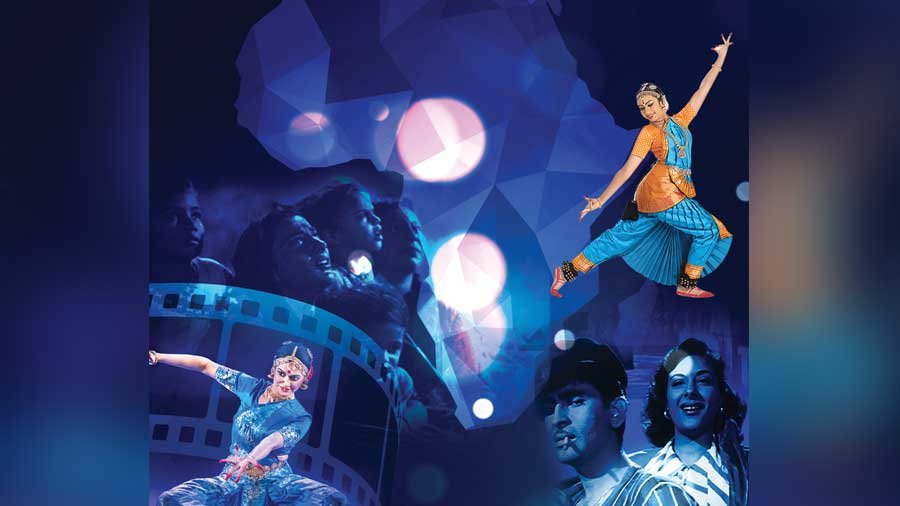
The relationship between India and East Africa represents one of the oldest and most enduring cultural exchanges in the Indian Ocean world. Long before colonialism, merchants, sailors, and migrants moved between the western coast of India and the Swahili coast of East Africa, creating networks of commerce, religion, language, and culture.
Centuries later, these historical connections found a new expression through Bollywood cinema. Across cities such as Nairobi, Zanzibar, Mombasa, Kampala, and Dar es Salaam, films like Awara (1951), Shree 420 (1955), Mother India (1957), Sholay (1975), and Amar Akbar Anthony (1977) became highly popular among African audiences. Bollywood songs were played at weddings and social gatherings, while actors such as Raj Kapoor and Amitabh Bachchan achieved iconic status in East Africa.
Bollywood’s emotional narratives and musical storytelling enabled Indian cinema to transcend linguistic and geographical boundaries. Thus, from Zanzibar’s trading ports to East African cinema halls, Indo–African interactions reveal a long history of cultural hybridity and shared imagination.
Indian Ocean Trade and Early Cultural Exchange
The Indian Ocean connected India and East Africa through centuries of trade, migration, and cultural exchange. K. N. Chaudhuri (1985) described it as an integrated space where monsoon winds enabled trade between Gujarat, Malabar, and the Swahili coast, exchanging Indian textiles, spices, and beads for African ivory, gold, and timber. Zanzibar became a major trade centre in the 19th century under Sultan Said bin Sultan, while Gujarati, Bohra, Khoja, and Parsi traders linked East Africa with Bombay and other Indian ports.
Cultural exchange also shaped Swahili civilisation through African, Arab, Persian, and Indian influences, reflected in language, food, clothing, and architecture. During colonial rule, Indians migrated to East Africa as labourers, traders, and clerks, especially during the construction of the Uganda Railway (1896–1901), and later established schools, religious institutions, newspapers, and businesses in cities such as Nairobi, Kampala, Mombasa, and Dar es Salaam. In conclusion, Indian Ocean interactions created lasting economic and cultural ties that shaped the hybrid identity and urban development of East Africa.
Bollywood and the Making of Cultural Connections
One of the most significant cultural ties between India and East Africa was forged through cinema. Starting from the 1940s, Bollywood films were played in Indian-owned cinema halls and diaspora networks for distribution. Bertz (2019) says that Hindi films became a very strong cultural channel because the issues of families, migration, love, morality, and social struggles that formed the basis of the stories resonated with the African audiences very deeply.
Several Bollywood films came to be extraordinarily popular in East Africa. The very fact that Raj Kapoor’s Awara and Shree 420 depicted poverty, inequality, and urban hardships caused them to be loved by the viewers, as these reflected post-colonial social realities. Rachel Dwyer (2014) points out that the “common man” image of Kapoor was highly relatable to the newly independent Asian and African societies.
Apart from this, Mother India won admiration by virtue of its portrayal of the struggles of a mother and the symbol of resilience it conveyed.
In the 1970s and 1980s, the biggest cultural Chevrolet to sweep through the East African cities was the Amitabh Bachchan films such as Sholay, Don, and Amar Akbar Anthony. For Nina Davuluri (2018), Bollywood actors represented the aspirations of the young urban population of East Africa. This is because the youth related to the angry young man who was the persona of Bachchan, his embodiment of the people’s resistance to injustice and corruption being the aspect that appealed most to his admirers in East Africa.
Cultural Impact and India’s Cross-Cultural Exchange
Bollywood influenced everyday life beyond cinema halls. Indian film songs became popular at weddings, while Bollywood fashion and dance shaped urban youth culture. In Kenya and Tanzania, Swahili versions of Bollywood songs became part of local folk traditions. Bollywood’s melodrama, music, and emotional storytelling helped it cross linguistic barriers and gain global popularity.
These cultural exchanges also strengthened India’s soft power in East Africa by familiarising audiences with Indian traditions, music, food, and social values. Cinema encouraged interest in India, leading to greater educational exchanges, tourism, and business relations. It also helped create shared emotional and cultural connections across borders.
Indo–East African cultural and economic ties further contributed to multicultural urban identities. Indian restaurants, Bollywood-inspired music, and intercultural marriage practices became visible in cities such as Nairobi and Dar es Salaam. In East Africa, Bollywood evolved beyond imported entertainment into a localised cultural phenomenon.
Contemporary Relevance of Bollywood in East Africa
Nowadays, the influence of Bollywood is still felt across the East African region, although there has been a change in the way people consume the art form. Cinemas as traditionally known have for the most part been supplanted by satellite television, streaming services, YouTube, and social media platforms. 3 Idiots (2009), PK (2014), Dangal (2016), and Pathaan (2023) are some of the films that not only continue to be loved by young viewers but have also become a part of the cultural fabric of East Africa because of their combination of social issues, comedy, music, and action.
Nevertheless, in the contemporary world, Bollywood is at loggerheads with Hollywood, Nollywood, Korean dramas, and a host of other expanding East African entertainment sectors. Despite all these competitors, its sway is still quite potent owing to reasons such as historical acquaintance and the very strong and widely dispersed diasporic networks. Cultural events of India, dance academies, yoga centres, and film screenings are among the activities that still thrive in Kenya, Tanzania, and Uganda. Barry Larkin (2008) states very decorously that media on a global level is successful only if the local audience is able to incorporate the foreign content within their own reality; the success story of Bollywood in East Africa is a perfect demonstration of this.
India has also increased its cultural diplomacy, trade, education, and other engagements with East Africa. The first overseas campus of the Indian Institute of Technology Madras in Zanzibar is a scientific and technological institute that is a sign of the continuation of historical Indo–African relations under a modern developmental framework. The relations between India and East Africa are expanding by means of cultural exchanges, film festivals, educational scholarships, and diaspora engagement/lobbying.
Conclusion
The cultural ties that exist between India and East Africa are a living example of the Indian Ocean functioning as a space of circulation, hybridity, and shared creativity throughout history. From maritime trade in the Middle Ages and cultural synthesis on the Swahili coast to the lasting popularity of Bollywood, Indo–East African contacts display the interconnected histories of two regions extending far beyond colonial aspects. The story from dhows to Bollywood movies, therefore, is not just about business or entertainment; it shows the continuation of cultural solidarities which still play a role in shaping identities and relations in the Global South.
References:
Aiyar, S. (2015). Indians in Kenya: The politics of diaspora. Harvard University Press.
Alpers, E. A. (2014). The Indian Ocean in world history. Oxford University Press.
Bertz, N. (2019). Bollywood in Africa. In Oxford Research Encyclopedia of Asian History. Oxford University Press. https://doi.org/10.1093/acrefore/9780190277727.013.333
Bertz, N. (2021). The Indian diaspora in Tanzania. In Oxford Research Encyclopedia of African History. Oxford University Press. https://doi.org/10.1093/acrefore/9780190277734.013.987
Bose, S. (2006). A hundred horizons: The Indian Ocean in the age of global empire. Harvard University Press.
Chatterjee, G. (2022). African tongue, Indian blood: The case of Swahili authors of Indian descent. Collected Papers of the XXIII Congress of the ICLA.
Chaudhuri, K. N. (1985). Trade and civilisation in the Indian Ocean: An economic history from the rise of Islam to 1750. Cambridge University Press.
Dwyer, R. (2014). Bollywood’s India: Hindi cinema as a guide to modern India. Reaktion Books.
Gregory, R. G. (1993). South Asians in East Africa: An economic and social history, 1890–1980. Westview Press.
Kabir, N. M. (2001). Bollywood: The Indian cinema story. Macmillan Pub Ltd ·
Larkin, B. (2008). Signal and noise: Media, infrastructure, and urban culture in Nigeria. Duke University Press.
Mankekar, P. (2002). Screening Culture, Viewing Politics. Duke University Press.
Mazrui, A. A., & Shariff, I. N. (1994). The Swahili: Idiom and identity of an African people. Africa World Press.
Mazrui, A. M. (1997). Swahili state and society: The political economy of an African language. East African Educational Publishers.
Sawhney, R. (2016). Bollywood and its global audiences. International Journal of Cultural Studies, 19(1), 45–62.
Sheriff, A. (2010). Dhow cultures of the Indian Ocean: Cosmopolitanism, commerce and Islam. Columbia University Press.
Wahab, S. (2022). The history of Indians in Zanzibar from the 1870s to 1963. Göttingen University Press.




Leave a Reply