

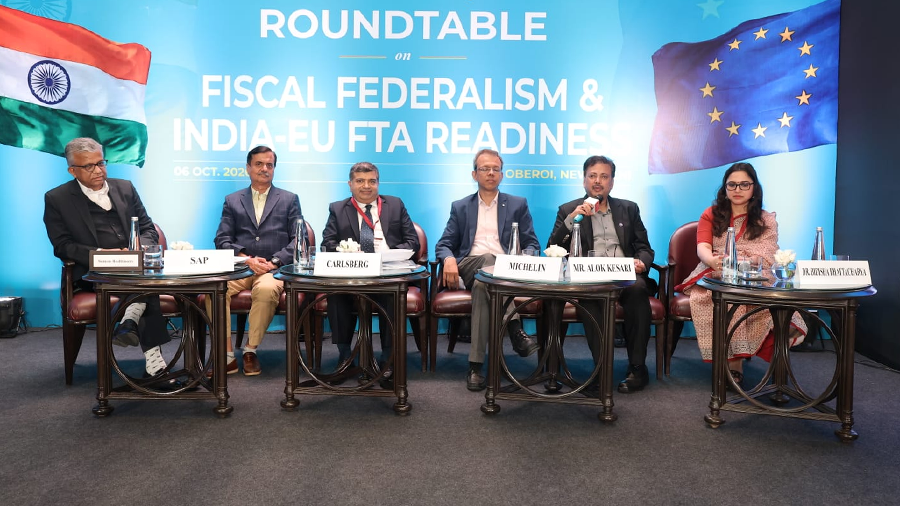
At SEPC’s National Policy Roundtable, industry leaders argued that the India–EU FTA will deliver its full potential only when states build the digital, regulatory, infrastructure and skills ecosystems businesses need to compete globally.
National Policy Roundtable on Fiscal Federalism and India–EU FTA Readiness, was organised by the Services Export Promotion Council (SEPC) in collaboration with the Hanns Seidel Foundation India, the Federation of European Business in India (FEBI) and institutional partners in New Delhi on 6 October 2026.
Titled “From Market Access to Market Presence: What Businesses Need from States to Make the India–EU FTA Implementation Effective”, the session brought together industry perspectives from technology, beverages, automotive and medical technology.
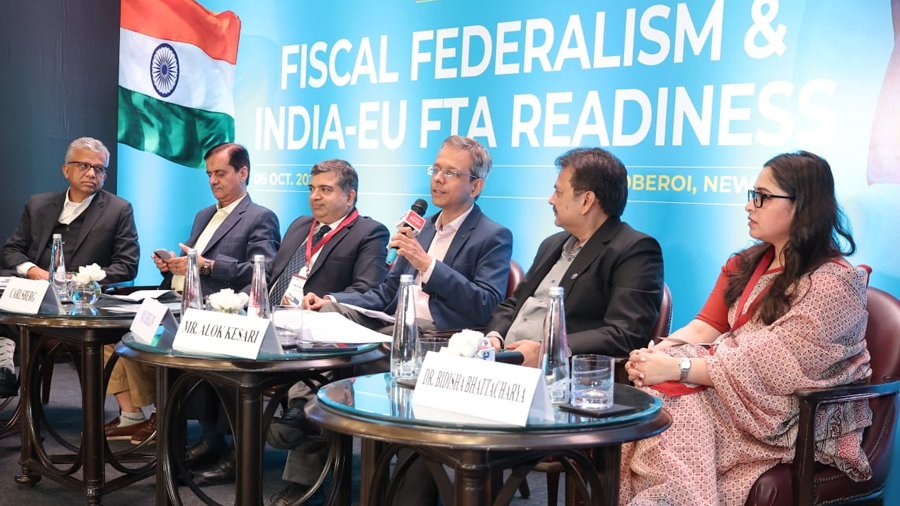
Moderated by Mr. Alok Kesari, Director – Policy Advocacy and Trade Facilitation, Federation of European Business in India (FEBI), the discussion moved beyond the broad promise of the FTA to ask a more practical question: What will Indian states need to do to ensure that businesses can actually utilise the opportunities created by the agreement?
The panel featured Mr. Bikas Kr. Singh, Vice-President & India Head, Government Affairs, SAP; Mr. Rishi K. Chawla, Vice-President, Corporate Affairs, Carlsberg India; Mr. Sidharth Prasad, Director – Public Affairs & CSR, Michelin India; and Mr. Vineet Gupta, Head of Government Affairs, Siemens Healthineers. Dr. Bidisha Bhattacharya, Associate Fellow & Head of Research, Centre for Economy and Trade, Chintan Research Foundation, provided the context-setting remarks.
Digitalisation as the Starting Point
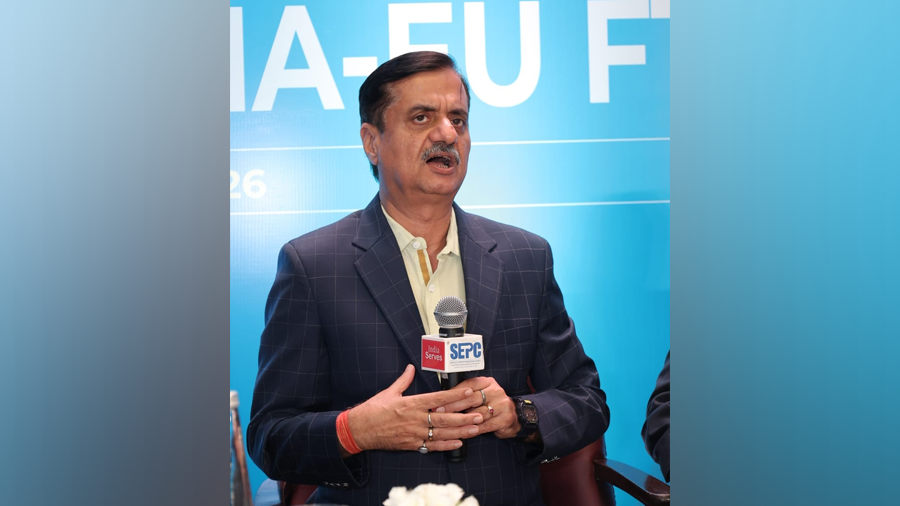
Kesari opened the discussion by turning to digitalisation, particularly its importance for small and medium-sized enterprises seeking to integrate into European value chains.
For Bikas Kr. Singh of SAP, digitalisation is not simply another component of trade readiness. It is the backbone that can help businesses meet increasingly complex requirements related to data, compliance, sustainability and supply-chain integration.
“Digitalisation, in our opinion, is a great starting point.”
Singh argued that the India–EU FTA should not be viewed purely through the lens of tariffs and trade volumes. Greater economic integration will also mean deeper investment, manufacturing and services linkages between the two markets.
“The FTA, especially the India–EU FTA, is not just about trade.”
He pointed to the growing complexity of European regulatory requirements. Businesses exporting to the EU may have to deal with technical standards, product safety, conformity assessment, sanitary and phytosanitary requirements, sustainability reporting, the EU deforestation regulation, eco-design requirements, packaging and packaging-waste rules and digital product passports.
For large companies, the systems required to manage such information can be built internally. For smaller businesses, however, the compliance burden can be considerably more difficult.
This is where Singh sees digital systems playing a bridging role. European companies operating in India often understand both sides of the regulatory and commercial environment. Their experience and technology platforms can potentially help Indian businesses understand requirements and integrate into European value chains.
The challenge, he suggested, is not only compliance but interoperability — ensuring that the systems used by suppliers, manufacturers, customers and regulators can communicate effectively.
The Business Case for Predictability
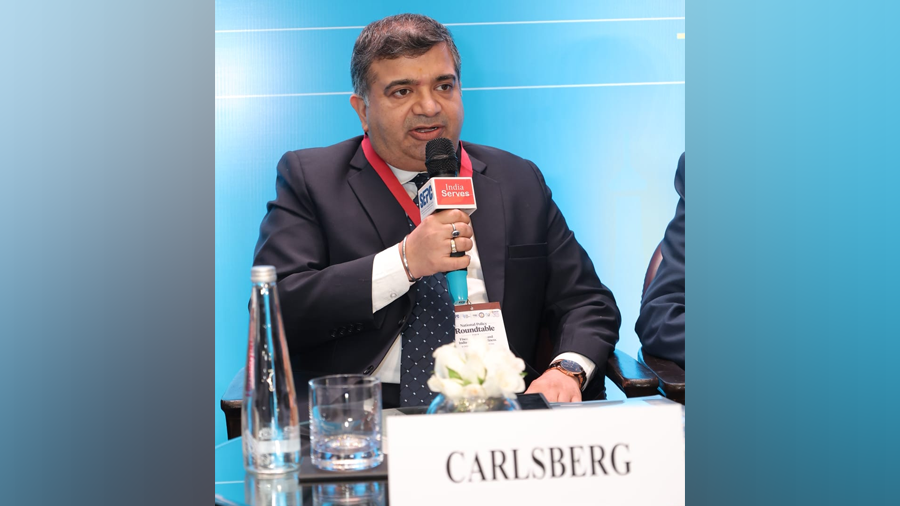
Kesari then turned to Rishi K. Chawla of Carlsberg India, asking how variations in state-level regulations affect businesses operating across multiple states.
Chawla offered a particularly strong perspective because the alcoholic-beverage industry is deeply intertwined with state-level regulation. Taxation, licensing, route-to-market arrangements, approvals and permits can vary significantly between states.
For companies with manufacturing and distribution operations across India, this creates a complex regulatory landscape.
But Chawla argued that the issue is broader than sector-specific regulation. Predictability, he said, is one of the most important factors influencing long-term investment decisions.
“Investors see ease of doing business as the first priority; predictability comes first.”
For global investors, the question is not simply whether a state offers incentives. They want to know whether they can secure approvals on time, access reliable infrastructure, find skilled talent, develop a local supplier ecosystem and operate with confidence over the next ten or twenty years.
“Predictability of the regulations, or transparency of the regulations, is the number one ask.”
Chawla also challenged the perception that European businesses are concentrated in only a handful of Indian states. While Maharashtra, Tamil Nadu, Gujarat, Karnataka, Andhra Pradesh and Telangana have emerged as important investment destinations, he argued that other states are increasingly seeking to attract European businesses.
The opportunity, therefore, is to broaden the geographical base of investment rather than concentrate it in existing industrial centres.
For that to happen, however, states will need to compete on more than incentives.
From Automotive Exports to Global Supply Chains
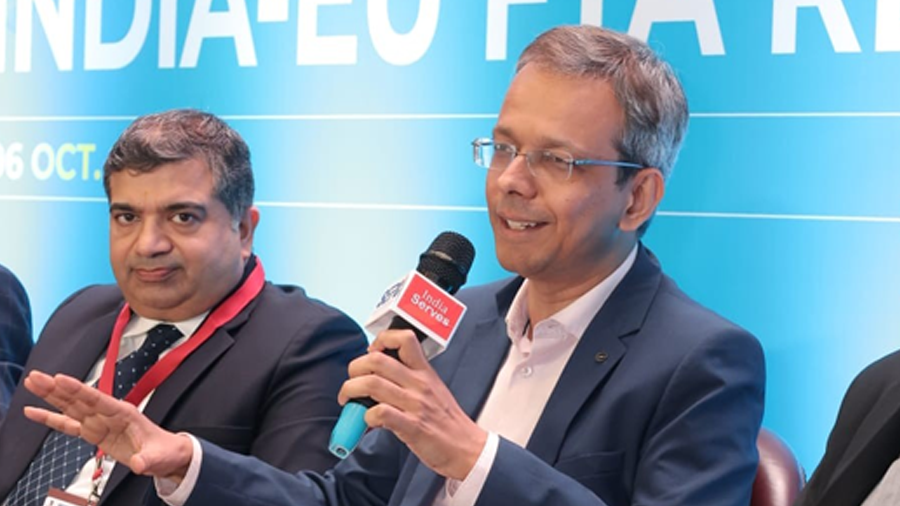
For Sidharth Prasad of Michelin India, the India–EU FTA presents an opportunity that extends across the entire automotive ecosystem.
He pointed to provisions covering automotive components, chemicals, plastics and other inputs, as well as the importance of regulatory predictability for businesses planning investments.
The potential gains, he argued, extend beyond European companies.
The FTA can benefit Indian manufacturers, suppliers and consumers while creating opportunities for Indian companies to become more deeply integrated into global supply chains.
India’s growing consumer market, improving infrastructure and expanding manufacturing capabilities create a strong foundation. Roads and expressways, industrial infrastructure and a growing pool of skilled workers can help make India a more competitive manufacturing and export base.
But the supplier ecosystem will be equally important.
Michelin’s own operations involve a large network of suppliers, and Prasad stressed that suppliers must be able to meet international standards consistently if India is to become a stronger export hub.
“All in all, it is a win-win for the EU industry, for Indian industry, for suppliers and, of course, for consumers.”
When Kesari asked what would make a particular state attractive from an investment perspective, Prasad placed ease of doing business at the top of the list.
Dedicated investor-facilitation agencies, effective single-window mechanisms, manufacturing zones, land availability, incentives, skilled workers and a strong local supplier base were identified as important components.
Tamil Nadu and Maharashtra were cited as examples where investor facilitation mechanisms and industrial infrastructure have helped create a more supportive business environment.
But incentives alone, Prasad suggested, are not sufficient.
“States should compete not only on incentives, but on ecosystem.”
That ecosystem must include infrastructure, skills, suppliers, testing capabilities, regulatory support and institutional responsiveness.
Medical Technology: From Market Access to Manufacturing
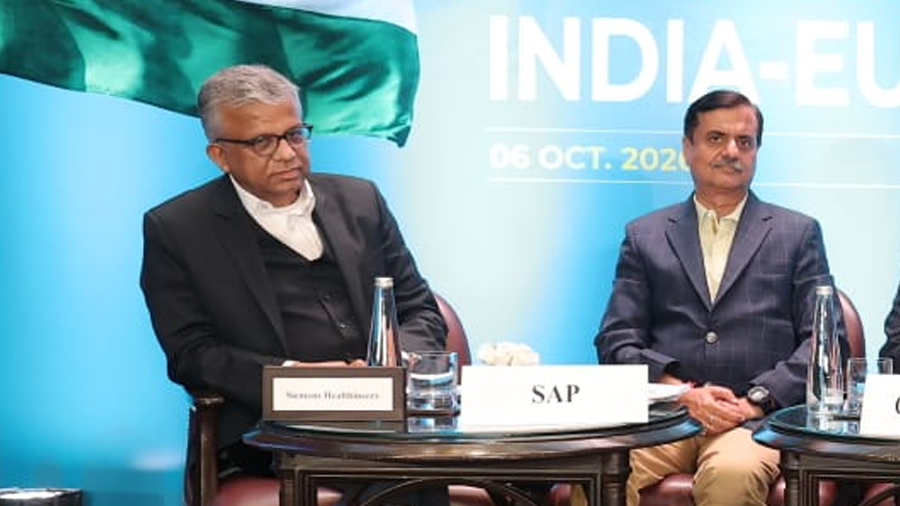
The discussion then moved into healthcare and medical technology with Vineet Gupta, Head of Government Affairs, Siemens Healthineers, who brought another dimension to the FTA debate.
Asked about the potential impact of the India–EU FTA on the medical-device sector, Gupta argued that the agreement could significantly alter the economics of the industry.
India is already a major market for medical devices, but the opportunity is to move beyond consumption towards greater manufacturing and export competitiveness.
“The FTA can fundamentally change the economics of the Indian medical-device industry.”
Gupta highlighted the possibility of combining India’s manufacturing capabilities and cost competitiveness with European technology and expertise.
Such a model could encourage European companies to expand manufacturing in India while enabling Indian medical-technology companies to move up the value chain.
The discussion also highlighted an important distinction: market access is only meaningful if businesses have the capacity to utilise it.
For medical technology, that capacity includes specialised infrastructure, skilled manpower, testing facilities, logistics and regulatory expertise.
Gupta cited the Andhra Pradesh MedTech Zone (AMTZ) as an example of a specialised ecosystem designed to allow medical-device companies to establish manufacturing operations with access to common infrastructure and facilities.
For other states seeking to attract investment in this sector, the lesson is clear: building an industrial ecosystem can be more effective than simply offering financial incentives.
Testing, Standards and the MSME Challenge
The conversation returned repeatedly to one issue: quality infrastructure.
As Indian companies seek greater access to European markets, meeting international standards will become increasingly important. For large corporations, sophisticated testing and compliance systems can be developed internally. Smaller businesses may not have the resources or geographical access to do so.
Singh noted that European regulatory frameworks can require businesses to generate substantial amounts of data relating to production, raw materials, energy use and environmental performance.
The implication for Indian MSMEs is significant. Digital systems, testing laboratories and accessible compliance support can determine whether a smaller enterprise is able to enter an international value chain or remains confined to the domestic market.
The panellists therefore called for stronger testing infrastructure at the state level, rather than expecting smaller businesses to travel to major industrial centres to access laboratories and certification facilities.
This becomes particularly important as India seeks to build export-oriented clusters outside the traditional industrial states.
States as Partners, Not Just Regulators
Another recurring theme was the relationship between businesses and state governments.
The panellists argued that state authorities need to view companies not merely as entities seeking approvals or incentives, but as long-term partners contributing to employment, investment, technology transfer and local economic development.
Prasad emphasised the importance of a collaborative approach, while Chawla illustrated the value of regulatory stability through his company’s experience of operating across multiple states.
The message was straightforward: businesses need institutional partners that understand their long-term requirements.
Investment-promotion agencies can play an important role, but their effectiveness depends on whether they have the authority and capacity to coordinate with different departments and resolve problems quickly.
A genuine single-window system, therefore, must go beyond being a digital portal. It must function as an effective mechanism for connecting investors with the relevant government departments.
Building Skills for the Next Phase
Skills emerged as another critical pillar of state readiness.
If India is to attract advanced manufacturing, medical technology, digital services and other high-value investments, states must ensure that companies can access appropriately trained talent.
This means closer collaboration between industry, universities, technical institutions and governments.
For specialised sectors such as medical devices, Gupta argued that states will need professionals with backgrounds spanning engineering, medicine, regulatory affairs, quality and compliance.
Similarly, the digital transformation of manufacturing and supply chains will require workers capable of operating increasingly sophisticated technological systems.
The panellists therefore emphasised that investment readiness and skills readiness cannot be separated.
The FTA Will Be Tested on the Ground
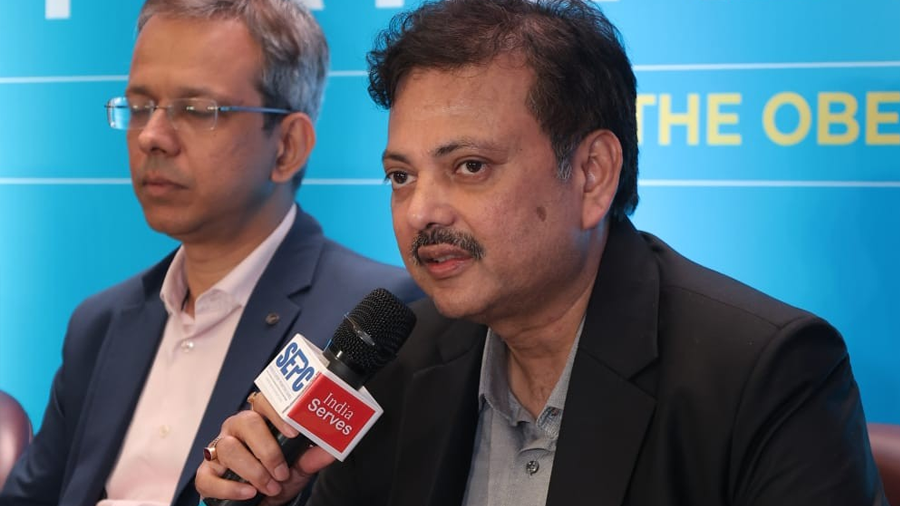
Towards the end of the discussion, Kesari brought the conversation back to the broader objective of the session: translating the India–EU FTA from an agreement negotiated at the national level into economic outcomes visible across states and businesses.
The panellists’ responses converged around a common message.
Digitalisation will be necessary to manage complex trade and compliance requirements. Predictable regulation will be essential for long-term investment. Quality infrastructure and testing facilities will determine whether businesses can meet international standards. Skills and supplier ecosystems will influence manufacturing competitiveness. And effective investor facilitation will determine how quickly businesses can move from intention to implementation.
The discussion also highlighted the importance of ensuring that the benefits of the FTA are not concentrated in India’s existing industrial centres.
As India looks towards Viksit Bharat @2047, expanding investment and export capacity to a wider group of states will require states to build the ecosystems that global businesses increasingly demand.
The India–EU FTA may create the market opportunity. But as the panel made clear, states will determine how much of that opportunity India is actually able to capture.


Leave a Reply