

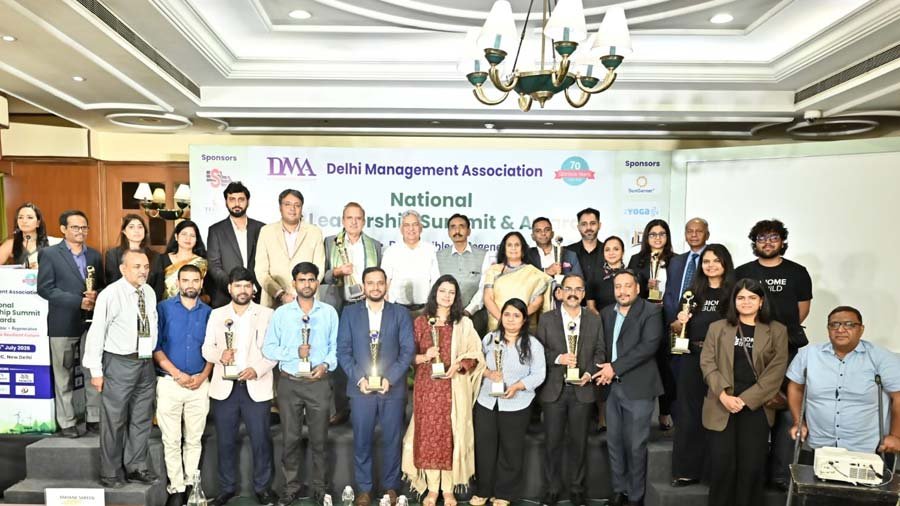
How the Delhi Management Association is fostering collaborative leadership to shape India’s sustainable future.
Continuing its seven-decade legacy of promoting management excellence and thought leadership, the Delhi Management Association (DMA) successfully organised the National ESG Leadership Summit & Awards 2026 at the India Habitat Centre, New Delhi. Conceived as a flagship initiative of the DMA ESG Committee, the Summit brought together policymakers, industry leaders, academicians, sustainability experts and innovators to deliberate on the growing importance of Environmental, Social and Governance (ESG) in shaping India’s future.
Held under the theme “Resilient | Responsible | Regenerative – Sustainability for a Resilient Future,” the Summit reflected DMA’s commitment to creating meaningful platforms that connect government, industry and academia. More than an event, it served as a forum for exchanging ideas, sharing best practices and inspiring organisations to translate sustainability commitments into measurable action.
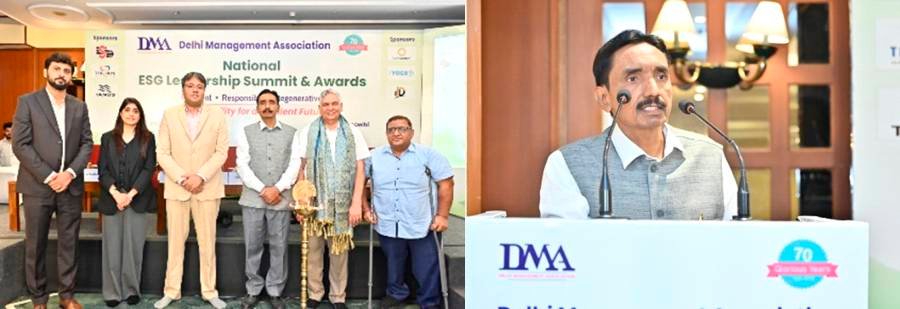
The Summit commenced with the traditional lamp-lighting ceremony led by Dr. Navneet Kumar Sharma, President, Delhi Management Association, Prof. S. K. Garg, Director, East Delhi Campus, Delhi Technological University (DTU), members of the DMA ESG Committee and other distinguished dignitaries, symbolising a shared commitment towards responsible and sustainable development.
In his welcome address, Mr. Rahul Prabhakar, Chairperson of the DMA ESG Committee and Head of Technical Services, ITC Hotels Ltd., highlighted the vision behind the Summit. He observed that ESG has evolved from a compliance requirement into a strategic framework influencing governance, investment, innovation and long-term organisational resilience. He emphasised that DMA envisioned the Summit as a collaborative platform where policymakers, business leaders and academia could come together to exchange practical insights, inspire innovation and accelerate India’s sustainability agenda.
The Summit was honoured by a special video message from Shri Shripad Yesso Naik, Hon’ble Minister of State for New and Renewable Energy, Government of India, who served as the Chief Guest. The Hon’ble Minister reaffirmed the Government’s commitment to renewable energy, climate resilience and sustainable development.
The event was graced by Prof. S. K. Garg, Director, East Delhi Campus, Delhi Technological University (DTU), as the Guest of Honour. A strong advocate of multidisciplinary education and innovation aligned with the National Education Policy (NEP) 2020, Prof. Garg emphasised the importance of nurturing future-ready leaders capable of driving sustainable development through responsible management and entrepreneurship.
Addressing the gathering, Dr. Navneet Kumar Sharma, President, Delhi Management Association, reaffirmed DMA’s commitment to strengthening collaboration between industry, academia and government. He emphasised that professional institutions like DMA have a vital role in fostering responsible leadership, encouraging knowledge exchange and creating platforms that translate ideas into meaningful action. Congratulating the DMA ESG Committee for successfully conceptualising the inaugural National ESG Leadership Summit & Awards, he noted that the initiative reflects DMA’s continued endeavour to promote management excellence while advancing India’s sustainability agenda.
As the inaugural edition of the National ESG Leadership Summit & Awards 2026 concluded, it reinforced the Delhi Management Association’s position as a catalyst for thought leadership and collaborative action in the ESG ecosystem. Through this flagship initiative, DMA has established a national platform that not only celebrates excellence but also inspires organisations to embed environmental stewardship, social responsibility and good governance into their growth strategies.
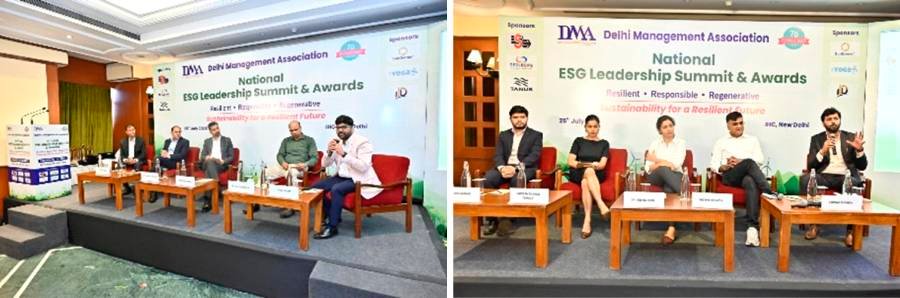
The Summit featured insightful keynote addresses and engaging panel discussions around five critical pillars of sustainability—Net Zero Transition, Air Quality, Water Security, Social Equity and Waste Management.
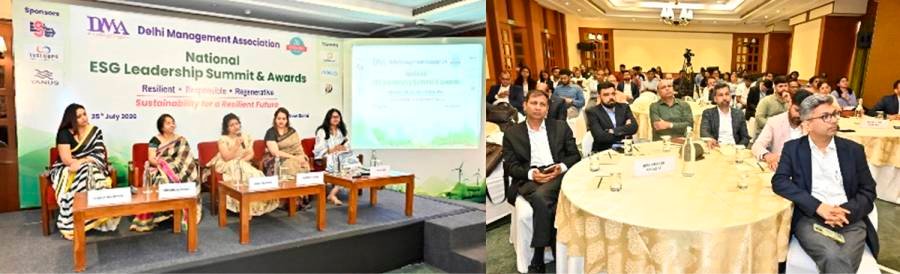
Under the guidance of the DMA ESG Committee, the Summit curated discussions around themes that reflect both contemporary industry challenges and practical implementation. The session on Net Zero Transition Pathways, a theme championed by Mr. Rahul Prabhakar, highlighted the importance of moving beyond commitments towards measurable action through energy efficiency, innovation and operational excellence. The Indoor Air Quality panel, moderated by Mr. Chirag Kataria, Member of the DMA ESG Committee and Founder of MeVachi Solutions, examined how healthier indoor environments have become an essential component of employee well-being, productivity and sustainable infrastructure. The discussion on “From Inclusion to Coexistence,” inspired by the vision of Ms. Namrata Kataria, Co-Chairperson of the DMA ESG Committee and Founder of TPL Enterprises, encouraged organisations to move beyond diversity as a metric and foster inclusive cultures built on empathy, equal opportunity and shared responsibility.
One of the defining highlights of the Summit was the National ESG Leadership Awards, recognising organisations and individuals demonstrating exceptional commitment to sustainability, responsible governance and social impact. Honours were conferred across categories including Most Sustainable Enterprise of the Year, Net Zero Champion (Corporate), Innovator in Clean Air Technology, Water Stewardship Award, Circular Economy Pioneer, Social Impact Leadership Award, ESG Reporting Excellence Award, Emerging Green Startup Award, Youth Environmental Champion and Lifetime Achievement in Sustainability. The awards celebrated organisations that are setting new benchmarks in responsible business and inspiring wider adoption of ESG principles across industries.
The enthusiasm and active participation of delegates throughout the day reflected the growing momentum behind ESG in India. Every session witnessed insightful exchanges, engaging audience interactions and meaningful networking, reinforcing the importance of collaboration in addressing today’s environmental, social and governance challenges.


Leave a Reply