

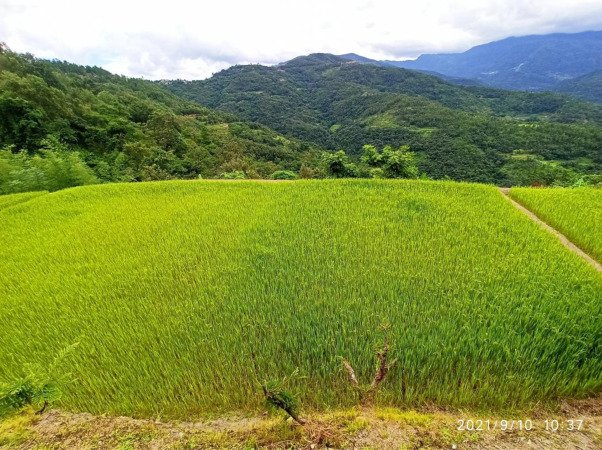
Across the mid-hills of Himachal Pradesh and the wider Indian Himalayan Region (IHR), farmers do not need scientific reports to tell them the climate is changing. They see it in the shortening winter chill that once sustained apple orchards, in the springs that now run thinner into summer, and in the increasingly erratic rhythm of rainfall that alternates between long dry spells and short bursts of damaging intensity. Climate risk in the mountains has moved from projection to lived reality. Yet the institutional response, particularly in agriculture and land management, is still catching up.
Over the past decade, climate-resilient agriculture (CRA) and agroforestry have rightly gained policy traction in the Himalayas. Terracing repair, soil and water conservation (SWC) works, springshed development, diversified cropping and tree-based farming systems are now widely promoted. These interventions are technically sound and locally relevant. The real weakness lies elsewhere: while practices are expanding, their outcomes are rarely measured in ways that are consistent, comparable or finance-ready. This measurement deficit is quietly becoming the biggest barrier to scaling resilience.
Most programmes continue to report progress in terms of inputs, hectares treated, check dams constructed, and saplings planted. But mountain resilience is fundamentally about stability under stress. It is about whether soil moisture persists longer into a dry spell, whether terraces withstand an intense rainfall event, whether spring discharge becomes more reliable, and whether horticulture yields fluctuate less from year to year. Without tracking such outcomes, even well-designed interventions remain administratively visible but economically undervalued.
This is where the emerging conversation on digital monitoring, reporting and verification (MRV) becomes important. In simple terms, digital MRV combines satellite time series, climate datasets and targeted field observations to track how landscapes are actually responding to interventions. For Himalayan systems, where terrain is complex, farms are fragmented and field access is uneven, such an approach offers a practical way to move from anecdotal success to evidence-based planning.
The Himalayan context demands this shift more urgently than the plains. Two neighbouring villages receiving similar seasonal rainfall can experience very different crop outcomes because of slope, aspect, soil depth and rainfall intensity patterns. Short, high-intensity storms often translate into runoff rather than groundwater recharge. Terraced agriculture, though inherently adaptive, requires continuous maintenance to remain effective. Springs, which sustain both drinking water and irrigation in many mid-hill settlements, respond slowly and unevenly to recharge measures. In such conditions, static planning based on administrative averages is no longer sufficient.
At the same time, the region’s horticulture economy is already signalling climatic stress. The gradual upward shift in apple suitability zones and growing moisture stress in mid-elevation belts are early indicators of a deeper transition underway. What is needed now is not merely more schemes, but a system that can identify where resilience investments are working best and where they are not.
Reframing CRA and agroforestry interventions as measurable landscape assets offers one way forward. Terraces and SWC structures can be tracked through erosion risk proxies and soil moisture indicators. Springshed interventions can be monitored using sample discharge trends alongside vegetation recovery. Agroforestry systems can be assessed through biomass growth and canopy stability. Once such metrics are routinely generated, resilience stops being an abstract objective and becomes a quantifiable outcome.
This is also where the conversation on carbon finance enters the Himalayan policy space. Tree-based systems and well-designed agroforestry models in the IHR do hold credible carbon sequestration potential, particularly when implemented through farmer collectives and landscape-scale programmes. If additionality, permanence and leakage risks are carefully managed, carbon markets can provide supplementary income streams to participating farmers.
However, it would be a mistake to view carbon finance as a universal solution. Many SWC and water-focused interventions in mountain agriculture primarily deliver adaptation benefits rather than large, easily creditable carbon gains. For these, result-based climate finance, green convergence funding and performance-linked public investments may prove more suitable. The real opportunity lies in a blended strategy: deploy carbon finance where biophysical and methodological conditions align, and support the broader resilience architecture through public and climate-aligned finance.
For small and marginal farmers, who dominate the Himalayan agricultural landscape, carbon revenue will not replace farm income. But it can become a meaningful supplementary stream, particularly when bundled with agroforestry, orchard rejuvenation and landscape restoration efforts. More importantly, the discipline of measurement that carbon-linked systems demand can improve programme targeting, transparency and long-term planning even beyond carbon markets themselves.
What the Himalayas need now is not another proliferation of schemes, but a tighter integration of risk assessment, resilience planning and outcome verification. A small, standardised set of resilience indicators, piloted through lightweight digital MRV systems in selected districts of Himachal Pradesh and neighbouring hill States, could significantly improve decision-making. Equally important is institutional clarity, like defining who measures, who verifies and how farmer benefits are protected.
Climate risks in the Indian Himalayan Region will continue to intensify. But with the right architecture, they can also catalyse a more intelligent and incentive-compatible model of agricultural transition. The pathway from climate risk to carbon revenue is neither automatic nor universal. It requires credible data, careful programme design and strong safeguards. Yet if approached thoughtfully, it offers Himalayan farmers something they have rarely received from climate discourse so far: recognition not just as vulnerable communities, but as active stewards of climate solutions.
The next phase of climate-resilient agriculture in the Himalayas must be measurable, verifiable and finance-aware. Only then can resilience move beyond pilot islands and become a scaled rural transition that secures both landscapes and livelihoods in India’s most climate-sensitive mountains.


Leave a Reply