

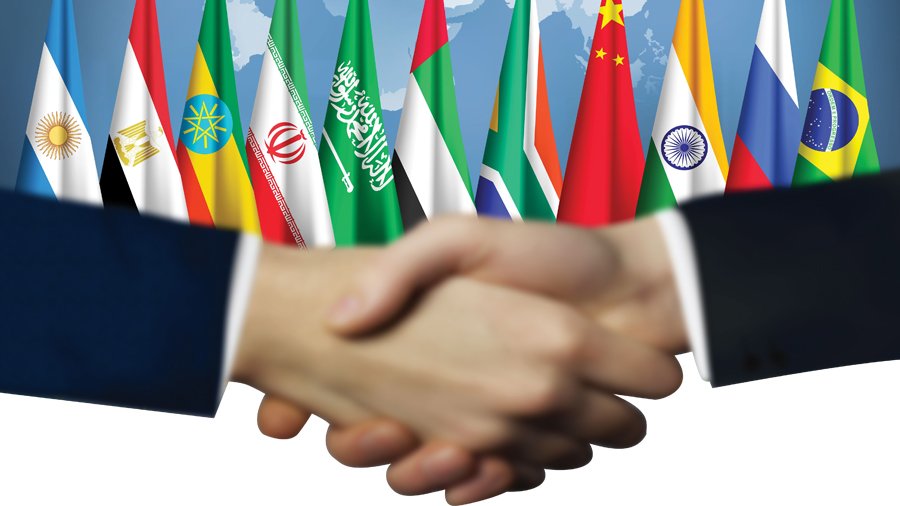
The transformation of BRICS into an expanded ‘BRICS Plus’ marks one of the most consequential experiments of the twenty-first century global governance. What began in 2009 as a loose coalition of four emerging economies — Brazil, Russia, India, China, and South Africa, which added to it in 2010 — has, since 2024, evolved into a sprawling platform with more than forty nations aspiring to join it.
But expansion also brings a paradox central to the International Organisation (IO) theory: scale enhances legitimacy but erodes cohesion. The most powerful North Atlantic Treaty Organisation remains currently an apt example of such a prognosis. Even within BRICS, while Argentina has declined the invitation to join, Saudi Arabia has maintained ambiguity in the name of still ‘studying’ its invitation for membership.
The core question, therefore, is whether India, as the Chair of ‘BRICS Plus’ for 2026, can steer it safely toward a sustainable multi-tier institutional design that reconciles diversity with functionality to ensure efficacy.
From a Club to a Complex
Traditional IO theory distinguishes between ‘club governance’ (small, cohesive, consensus-driven) and ‘universal governance’ (broad, heterogeneous, norm-driven) initiatives. BRICS, in its original form, had begun as a minilateral club — informal, flexible, and strategically ambiguous. Its expansion, however, has pushed it toward what scholars call ‘regime complexity’ — stakeholders being members of overlapping and even mutually competitive institutions with varied mandates.
Since the 2024 Kazan summit, BRICS have incorporated five new members — Egypt, Ethiopia, Indonesia, Iran and the UAE — and 10 partner countries — Belarus, Bolivia, Cuba, Kazakhstan, Malaysia, Nigeria, Thailand, Uganda, Uzbekistan and Vietnam — expanding its global outreach and providing hope for twenty-plus other aspirant nations. Already, ‘BRICS Plus’ represents 32% of the global GDP (42% in PPP terms) and 58% of the world’s population, rivalling the global governance monopoly of Bretton Woods institutions and G7 of the industrialised countries.
But, such economic aggregations also do not automatically translate into institutional coherence. The membership of geopolitically rival states — such as China and India or Iran and the UAE, or Egypt and Ethiopia — complicates consensus-building. This presents the classic collective action dilemma: as membership expands, preference heterogeneity increases, lowering the probability of agreements, raising transaction costs and implementation hiccups.
Limits of Consensus-building
BRICS has historically relied on informality and consensus decision-making. This has already revealed three structural constraints in an 11+ configuration of BRICS Plus:
The result is a risk of ‘forum dilution’: a large, rhetorically ambitious grouping becoming a ‘talking shop’ for leaders’ grandstanding, but unable to deliver.
Why Multi-Tiering Makes Sense?
The BRICS Plus reinforces the need for differentiated integration. The five new members contribute about 6% of the GDP of the original five of BRICS, indicating asymmetrical economic weight. But this asymmetry has not been a hurdle in their growing interdependence. Intra-BRICS trade has risen significantly, doubling to around 40% of members’ total trade over the last two decades. In terms of resilience, government debt of BRICS Plus economies is significantly lower than that of the G7 or the US, suggesting fiscal space for collective initiatives.
On the flip side, BRICS asymmetries potentially threaten to create serious fault lines. China’s GDP is one-fifth of the global GDP and twice as much as the rest of the nine BRICS members combined. Even without China wanting it, this structural dominance can skew BRICS decision-making. Intra-BRICS geopolitical conflicts could very well make China want to use its dominance, thus paralysing the institutional evolution of BRICS Plus.
These aspirations and constraints underline the need for an innovative institutional design to mitigate power asymmetries and preference divergence. This is where a flexible multi-tier institutional design can facilitate the co-existence of their stark asymmetries and promote interdependence to make BRICS inefficient and politically untenable. But, for this, BRICS must transcend its normative ambiguity and go beyond its rhetorical opposition to Western dominance and articulate a coherent alternative.
Opportunity to build Multi-Tier BRICS
India, this year’s Chair, is expected to address this institutional deficit. The unique vantage point of New Delhi is that, unlike China, it is not suspected of any hegemonic ambitions. Yet, unlike smaller states, it possesses sufficient economic and diplomatic weight to propose innovative restructuring within BRICS Plus. This positions India as a ‘system stabiliser’ — a role consistent with liberal institutionalist expectations from middle powers’ system shaping drive, which has been gaining momentum lately.
This is where India can both fine-tune and strengthen the evolving multi-tier governance model of BRICS Plus by developing a requisite architecture to make it consequential and effective. Such a model could involve three concentric circles:
A smaller decision-making core (Russians call it ядро), comprising original members to steer strategic coordination — macroeconomic policy, currency initiatives, geopolitical positioning. This would reflect the logic of ‘variable geometry’ used successfully in the European Union, where not all members participate in all policy-making.
Issue-specific coalitions — on energy, digital governance, supply chains, or climate finance — to allow subsets of members to cooperate without requiring full consensus. This aligns with ‘plurilateralism’, increasingly visible in WTO reforms and climate summits.
A broader circle of partner countries to participate in dialogues, capacity-building, and selective initiatives without full membership obligations and privileges. This resembles the ‘hub-and-spokes’ model of institutional expansion, enhancing outreach while preserving core efficiency.
India’s Normative Leadership
India’s ability to institutionalise such a Multi-Tier BRICS Plus model rests on its three comparative advantages:
A multi-tier governance promises a viable pathway. By combining a strong core, flexible coalitions, and an inclusive partner network, India can contribute to reconciling scale with efficacy — transforming BRICS Plus from a symbolic coalition into a functional international organisation.
The challenge is complex but clear: to move from ‘soft balancing’ the West to ‘structured governance’ for humankind. India’s success in this endeavour will determine whether BRICS Plus becomes a game changing grouping or just another a fleeting moment in the evolving global order.


Leave a Reply