

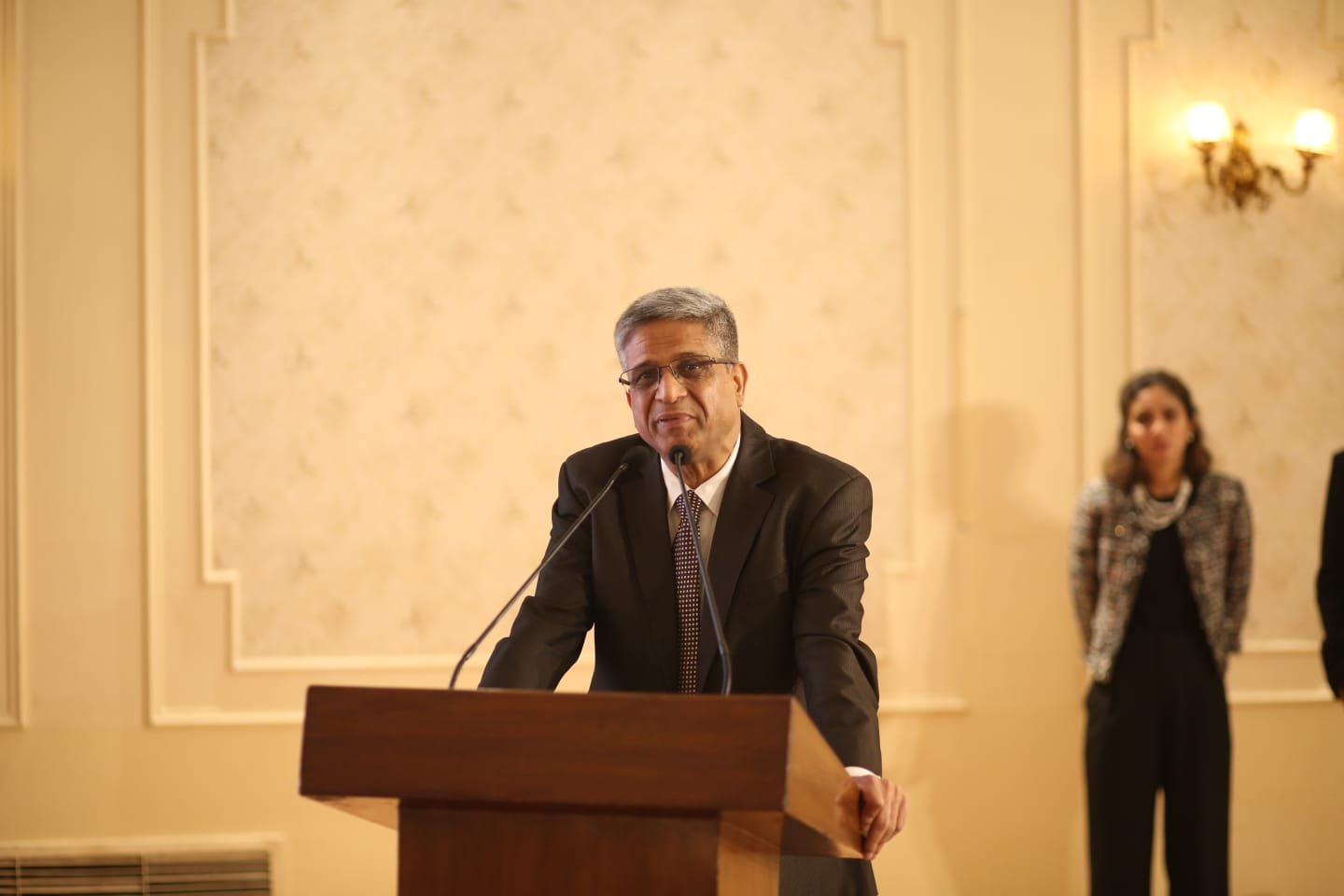
At the Symbiosis International Annual Dinner on 9th October in New Delhi, Dr Rajiv Yeravdekar, Provost, Faculty of Medical & Health Sciences, outlined the university’s expanding role in healthcare delivery, professional training and mental health.
Healthcare is not merely about treating illness; it is about building the knowledge, skills and institutions that enable societies to lead healthier lives.
Addressing an audience of ambassadors, diplomats and distinguished guests, Dr Yeravdekar described Symbiosis’s evolution from an institution established to support international education into a multidisciplinary university with an expanding commitment to healthcare, medical education and research.
He explained that the institution’s healthcare initiatives reflect a broader social responsibility: to provide accessible medical services while developing the professionals required to strengthen healthcare systems.
He focused on the Symbiosis University Hospital and Research Centre (SUHRC) in Lavale, Pune. The 900-bed tertiary-care facility was conceived to combine healthcare delivery with teaching, training and research. Its emphasis on evidence-based and affordable treatment reflects the university’s commitment to extending quality healthcare beyond conventional institutional boundaries.
Dr Yeravdekar highlighted the hospital’s role in serving patients from India and abroad, including individuals from African countries. He noted that access to affordable medical care could become an important dimension of international cooperation, complementing the educational exchanges for which Symbiosis has long been known.
“The focus is not just on providing healthcare, but also on teaching, training and capacity building,” he emphasised, drawing attention to the need to develop sustainable healthcare expertise alongside clinical services.
The hospital’s designation as a university hospital and research centre, he explained, reflects this integrated approach. Medical treatment, professional education and scientific inquiry must reinforce one another if healthcare delivery is to become more effective and responsive to society’s needs.
A shortage of appropriately trained healthcare professionals remains a challenge for health systems worldwide. Dr Yeravdekar stressed that addressing this gap requires a broader understanding of the healthcare workforce, extending beyond doctors and nurses to include allied health professionals, medical technologists, dietitians, nutrition specialists and other skilled practitioners.
For Symbiosis, developing this workforce is both an educational priority and a social responsibility.
Dr Yeravdekar also spoke about mental health. He cautioned that the pressures of modern life, combined with growing mental-health needs, require a much wider network of trained professionals and support services.
He expressed concern that the availability of psychiatrists and other qualified mental-health practitioners remains insufficient to meet society’s needs. Addressing this gap, he argued, requires a multidisciplinary approach involving not only psychiatrists and clinical professionals, but also counsellors and other appropriately trained practitioners.
The need is particularly pressing among young people, including students navigating academic expectations, social pressures and an increasingly demanding world. Educational institutions have an important role to play in creating supportive environments and ensuring that students can access appropriate mental-health assistance.
Symbiosis has incorporated student wellbeing into its wider health-promoting approach, including through the Symbiosis Centre for Emotional Wellbeing.


Leave a Reply