

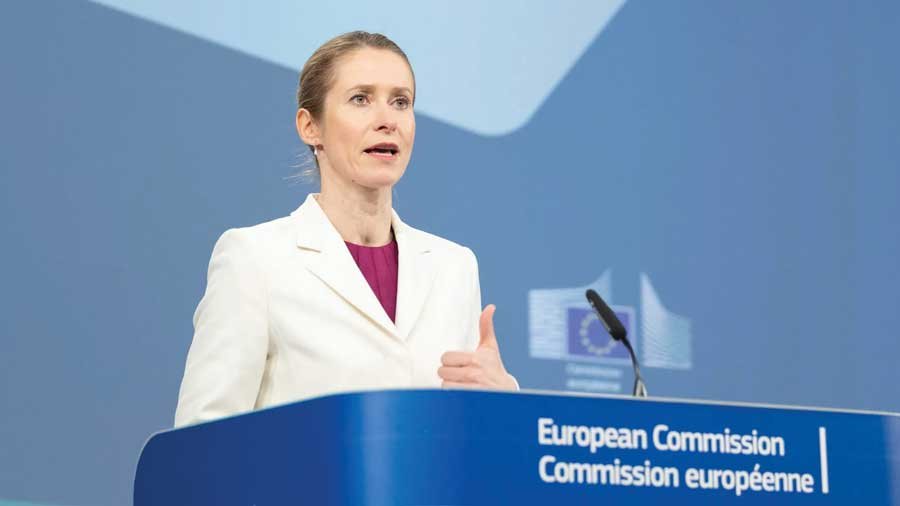
The European Commission and the EU’s High Representative, Kaja Kallas, presented the White Paper for European Defence Readiness 2030 on 19 March 2025. The agenda is a comprehensive strategy aimed at strengthening Europe’s ability to deter aggression, protect citizens in an increasingly conflict-driven international environment, and respond to conflicts.
The security environment that surrounds the continent has hardened since Russia invaded Ukraine in 2022. Hybrid attacks, military and technological competition, and uncertainty about the durability of American engagement have forced European capitals to rethink their reliance on existing security arrangements. Readiness 2030 is meant to leave Europe better positioned to deter aggression, to respond to high-intensity conflict, and to protect both citizens and critical infrastructure.
Defence remains primarily the responsibility of member states, while the EU’s role focuses increasingly on what states alone have struggled to deliver, especially financing, industrial coordination, joint procurement, infrastructure, thereby enabling capacities, and the technological development that allows military plans to become operational reality.
The White Paper has identified several areas which need strengthening in their capabilities. It includes air and missile defence, ammunition, drones, counter-drone systems, AI, and electronic warfare. Strategic enablers such as air-to-air refuelling, strategic airlift, maritime surveillance, secure communications and protection of space assets are also central to the strategy. The growing importance of cyber and electronic warfare shows that the future European defence cannot depend exclusively on conventional weapons. Therefore, it is increasingly connected to digital infrastructure, satellites, artificial intelligence and autonomous systems.
Military mobility is an important part of Readiness 2030. European forces have been facing delays caused by national regulations, customs procedures, diplomatic clearances, and inadequate infrastructure. Differences in railway, road, and bridge standards could complicate the movement of such heavy equipment. The EU will simplify permissions, prioritise military movements, and upgrade around 500 hotspots across four multimodal corridors. These upgrades serve as a dual-purpose model, helping to boost both defence deterrence and civilian trade, thereby allowing the EU to strengthen security.
SAFE Loans and the €800 Billion ReArm Europe Plan
The biggest question surrounding Readiness 2030 is not just what Europe wants to achieve, but how it intends to pay for it. Security Action for Europe, or SAFE, is the most important instrument through which the European Commission can raise €150 billion in capital markets and provide long-term loans to interested member states for urgent defence investments. It primarily supports investment in priority areas such as missiles, ammunition, drones, air defence, and cyber capabilities, while encouraging European industrial production and interoperability among allied systems.
The wider ReArm Europe Plan could mobilise up to €800 billion in additional defence investment through a combination of measures, rather than a single EU defence budget. SAFE is designed to encourage countries to move away from isolated national purchases and move towards joint procurement. Fragmented procurement and inefficient spending, in which each member state purchases independently, can reproduce the same structural weakness that has persisted for decades.
Europe’s Four Strategic Defence Priorities
The Readiness Roadmap has identified four flagship projects as part of its broader defence strategy intended to strengthen Europe’s defence capabilities. The Eastern Flank Watch is aimed at strengthening surveillance and protection along Europe’s eastern borders, especially in response to military activity, hybrid threats, sabotage, and pressure involving Russia and Belarus. Integrated surveillance systems, sensors, drones, and border infrastructure can become part of a broader eastern border shield that combines physical protection with modern intelligence and monitoring capabilities.
The European Drone Defence Initiative shows how drones have become central to surveillance, which includes targeting and attacks. Europe, therefore, needs both drone capabilities and effective counter-drone systems to detect, disrupt, and intercept these platforms. The European Air Shield addresses major needs in greater protection against aircraft, cruise missiles, ballistic missiles, hypersonic systems and unmanned aerial vehicles. Developing an effective shield would require layered short-, medium-, and long-range systems, integrated command networks, sensors, and interceptors. This remains one of Europe’s most urgent capability gaps that needs to be addressed, mainly because existing stocks are limited and advanced air defence systems remain concentrated in the hands of a relatively small number of states.
The fourth flagship project, European Space Shield, recognises the deep dependency on space by military powers. Satellites support navigation, communications, intelligence, surveillance and early warning, making space infrastructure an increasingly important part of European security. Protecting these systems requires resilience to cyberattacks, jamming, anti-satellite capabilities, and other threats.
Ukraine and the ‘Porcupine Strategy’
Ukraine has become an increasingly important part of Europe’s defence readiness strategy. The idea of turning Ukraine into a steel porcupine means making the country strong and resilient enough to deter and defend against any future aggression. This is important not only for Ukraine’s security but also for Europe’s wider defence. Europe’s readiness efforts can strengthen Ukraine while also learning from its experience of war, technological innovation, civil-military cooperation, and a growing defence industry.
The aim is for the EU to provide Ukraine with long-term security support through predictable financial assistance, continuous military supplies, closer integration of Ukraine’s defence industry with the European Defence Technological and Industrial Base (EDTIB), and stronger cooperation mechanisms. A major focus is on maintaining Ukraine’s Qualitative Military Edge (QME), which will ensure it retains the advanced capabilities, technology, training, and intelligence needed to defend itself and deter future aggression. Ukraine will also participate in EU instruments such as SAFE and EDIP, which will enable equipment to be developed and procured with and from the Ukrainian industry. The main objective is to help Ukraine defend itself, deter future aggression and strengthen the wider European defence ecosystem.
The main challenge for Defence Readiness 2030 is to translate Europe’s political commitments and increased defence spending into real, effective capabilities. The €150 billion SAFE instrument and other new initiatives demonstrate Europe’s commitment to greater defence preparedness. However, achieving meaningful readiness by 2030 will require Member States to work together, coordinate investments, strengthen defence industries and follow clear timelines. Europe’s experience with projects like the Single Market shows that major initiatives need clear goals, careful planning and continued political support. The same approach will be important for defence.
There should be regular progress reviews, timely decision-making, and cooperation across the procurement, investment, and defence industries to help keep the process on track. Ultimately, the success of Readiness 2030 will depend on how well Europe translates its plans and commitments into practical, effective defence capabilities.




Leave a Reply