

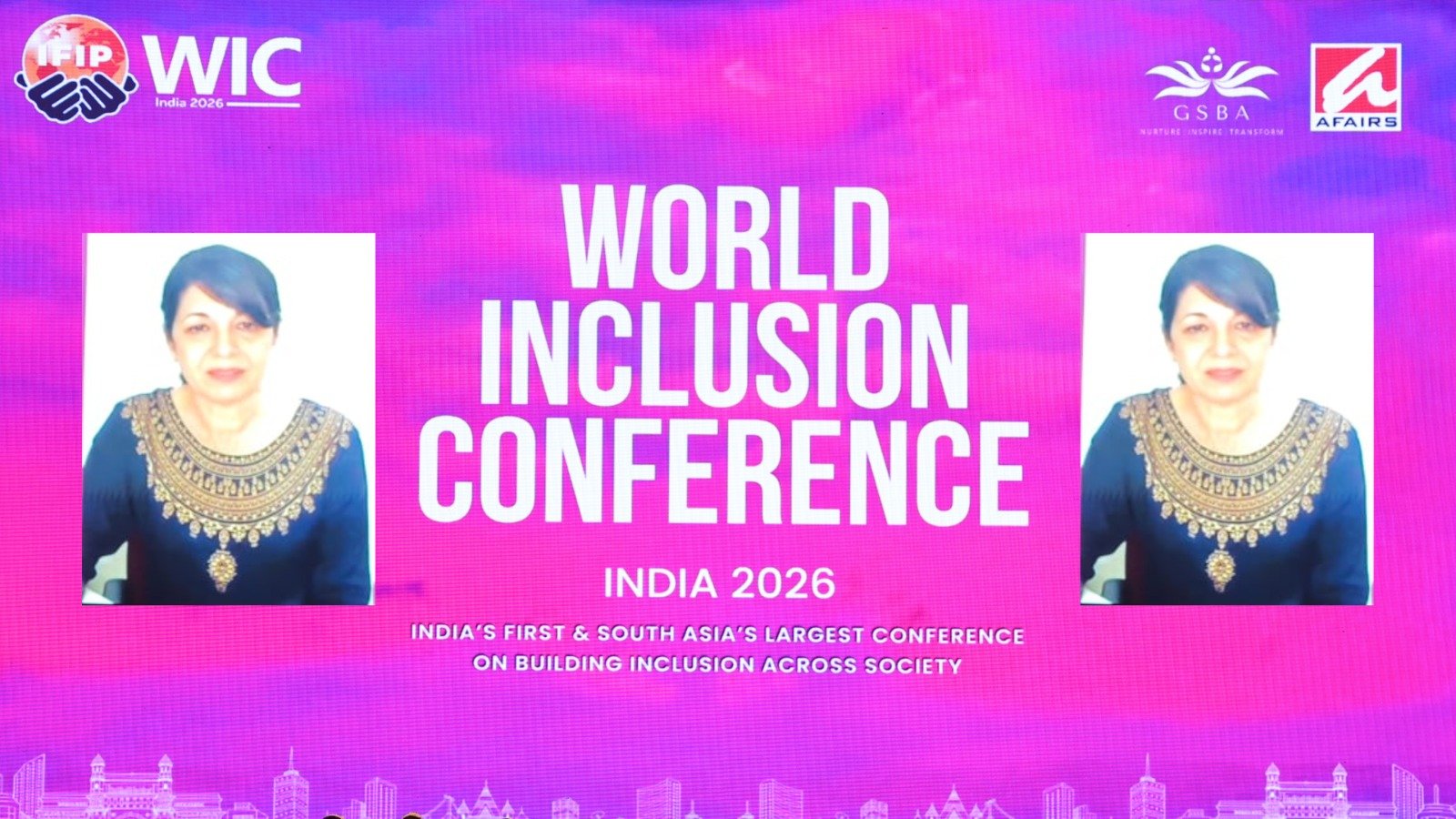
Delivering a video address at the World Inclusion Conference 2026 in New Delhi, Prof. Ms. Maiky Diaz Perez, First Secretary, Embassy of Cuba in India, highlighted Cuba’s enduring belief that education is the foundation of freedom, equality and sustainable development. Her address focussed on the country’s long-standing commitment to universal, inclusive and quality education while emphasising the importance of international cooperation in building equitable learning societies.
Reflecting on Cuba’s educational journey, Prof. Perez noted that the country’s inclusive education policy was established in 1959 and gained momentum with the historic National Literacy Campaign of 1961, which mobilised thousands of citizens to bring education to every corner of the country, including its most remote communities.
Recalling the words of Cuba’s National Hero, José Martí, she remarked, “The only way to be free is to be educated.” She further quoted Fidel Castro, saying, “The happiest people are those who have best educated their children,” noting that these ideals continue to guide Cuba’s educational philosophy.
She explained that Cuba’s education system is rooted in the principles of universality, equality and social justice. The country’s 2019 Constitution, she said, recognises education as both a universal right and a responsibility of the State, ensuring that education remains free, secular and accessible to every citizen.
“Education in Cuba is universal, free, secular and of quality,” Prof. Perez said. “It promotes ethical, civic and patriotic values, encourages citizen participation and supports the integral development of every individual.”
Highlighting the achievements of the Cuban education model, she noted that the country has attained a literacy rate of approximately 99 per cent, while implementing comprehensive programmes for students with special educational needs, talent development initiatives and diverse educational pathways that include sports, arts, military and technical education.
Prof. Perez also stressed that Cuba’s educational framework is closely aligned with the United Nations Sustainable Development Goal 4, reaffirming the country’s commitment to ensuring inclusive and equitable quality education and lifelong learning opportunities for all.
Speaking on the importance of global partnerships, she observed that international cooperation has been central to Cuba’s educational development. Through collaboration with countries and international organisations, Cuba has shared knowledge, educators and expertise while continuing to strengthen innovation, teacher training, curriculum development, digital learning, infrastructure, and student and faculty mobility.
Addressing the future of education, she emphasised the growing role of emerging technologies, particularly artificial intelligence, in transforming learning systems. At the same time, she underlined that diplomacy remains essential in fostering collaboration across borders. “I deeply believe in diplomacy and its vital role in creating channels, networking and mechanisms of communication and cooperation,” she said.
Concluding her address, Prof. Perez called upon governments, educational institutions and international partners to work collectively towards a more inclusive future. “Together, we can promote inclusiveness and collaborative education as a shared global responsibility,” she affirmed, reiterating that education remains one of humanity’s most powerful instruments for peace, development and social progress.


Leave a Reply