

The story of modern international partnerships is, in many ways, a story of connectivity. While trade agreements, diplomatic dialogues, and strategic frameworks create the foundation for cooperation between nations, it is the movement of people, ideas, cultures, and businesses that brings these relationships to life.
As India and Vietnam celebrate a decade of their Comprehensive Strategic Partnership and mark the elevation of bilateral ties to an Enhanced Comprehensive Strategic Partnership, we are witnessing a relationship that has evolved with momentum and purpose. Built on mutual trust, shared aspirations, and a common vision for growth in the Indo-Pacific region, the partnership today extends well beyond government-to-government engagement. With a shared focus on supply chain diversification, digital innovation, and cross-border investments, India and Vietnam are shaping a growth corridor that is increasingly integral to the broader Indo-Pacific economic landscape. Rising trade targets, stronger institutional cooperation, and expanding cultural exchanges are all outcomes of this deliberate trajectory.
At the heart of this next phase of growth lies connectivity, and more specifically, the role of aviation as a strategic enabler. Aviation has long served as one of the most powerful enablers of economic and social progress. It does not just facilitate travel, it also reduces friction in economic engagement. Direct connectivity compresses time, expands market access, and unlocks demand that often remains unrealised in the absence of efficient links.
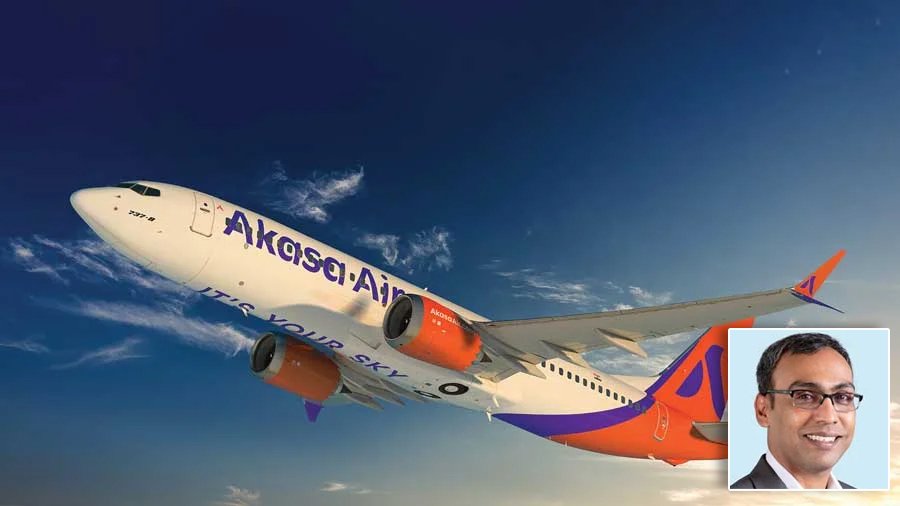
Beginning September 2026, Akasa Air will operate four weekly non-stop flights between Mumbai and Hanoi, a direct connection between two cities whose significance in the regional economic architecture cannot be overstated. Mumbai, India’s commercial capital and the beating heart of its financial, entertainment, and manufacturing sectors, now finds a direct air corridor to Hanoi, one of Southeast Asia’s fastest-growing centres of technology, manufacturing investment, and cultural tourism.
The economic rationale for direct connectivity between Mumbai and Hanoi is compelling and growing. Bilateral trade between India and Vietnam has seen consistent upward momentum, with both governments committed to deepening commercial linkages across sectors. Direct air connectivity dramatically reduces the friction that impedes business travel and trade. For tourism, it enhances accessibility and stimulates new demand. For businesses, it enables agility, making it easier to build partnerships, explore new markets, and accelerate decision-making. For education and cultural exchange, it brings societies closer together in a way that is both immediate and sustained.
India and Vietnam today share deep convergences: both are among the world’s fastest-growing major economies, both are significant nodes in the shifting architecture of global supply chains, and both are home to young, aspirational populations increasingly looking outward for opportunity, collaboration, and experience. Over time, these connections will also reshape cultural familiarity. Increased travel will lead to more sustained people-to-people engagement. This is where connectivity transcends infrastructure and becomes a bridge between societies.
For Akasa Air, this expansion is part of a broader philosophy, building a network that is purposeful, demand-driven, and accessible. By offering reliable and affordable connectivity, the intent is to make international travel more seamless while supporting the larger ecosystem of trade, tourism, and mobility.
Looking ahead, the implications of stronger India–Vietnam connectivity extend far beyond passenger movement. As access improves, tourism flows will deepen, creating new opportunities across hospitality and allied sectors. More importantly, business ecosystems will become increasingly integrated, enabling faster collaboration across industries such as manufacturing, technology, and services.
The next phase of global growth will be defined not just by markets, but by how effectively they are connected. For corridors like India and Vietnam, which are already aligned in ambition and opportunity, aviation will play a central role in accelerating this journey.



Leave a Reply