

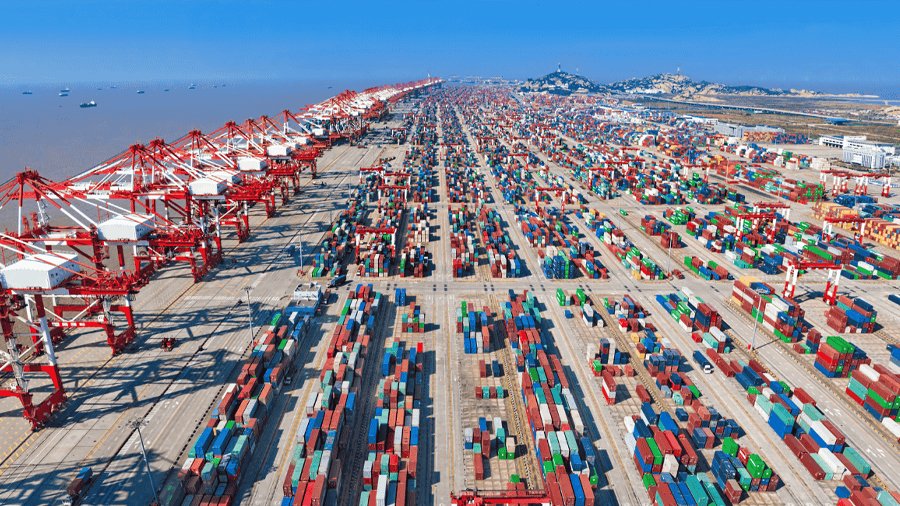
From Eurasia to Africa — India’s Role in Rewiring Global Trade Routes
The landscape of global trade is undergoing a profound shift. What was once shaped primarily by market efficiency and liberal economic integration is now being redefined by strategic competition and supply-chain resilience. The cumulative disruption in the past few years, viz., the COVID pandemic, the Red Sea crisis, sanctions regimes, export controls, and recent conflicts in Eurasia and the Strait of Hormuz, has exposed the fragility of legacy trade routes built around Western markets and financial systems. The World Economic Forum (WEF) notes that roughly 15 percent of trade flows were disrupted due to geopolitical tensions and climate events in 2024, and losses incurred were roughly seven per cent of global GDP.[1]
Due to these disruptions, BRICS is beginning to assume a significant role that extends beyond summit diplomacy. It is increasingly emerging as an institution for corridor-building across Eurasia, West Asia, Africa, and the wider Global South. For India, this is a chance to shape the future of global commerce.
BRICS+ and the New Corridors
The future of BRICS+ may lie less in de-dollarisation and more in developing alternative supply chain corridors. Intra-BRICS trade has surged multi-fold over the past two decades. A UNCTAD Report shows that trade expanded from a mere USD 85 billion in 2003 to USD 1.2 trillion in 2024,[2] signalling that it is no longer a peripheral economic grouping but a legitimate economic bloc.
More importantly, BRICS’s evolution into a 10-member bloc, with Egypt, Ethiopia, IRAN, the UAE, and Indonesia as new members, has expanded its scope.[3] This evolved grouping now spans the Suez Canal and Red Sea routes via Egypt, the Horn of Africa via Ethiopia, the Persian Gulf via Iran and the UAE, and the Indo-Pacific via Indonesia. This new cartography enables the emergence of an integrated corridor linking overland Eurasian routes, Indian Ocean sea lanes, Gulf capital, and African production zones.
India, geographically, sits at the centre of this emerging system. It enables it to connect three theatres, viz., Eurasia, Africa and the Indian Ocean simultaneously, as the principal logistical bridge between them.
The most compelling case study for this emerging logic is perhaps the International North-South Transport Corridor (INSTC). Stretching from India through Iran to Central Asia and onward into Eastern Europe, Eurasia, and finally to Russia, provides an alternative multi-modal access.[4] More importantly, it offers Indian access to Eurasian markets through routes less vulnerable to geopolitical disruption in West Asia.
This is where the conversation moves beyond just building infrastructure into strategic economics. The real significance of these corridors lies in their ability to create supply chain diversification. In the post-pandemic world, States are increasingly concerned not merely with trade volumes but also with control over these routes.
How India is Rewiring Global Trade Routes
India’s role in this transition is no longer limited to participation; it is increasingly one of route-making. This is visible across multiple axes of connectivity.
To the west, India is building access through Chabahar and the INSTC, linking India’s ports to Iran, Afghanistan, Central Asia, Russia, and Eastern Europe. This reduces overdependence on the Suez route and offers an alternative pathway into Eurasian markets.
To the southwest, India’s expanding engagement with the Gulf – particularly the UAE and Saudi Arabia – has strengthened logistics, energy, and investment corridors that connect Indian manufacturing with West Asian capital and onward African markets.
To the south and west of the Indian Ocean, India’s port-led engagements along the eastern African littoral – from Mombasa and Dar es Salaam to Mozambique and island nations such as Mauritius and Seychelles – are gradually creating a corridor-based economic ecosystem.[5] Investments in port infrastructure, warehousing, pharmaceuticals, food processing, and digital logistics systems are linking African production centres with Indian supply chains.
In effect, India is seeking to move from being a node in global supply chains to becoming an architect of supply chain geography.
While China continues to dominate manufacturing scale, Russia provides energy resources and continental access, and Gulf economies contribute capital surpluses, India offers a different combination of advantages: industrial capability, market size, digital public infrastructure, and maritime centrality. This positions New Delhi as a natural processing and redistribution hub between Eurasian resources and African demand centres.
The African dimension is central to this transition. For too long, Africa has been viewed either as a resource frontier or a destination market. The new BRICS geography allows for a more strategic perspective: Africa as an active production and logistics zone. Port infrastructure, warehousing, logistics systems, pharmaceuticals, food processing, and digital connectivity can transform the eastern coast of Africa into an integrated corridor space linked to Indian supply chains. In this sense, BRICS corridors linking Eurasia, India, and Africa acquire real strategic depth.
India’s maritime geography gives it a natural advantage in shaping this architecture.
Ports such as Mumbai, Mundra, Kochi, and Chennai, alongside external strategic nodes such as Chabahar, can serve as major transhipment, consolidation, and value-addition hubs. This would mark a significant shift in India’s strategic posture – from adapting to trade routes designed elsewhere to becoming an architecture of corridor geography.
India’s Multi-Alignment Foreign Policy
India’s approach towards BRICS must be viewed through the lens of its broader foreign policy balancing and multi-alignment. India’s participation in BRICS is not directed against the West, nor does it diminish its deep engagement with the United States, Europe or other Global North countries. Rather, it reflects New Delhi’s calibrated multi-alignment policy.[6]
India today seeks to position itself as a bridging power – engaging the Global South while retaining its flexibility with major Western partners. This balancing act has become even more important as India assumed the BRICS chairmanship in 2026. New Delhi’s emphasis on resilience, innovation, cooperation, and sustainability suggests an attempt to shape BRICS around practical economic cooperation, digital public infrastructure, energy security, and resilient supply chains rather than ideological bloc politics.
The China Question
At the same time, the principal structural challenge remains the Sino-India equation. No serious discussion of BRICS corridors can avoid the China question.
India’s comfort with any BRICS-led connectivity framework will remain limited so long as China’s infrastructure initiatives intersect with India’s sovereign territory. The most visible example remains the Belt and Road Initiative, particularly the China-Pakistan-occupied Kashmir-Pakistan Economic Corridor (CPoKPEC), which passes through Gilgit Baltistan, an integral part of India’s sovereign domain. This is not merely a question of infrastructure; it is fundamentally a question of sovereignty.
Any corridor that traverses territory without India’s concurrence directly affects its cartographic identity and territorial integrity. The continued operationalisation of CPoKPEC, alongside Chinese infrastructure development in Aksai Chin and the Shaksgam valley, reinforces New Delhi’s reservations.
This is why India’s westward connectivity strategy is increasingly being built around alternatives such as Chabahar and the INSTC. These are not simply trade routes; they are instruments of geopolitical bypass, designed to reduce India’s dependence on transit routes shaped by Pakistan’s strategic veto. In effect, India’s corridor strategy reflects a broader logic of strategic decoupling from Pakistan-centric continental access.
This is also why BRICS connectivity cannot be allowed to become synonymous with BRI expansion. India must remain vigilant that BRICS does not evolve into a China-led alliance in strategic, financial, or infrastructural terms. This is perhaps the most important policy caution.
The grouping must remain a platform for multipolar connectivity rather than a hub-and-spoke system centred on Beijing. For India, this means ensuring that corridor governance, logistics data, standards, payment systems, and port-led infrastructure remain distributed across multiple actors.
Conclusion
The real contest in the coming decade will not be fought over tariffs alone. It will increasingly centre on who controls routes, chokepoints, logistics networks, digital payment architectures, regulatory standards, and access to critical mineral pathways. In this emerging geopolitical economy, corridors are no longer mere conduits of trade; they are instruments of strategic power.
If the twentieth century was defined by Atlantic trade routes and the early twenty-first by East Asian manufacturing chains, the next phase of global commerce may well be shaped by Global South corridor systems stretching across Eurasia, the Indian Ocean, and Africa.
For India, this is more than an economic opportunity — it is a strategic moment. Positioned at the intersection of land and sea, markets and resources, production and redistribution, India has the capacity not merely to participate in this transition, but to shape its direction and define its rules.
The question, therefore, is no longer whether BRICS can challenge the old trade order. The more consequential question is whether India can lead in designing the new one — and, in doing so, transform geography into strategy and connectivity into influence.
[1] Sultan Ahmed bin Sulayem, “Why trade corridors are the path to a more resilient future,” World Economic Forum, 16 Jan 2025, https://www.weforum.org/stories/2025/01/trade-corridors-resilient-future/.
[2] “Two decades of intra-BRICS trade: Trends, patterns and policies,” UN Trade & Development, UNCTAD, 05 Mar 2026, https://unctad.org/publication/two-decades-intra-brics-trade-trends-patterns-and-policies.
[3] “Briefs on BRICS,” Ministry of External Affairs (MEA), GoI, 2025, https://www.mea.gov.in/Portal/ForeignRelation/BRICS-2025.pdf.
[4] Emil Avdaliani, “The International North-South Transport Corridor,” The Gulf Centre, 26 Aug 2025, https://www.grc.net/single-commentary/302.
[5] Anum Khan, “Infusing Maritimity into India’s Foreign Policy Towards Eastern Africa – Policy Recommendations,” National Maritime Foundation, 11 June 2025, https://maritimeindia.org/infusing-maritimity-into-indias-foreign-policy-towards-eastern-africa-policy-recommendations/.
[6] Richard M Rossow, “India’s Future Strategic Choices: Complications of Mass,” Centre for Strategic * International Studies, 02 December 2025, https://www.csis.org/analysis/indias-future-strategic-choices-complications-mass.



Leave a Reply