

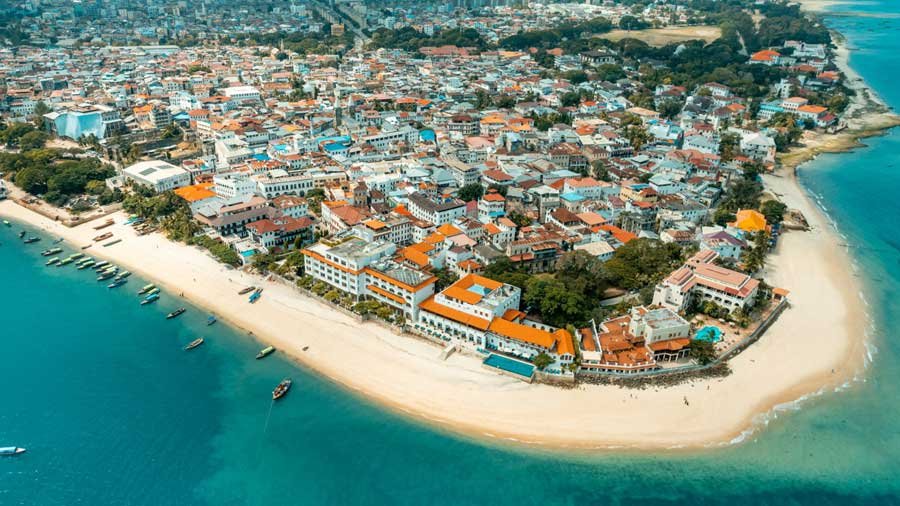
Cultural connections between India and Zanzibar have developed over many centuries by means of maritime trade and cultural exchanges. It represents one of the oldest and most enduring examples of people-to-people diplomacy in the world. Long before the emergence of modern nation-states, merchants, sailors, scholars, and travellers from the western coast of India crossed the Indian Ocean through monsoon trade routes and reached the East African coast. These historical roots remain relevant till date and continue to support broader ties between India and Tanzania.
As both India and Tanzania were under British colonial rule, these exchanges continued, and Indian culture got firmly established in Zanzibar. On account of this connection, Zanzibar hosts a strong Indian diaspora to this date. The 1964 Zanzibar Revolution that overthrew the Omani rule led to the formation of the modern-day state of Tanzania. Alongside, the revolution led to the displacement of Indian-origin people from the islands. This caused a sudden disruption in the cultural flow from India to Zanzibar and the collapse of many Indian-owned businesses. However, the earlier contributions of the Indians to commerce, education, and culture remained part of Zanzibar’s history, and with time, films and Indian culture returned through new distribution channels.
Today, Indian communities in Tanzania continue to maintain links with their home country through family, business, and cultural activities. Over time, Zanzibar redefined itself as a vibrant society where African, Arab, Persian, and Indian culture coexisted harmoniously. The coast of Swahili itself became a symbol of cultural confluence; the influence of Indian culture became visible in various forms, including architecture, trade practices, wardrobe styles, and vivid social customs.
Hindi films from Mumbai travelled to reach East Africa in the early 20th century. It was in the 1920s that the first screenings took place, and later on dedicated cinema halls were built in cities like Zanzibar, Mombasa, and Nairobi by the 1930s. By the 1960s and 1970s, Hindi films were popular among South Asian communities and attracted local audiences. In fact, in Zanzibar, cinemas regularly screened Indian films. Some screenings were organised for women only. Families often attended together on weekends. The films provided entertainment and information on Indian clothing, music, festivals, and social customs for diaspora communities who had limited direct contact with India. In fact, Indian cinema has become an important instrument of India’s soft power by promoting emotional connections through music, family values, and cultural narratives. In Zanzibar, some local musicians adapted tunes from Hindi films into their own music, and although many old cinemas later closed, the memory of this period remains a significant part of local cultural history.
Similarly, music and performing arts also illustrate the depth of Indo-Zanzibari cultural ties. The movement of merchants and migrants across the Indian Ocean encouraged exchanges in rhythm, instruments, and artistic traditions. One of the most prominent musical forms of Zanzibar, Taarab, evolved through the blending of African, Arab, and South Asian cultural diasporas. Indian melodies and instruments like the harmonium and tabla influenced the style and structure of local music, while Swahili musical forms absorbed elements of Indian classical and folk traditions. Some early Taarab recordings were made in Bombay in the 1920s, and later, many Taarab songs drew inspiration from popular Hindi film music.
Contemporary studies have highlighted how East African cultural traditions influenced musical culture in parts of India, particularly through centuries of maritime exchange. In Gujarat, the Siddi community performs Dhamaal, a form that mixes local Indian styles with rhythm, instruments, and dance movements linked to East Africa, including areas that are now part of Tanzania and Kenya. Some songs use a mix of Swahili and Indian languages. These performances continue today and reflect a long-standing mutual exchange between people from both communities.
India has consciously used cultural diplomacy to strengthen its engagement with Tanzania and Zanzibar, especially in the twenty-first century. The establishment of the Swami Vivekananda Cultural Centre in Dar-es-Salaam under the Indian Council for Cultural Relations (ICCR) marked an important step in institutionalising cultural exchange.
While the dominance of Hindi films, especially Bollywood, continues as a cultural force, with strong competition from global media, younger audiences are shifting preferences and a language and cultural gap has emerged. As for India, Indian producers must leverage this age-old tie of warmth and exploit the beautiful locales of Zanzibar in their films. In other words, this East African archipelago has the potential to offer shooting locations to Indian films. For deeper cultural engagement, there is a need to shift from cultural influence caused by the diaspora communities to state-led soft power. Alongside this, the Tanzanian Government can upgrade their film production infrastructure for enhanced Bollywood cooperation.
Despite these limitations, cultural diplomacy can be enhanced with greater engagement from Indian institutions rather than depending on the diaspora. It was maritime trade that brought these nations closer, but culture, especially Bollywood, has been instrumental in preserving this connection. The sustainability of this relationship depends on carefully addressing historical sensitivities while promoting renewed cultural engagement, so that the shared heritage between India and East Africa continues to develop constructively.
As such, the longstanding cultural connections between India and Zanzibar underscore the importance of people-to-people diplomacy. Bollywood cinema has played a notable role in fostering cultural affinity, with Hindi films influencing entertainment preferences in Zanzibar and contributing melodies to the island’s Taarab music tradition. In a reciprocal manner, East African rhythms and instruments have enriched musical expressions among Siddi communities in Gujarat, India, particularly through performances of Dhamaal.
Institutions such as the Swami Vivekananda Cultural Centre in Dar es Salaam actively support these ties by offering classes in Indian classical music and tabla, organising yoga sessions, and facilitating cultural performances and exchanges with local partners. These initiatives complement official bilateral engagement between India and Tanzania. As India and Zanzibar pursue cooperation in trade, education, and maritime affairs, such targeted cultural exchanges will continue to build mutual understanding and provide a strong foundation for sustained goodwill and constructive relations.




Leave a Reply