

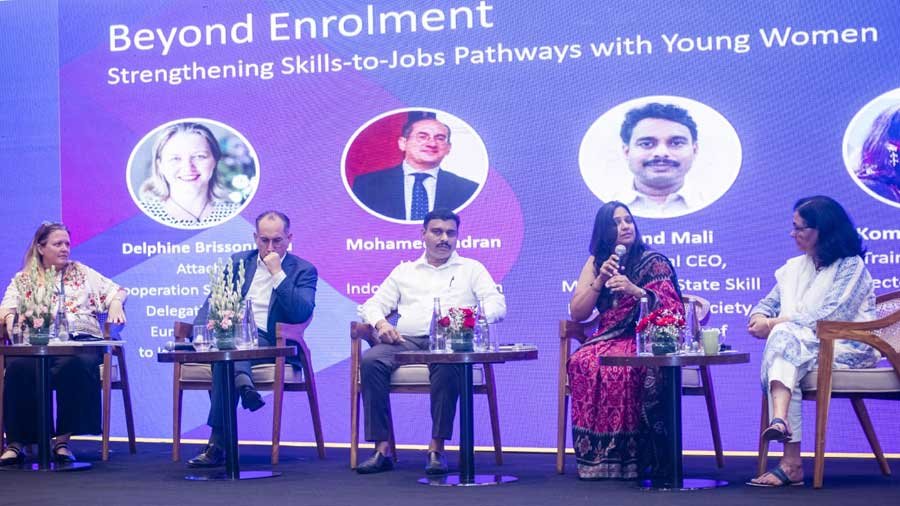
At the World Youth Skills Day celebrations organised by UN Women, policymakers and development partners examined a critical question: How can India ensure that young women not only enrol in skill development programmes but successfully transition into meaningful, sustainable employment? Moderated by Kanta Singh, Deputy Representative, UN Women India, the discussion highlighted the importance of partnerships, changing mindsets, industry engagement and safe workplaces in building an inclusive skilling ecosystem.
For years, success in India’s skilling ecosystem has largely been measured by the number of young people enrolled in vocational training programmes. Yet, as the panel discussion “Beyond Enrolment: Strengthening Skills-to-Jobs Pathways with Young Women” highlighted, enrolment is only the beginning. The real measure of success lies in whether young women are able to translate newly acquired skills into dignified employment, financial independence and long-term careers.
Moderating the discussion, Kanta Singh, Deputy Representative, UN Women India, set the tone by reflecting on UN Women’s journey of working with young women across Maharashtra, Madhya Pradesh and Gujarat. She observed that increasing enrolment required more than simply offering free education; it demanded confidence-building, community outreach and demonstrating that skilling could genuinely transform lives.
Drawing on years of field experience, she explained that when girls and their families could clearly see pathways leading from training to employment, enrolment increased significantly. Equally important, she noted, was adopting a gender-responsive approach to mobilisation, where women trainers and mobilisers helped build trust within communities and encouraged families to send their daughters for vocational education.
Having outlined the progress made in improving access, Singh posed the central question to the panellists: “What is the one systemic change that can strengthen the pathway from skills to jobs for young women?”
An Ecosystem, Not Individual Efforts
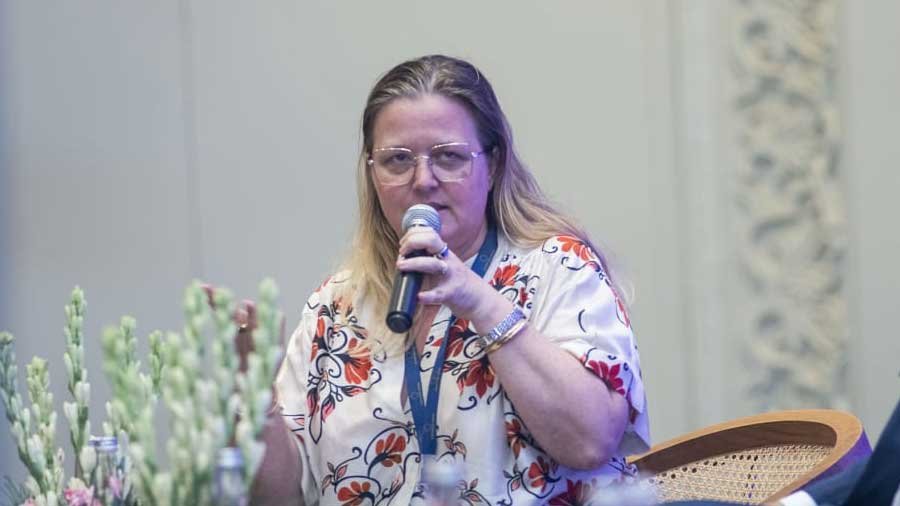
Responding first, Delphine Brissonneau, Attaché, Cooperation Section of the Delegation of the European Union to India and Bhutan, emphasised that there was no single solution to bridging the gender gap in employment.
Instead, she argued, lasting change depends on an ecosystem in which governments, skilling institutions, industry and development partners work together rather than in isolation.
She observed that despite encouraging numbers of women graduating in science, technology and vocational disciplines, far fewer successfully entered the workforce. The barriers, she explained, were multidimensional, ranging from inadequate mentoring and career guidance to concerns over mobility, safety and access to professional networks.
Drawing from the European Union’s collaboration with UN Women, Brissonneau noted that programmes designed around partnerships and shared responsibility were proving far more effective than isolated interventions. However, she stressed that successful pilot projects must eventually become institutionalised so that collaborative approaches become an integral part of national skilling systems rather than remaining standalone initiatives.
Building on this point, Kanta Singh remarked that improving employment outcomes required every stakeholder, from governments and educators to employers, to work in concert if women were to experience a seamless transition from education to employment.
Changing Mindsets Before Changing Systems

The discussion then turned to Mohamed Badran, Head of the Indo-German Green Skills Programme (IGGSP), GIZ, who brought an international perspective to the conversation.
Having worked on vocational education across several countries, Badran observed that while national contexts differ, many of the underlying challenges remain remarkably similar. Across both developed and developing economies, he noted, vocational education often struggles against deeply rooted social perceptions.
According to Badran, the first transformation required is not institutional but societal.
Parents, he observed, frequently aspire for their children to become engineers, doctors or lawyers while overlooking rewarding careers in technical trades. Yet electricians, technicians, carpenters and skilled professionals remain indispensable to every economy. Unless society begins to value these professions with equal respect and dignity, attracting young people, particularly young women, to vocational education will remain difficult.
He cited the German experience, where vocational education provides well-defined career pathways, competitive earnings and clear opportunities for professional advancement. Such recognition, he suggested, allows students to choose technical careers with confidence rather than viewing them as second-best options.
Badran also argued that the skilling ecosystem must become far more demand-driven. Too often, training institutions focus on delivering standard curricula without sufficient engagement with employers. Instead, industry should play a much larger role in identifying emerging skill requirements, designing relevant training programmes and creating employment opportunities, while governments focus on ensuring quality standards and regulatory oversight.
Building Support Beyond the Classroom

Kanta Singh steered the conversation towards another critical question: What more can governments and institutions do to ensure that young women not only complete their training but also secure meaningful employment?
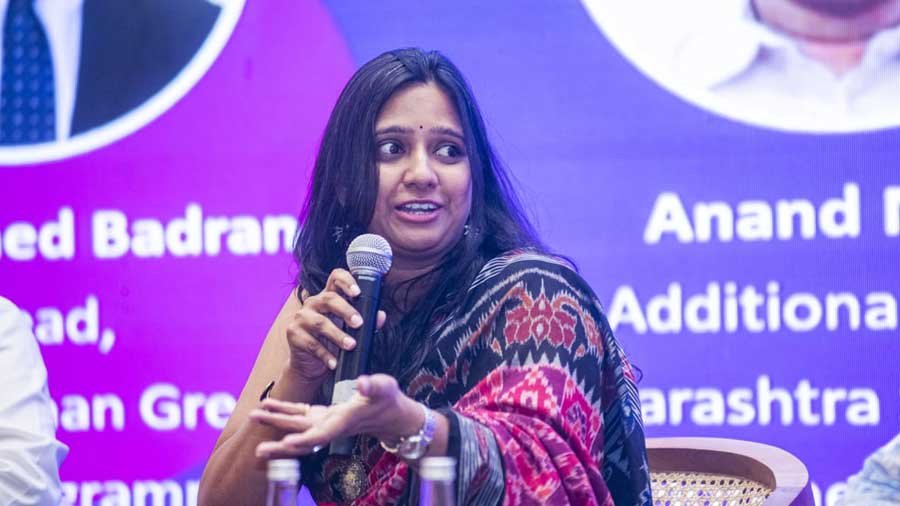
Responding to the question, Anand Mali, Additional CEO, Maharashtra State Skill Development Society, stressed that the responsibility of training institutions should not end with certification. In his view, India’s skilling ecosystem has made significant investments in mobilisation, curriculum development and training delivery, yet one crucial link remains weak: the transition from training to employment.
He advocated establishing dedicated transition-to-employment mechanisms at the institutional and district levels to continue supporting trainees even after they completed their courses. Such support, he explained, should include career counselling, documentation assistance, interview preparation, communication skills and regular engagement with employers.
According to Mali, post-placement support is equally important. Many young women secure employment but struggle to adjust to new workplaces or relocate to unfamiliar cities. Continuous mentoring during the initial months of employment, he suggested, could significantly improve job retention and career progression.
Safety Remains the Deciding Factor
The discussion then moved to one of the most pressing concerns affecting women’s workforce participation: safety.
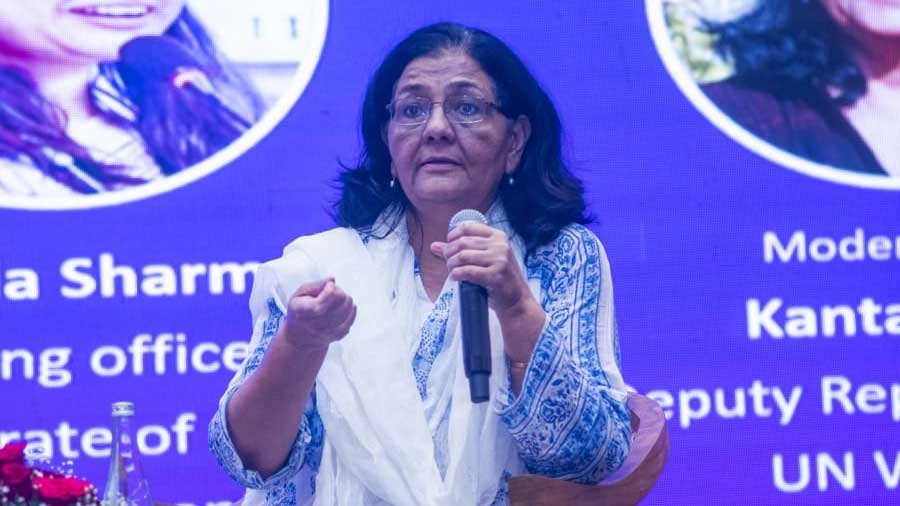
Drawing from her experience working closely with women trainees, Komila Sharma, Training Officer, Directorate of Skills Development, Government of Madhya Pradesh, remarked that while governments have invested considerably in strengthening vocational education, parents continue to judge opportunities primarily through the lens of safety.
She noted that families increasingly want their daughters to pursue education, acquire skills and become financially independent. However, their willingness to allow young women to travel or relocate for employment often depends on one question: Will they be safe?
For Sharma, creating safe workplaces is therefore not merely a welfare measure but a prerequisite for improving women’s participation in the labour market.
She suggested that governments could encourage industries to become more gender-responsive by recognising and incentivising employers that provide secure working environments, flexible work arrangements, supportive supervision and inclusive workplace policies. Such measures, she argued, would reassure families while encouraging more industries to recruit women actively.
“Skilling is no longer the biggest challenge,” she implied. “Creating workplaces where women feel secure and respected is.”
Beyond Enrolment to Empowerment
The discussion concluded with a clear consensus: success should no longer be measured solely by the number of women enrolling in skill development programmes. Real progress lies in ensuring that every young woman who acquires new skills can transition into meaningful employment, remain in the workforce and build a fulfilling career.
The panellists agreed that strengthening the skills-to-jobs pathway requires a holistic approach, one that values vocational education, aligns training with industry demand, provides structured post-placement support and creates workplaces where women can thrive without fear or discrimination.


Leave a Reply