

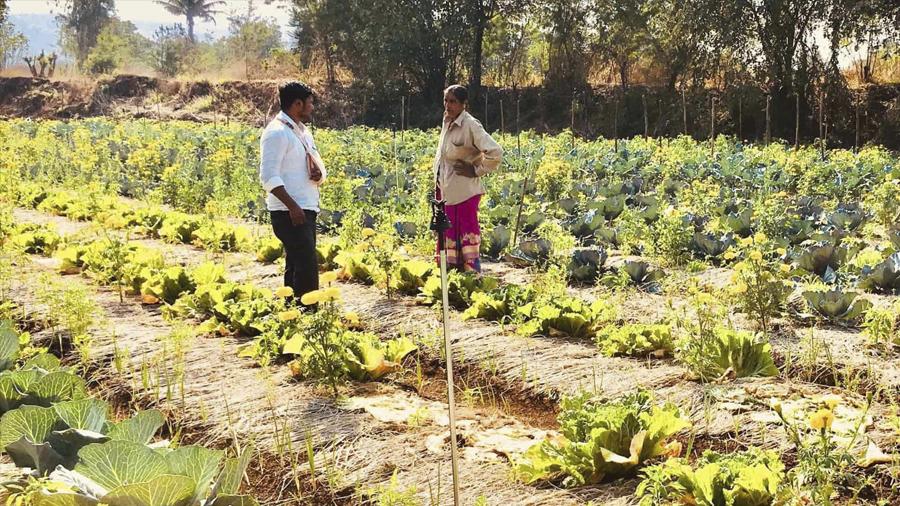
Agriculture in India is at a critical turning point. For decades, farmers have depended heavily on chemical fertilizers and pesticides to increase crop yields. While this approach helped boost food production, it also led to serious challenges such as rising farming costs, declining soil health, polluted water sources, and increasing farmer debt. Today, many farmers are searching for safer, more affordable, and sustainable ways to cultivate their land.
At this crucial juncture, Andhra Pradesh has emerged as a powerful example by promoting natural farming—a model that encourages farmers to grow crops without chemical inputs. This innovative approach, often referred to as Zero Budget Natural Farming (ZBNF), is not merely a farming method; it represents a quiet agricultural revolution aimed at restoring soil health, reducing farmers’ expenses, and building a more sustainable future for agriculture. The term “zero budget” does not imply farming without any expenditure; rather, it signifies that farmers do not need to take loans to purchase costly fertilizers or pesticides. By using natural materials available locally, farmers can significantly reduce their cultivation costs.
The natural farming programme in Andhra Pradesh was expanded significantly under previous government initiatives such as YSR Rythu Bharosa, along with the promotion of community-based natural farming through RythuSadhikaraSamstha (RySS). These efforts aimed to support farmers and reduce cultivation costs. Following the 2024 elections, the state is now governed by N. Chandrababu Naidu. The current administration has been reviewing several agricultural and welfare schemes introduced earlier. While many farmer support programmes continue in modified forms, the government is now focusing on strengthening agricultural infrastructure, technology-driven farming, irrigation projects, and market access. In essence, while natural farming expansion and key welfare initiatives were scaled up under the previous government, the present administration is reassessing and refining these policies as part of its broader agricultural strategy.
The natural farming model in Andhra Pradesh has gained national and international attention. Initially known as Zero Budget Natural Farming, it is now widely referred to as Andhra Pradesh Community Managed Natural Farming (APCNF).
The core idea behind natural farming is to work with nature rather than rely on chemicals. This concept was promoted by Indian farmer-scientist Subhash Palekar, who argued that nature already provides everything required for healthy farming. According to this approach, soil contains millions of beneficial microorganisms that can supply nutrients to crops if maintained properly. Farmers use locally available resources such as cow dung, cow urine, plant leaves, and crop residues to enhance soil fertility. These materials are used to prepare natural formulations that support plant growth and protect crops from pests and diseases.
Andhra Pradesh is one of India’s most important agricultural states, with farming playing a central role in its economy and rural livelihoods. A large proportion of the population depends directly or indirectly on agriculture for income and employment. The state produces major crops such as rice, maize, groundnut, cotton, chillies, and a variety of horticultural products. With fertile river deltas of the Krishna and Godavari rivers, extensive irrigation systems, and a long coastline supporting aquaculture, Andhra Pradesh is a leading contributor to India’s food production. It also plays a significant role in rice exports, horticulture, and fisheries, making agriculture a vital pillar of its economic development and food security.
The programme is implemented through RythuSadhikaraSamstha (RySS), a state-supported organisation that works closely with farmers. Its goal is ambitious: to encourage millions of farmers to gradually transition from chemical-based farming to natural farming. If successful, it could become one of the largest ecological farming transitions in the world. The programme relies heavily on community participation, with farmers trained through village-level meetings, field demonstrations, and peer-to-peer learning. Women’s self-help groups also play a crucial role in spreading awareness and supporting adoption.
Natural farming in Andhra Pradesh is based on simple and accessible practices. One key method is the preparation of a natural solution called Jeevamrutham, made by mixing cow dung, cow urine, jaggery, pulse flour, and soil in water. After fermentation, it is applied to the soil to enhance microbial activity and improve plant growth.
Another important practice is Beejamrutham, used for seed treatment. Seeds are dipped in a natural solution made from cow dung and cow urine, which protects them from fungal infections and diseases. Farmers also adopt mulching, which involves covering the soil with dry leaves or crop residues. This helps retain soil moisture, suppress weeds, and protect the soil from heat. Maintaining a proper balance of air and moisture in the soil is another critical principle, as it supports stronger root development and efficient nutrient absorption.
Since most inputs are locally sourced, farmers reduce their dependence on market-purchased products. This significantly lowers cultivation costs and reduces the need for loans. One of the major advantages of natural farming is cost reduction. Chemical fertilizers, pesticides, and hybrid seeds are often expensive, and many farmers spend a large share of their income on these inputs. In Andhra Pradesh, many farmers have reported a reduction in farming expenses by nearly half after adopting natural farming. Even if yields decline slightly in the initial years, overall profitability can remain stable or even improve due to lower input costs.
Natural farming also offers significant environmental benefits. Chemical inputs can degrade soil health over time by destroying beneficial microorganisms and reducing fertility. By eliminating chemical use, natural farming helps restore soil life, enhance nutrient retention, and improve water-holding capacity. Water conservation is another key benefit, as mulching and improved soil structure enable better moisture retention, reducing the need for frequent irrigation—particularly important in water-scarce regions.
Additionally, natural farming supports biodiversity. The absence of chemical inputs allows beneficial insects, birds, earthworms, and other organisms to return, creating a more balanced and resilient ecosystem.
The programme has attracted global attention, with several international organisations studying it as a model for large-scale sustainable agriculture. Institutions such as the Food and Agriculture Organization (FAO) and the World Bank have shown interest in understanding its implementation and potential for replication. Many researchers view such approaches as essential for addressing climate change and ensuring long-term food security.
The Andhra Pradesh government continues to expand the programme, aiming to reduce costs and enhance climate resilience. However, challenges remain. Some experts argue that yields may decline during the transition phase. Farmers also require proper training and support to adopt new practices effectively. Without adequate guidance, understanding natural input preparation and crop management can be difficult.
Market access is another challenge. Farmers producing chemical-free crops often expect premium prices, making the development of reliable markets for natural and organic produce essential.
Overall, the natural farming movement in Andhra Pradesh represents a significant step toward sustainable agriculture. By reducing dependence on chemical inputs and promoting the use of natural resources, it offers a viable solution to rising costs and environmental concerns. If widely adopted, it could help restore soil health, reduce pollution, and enhance agricultural sustainability.
The long-term success of this model will depend on strong farmer participation, continuous capacity-building, and supportive government policies. While questions about long-term productivity remain, early results are promising. With sustained efforts and careful implementation, natural farming could play a transformative role in shaping the future of agriculture in India and beyond.



Leave a Reply