

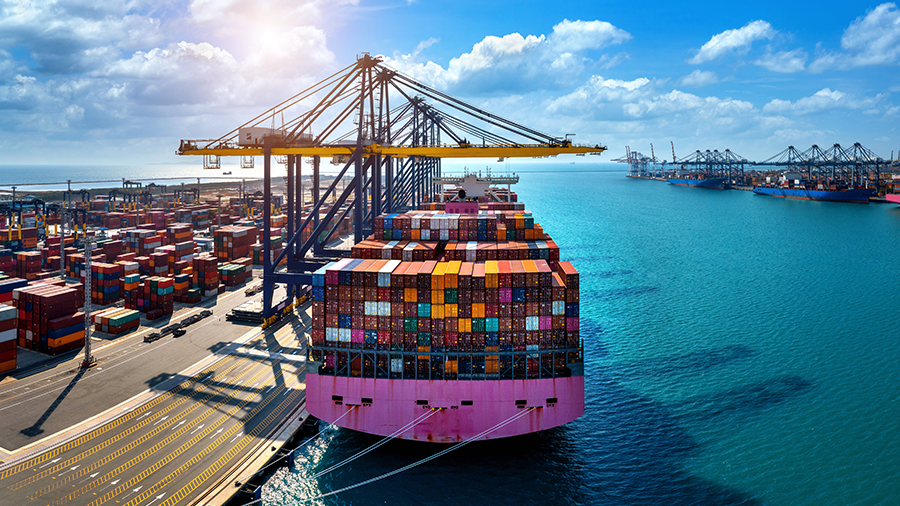
Two of the most important political and economic players in the world are the European Union (EU) and India. Together, they make up around 25% of the world’s GDP and are committed to multilateralism, sustainable development, and rules-based international trade, albeit in diverse ways. The India-EU Free Trade Agreement (FTA), formerly known as the Broad-based Trade and Investment Agreement (BTIA), has gained momentum again after years of stalled negotiations. This indicates a strategic recalibration motivated by changing geopolitics, supply-chain diversification, and the green and digital transitions. It is now strategically necessary to push the free trade boundary between India and the EU, rather than only an economic goal.
The Evolution of India–EU Trade Relations
Trade links between India and the EU began in the early 1960s and developed into a “Strategic Partnership” in 2004. India is among the top ten trading partners of the EU, while the EU is one of India’s biggest trading partners. Although bilateral commerce in commodities and services has continuously increased, it is still below potential given the size and complementarities of both economies. Disagreements about market access, tariffs, data protection, labour standards, and intellectual property rights led to the suspension of BTIA negotiations in 2013. A convergence of interests is reflected in the resumption of negotiations in 2022. While India wants to increase exports, draw in high-quality investment, and integrate more fully into global value chains, the EU wants to lessen its reliance on a small number of suppliers and improve economic security.
Working toward a stable, open, transparent, non-discriminatory, and predictable regulatory and business environment for European companies trading with or investing in India, including the protection of their investments and intellectual property, is a major goal of the EU’s trade relations with India. The objective is to help unlock the unrealised potential of investment and commerce between the EU and India.
Strategic Drivers Behind Renewed Momentum
India and the EU are moving toward greater trade integration due to a number of structural factors. First, the significance of robust and diverse supply chains has been highlighted by geopolitical instability, which is made worse by great-power rivalry and disturbances like the COVID-19 epidemic and the conflict in Ukraine. Europe is beginning to see India as a dependable partner and a centre for alternative manufacturing. Second, India has become more appealing as a trade and investment destination due to domestic changes, including the Goods and Services Tax (GST), production-linked incentive (PLI) programs, and improvements in ease of doing business. Third, India’s focus on strategic autonomy is in line with the EU’s aim of “open strategic autonomy,” which allows for practical collaboration without strict alliance structures.
Key Opportunities in a Future FTA
Both India and the EU might benefit greatly from a broad free trade agreement. Improved access to the EU market will help India’s labour-intensive industries, including information technology services, textiles, clothing, leather, and medicines. Increased EU investment might hasten India’s infrastructure development, green transformation, and industrial upgrading. Tariff reductions and regulatory cooperation would create chances for the EU in the fields of digital technologies, autos, manufacturing, renewable energy, and financial services. India is a desirable location for European exporters and investors due to its sizable consumer market and expanding middle class.
Beyond conventional commerce, collaboration in cutting-edge fields like clean hydrogen, circular economy principles, digital public infrastructure, and research and innovation could put the alliance at the forefront of inclusive and sustainable globalisation.
Persistent Challenges and Points of Friction
Despite common interests, there are still many obstacles to overcome. The EU prioritises sustainability, environmental norms, and labour rights, as evidenced by programs like the Carbon Border Adjustment Mechanism (CBAM). India has voiced worries about protectionism and the effects of such policies on development, despite its support for sustainability goals. There are still disagreements on dispute resolution procedures, agricultural market access, data governance, and intellectual property protection. It will take adaptability, trust, and progressive implementation to balance India’s development-oriented aspirations with the EU’s regulatory-heavy approach.
Conclusion
India and the EU must transition from transactional engagement to a partnership based on trust, sustainability, and shared strategic interests as global trade, climate action, and geopolitics become more intertwined. Both parties may create a strong, future-ready cooperation by coordinating economic growth with climate responsibility, strengthening technological and interpersonal ties, and guaranteeing equity in international regulations. In addition to strengthening bilateral relationships, a fair and forward-thinking India-EU relationship will support a more stable, inclusive, and rules-based international order.
In an increasingly fragmented global order, expanding the free trade frontier between India and the EU is both a strategic need and an economic opportunity. Although obstacles exist, they are not insurmountable. For decades to come, India-EU ties might be completely transformed by a forward-thinking, balanced free trade agreement (FTA) that is both ambitious in scope and attentive to development issues. If successful, it would show that big, diversified economies can still find common ground in a world growing more divided and send a strong message in favour of cooperative, rules-based commerce. Trade between the EU and India has increased by around 90% over the last ten years, but negotiations for a free trade agreement have stalled over time because of major differences between the two nations, particularly in the areas of agriculture, cars, and medicines.”The EU and India have the potential to be one of the defining partnerships of this century. It is why it will be a cornerstone of Europe’s foreign policy in the years and decades to come.”
A world of spheres of influence and isolationism is detrimental to both the EU and India. Additionally, they both stand to benefit from a world of collaboration and teamwork.
References



Leave a Reply