

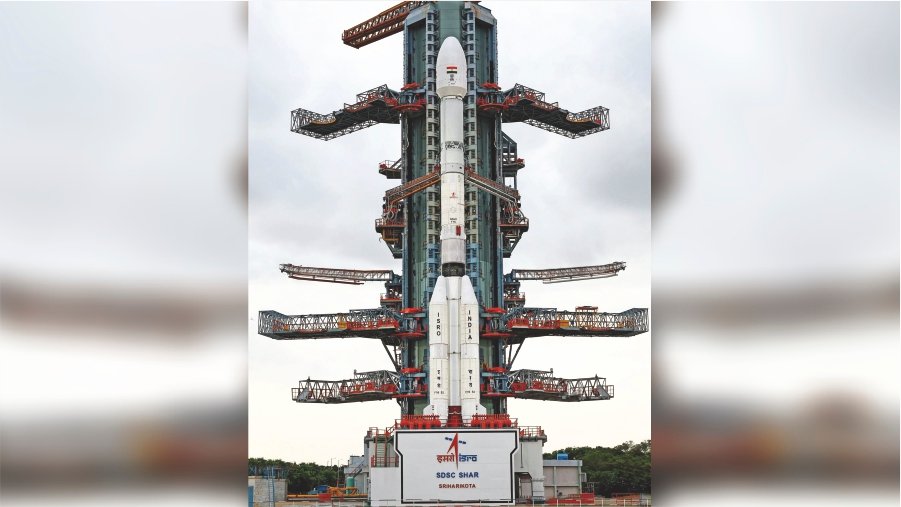
India’s introduction into the space era was distinguished by a special fusion of humanitarian goals and scientific aspirations. Since its establishment in 1969, ISRO has developed into a worldwide-renowned space agency from the dream of a developing country. Although its technical accomplishments, such as the Chandrayaan and Mangalyaan missions, are widely praised, its contribution to space diplomacy is just as important. India’s foreign policy today heavily relies on ISRO’s international partnerships, which foster cross-border peaceful cooperation, capacity building, and sustainable development.
India’s Space Diplomacy Development
International cooperation was the foundation of India’s early space endeavours. ISRO benefited from Soviet and American support for satellite launches, technology, and training during the 1960s. But by the 1990s, India had developed into a self-sufficient space power that could help others with technology. Technology exports were first temporarily restricted following the Pokhran-II nuclear tests in 1998, but ISRO’s steadfast dedication to peaceful space applications recovered its reputation around the world. Since then, India has prioritised collaborative science and equitable access** to space-based advantages in its space diplomacy, which is consistent with the UN’s view of space as “the province of all humankind.”
Significant International Partnerships
The Strategic and Economic Aspects of Space Diplomacy
The accomplishments of ISRO have also paid off strategically and commercially. India has launched more than 430 foreign satellites from more than 30 nations, including the US, Singapore, and the UK, through its commercial companies, Antrix Corporation and NewSpace India Limited (NSIL). India is known as the “Uber of Space” because of its affordable PSLV launch services. Strategically, ISRO participates in international forums including the G20, BRICS, and the United Nations Committee on the Peaceful Uses of Outer Space (COPUOS). India’s involvement in the Artemis Accords further demonstrates its willingness to participate in global governance of deep space and lunar exploration, striking a balance between international duty and scientific goals.
New Frontiers: Security, Sustainability, and Science
Three emerging priorities are becoming the focus of ISRO’s international collaborations: Scientific exploration through planetary missions and astronomical studies; Sustainability through the use of satellites for resource management and climate monitoring; and Space security, including debris tracking and the protection of vital assets. ISRO’s dedication to maintaining a secure and sustainable orbital environment is demonstrated by collaborative work on space debris mitigation with organisations such as JAXA (Japan) and ESA (Europe).
Obstacles and Prospects for the Future India’s space diplomacy is flourishing, although it still confronts a number of obstacles: The need for a clearer legal framework governing private-foreign partnerships; Increasing international rivalry in the commercial launch sector; Bureaucratic obstacles and sluggish policy execution. By liberalising India’s space environment, the Indian Space Policy 2023 and the creation of IN-SPACe (Indian National Space Promotion and Authorisation Centre) are efforts toward resolving these problems. These changes are intended to draw in foreign capital and bolster ISRO’s function as a global partner and private innovation enabler.
Conclusion
India’s goal of space as a realm of peace, partnership, and progress is embodied in ISRO’s growing international collaborations. India’s space diplomacy extends beyond conventional political and geographical boundaries, encompassing technology sharing with underdeveloped countries and scientific cooperation with advanced space powers. ISRO’s philosophy of open and responsible space participation provides a compelling vision for the future as the globe faces common concerns, such as orbital congestion and climate change. In forging its cosmic route, India fosters mutual growth, goodwill, and trust on Earth in addition to exploring space.
Selected Sources



Leave a Reply